



Stormy Ocean Painting
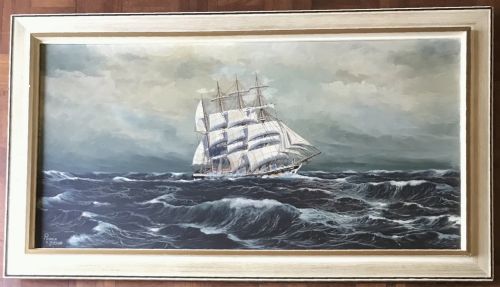
A stormy ocean painting captures the raw fury of heavy gales and crashing waves, offering an intense focal point for any interior.
Stormy Ocean Painting
A stormy ocean painting captures turbulent seas, merchant vessels in rough water, and dramatic shipwrecks through the lens of maritime art. These works span centuries, with the Victorian era heavily represented alongside earlier Dutch Golden Age examples and later twentieth-century interpretations.
The subjects range from tall masted ships in choppy waters and coastal lighthouses to fishermen on stormy shores. Most pieces on this page appear as framed oil paintings on canvas or board, alongside detailed watercolour paintings on paper.
Origins vary from British and Australian makers to European coastal scenes, showing vessels navigating gales or awaiting the return of fleets. Buyers encounter everything from intimate nineteenth-century watercolours to large seventeenth-century maritime canvases.
How they were made
Artists built these marine scenes using oil on canvas, oil on board, and watercolour on paper, often mounted in giltwood frames with gesso detail. Charcoal also appears for dramatic monochromatic shipwreck depictions.
Makers utilised pigmented oils to build thick, textured impasto for churning waves and foaming crests, while watercolours allowed for swift, translucent washes of grey and blue across stormy skies.
Stormy Ocean Painting Retail Price Guide 2026
Typical asking prices for stormy ocean painting among the pieces listed under this phrase on Sellingantiques today, from the lower quarter to the upper quarter. They describe what is for sale here now, not the wider market.
Materials across these listings include oil on canvas, watercolour on paper, wood, glass, and gesso.
What varies in quality
The strength of a stormy ocean painting lies in the convincing weight of the water and the atmospheric tension of the sky. Superior hands capture the violent motion of gale-forced waves and the accurate rigging of vessels under stress.
Condition and medium handling dictate value, distinguishing hurried coastal sketches from masterworks of maritime realism that command attention through confident brushwork and composition.
John Rose Miles·Bonaventura Peeters·John Callow·Percy Brooke·William Boyce·Walter Williams
The Stormy Ocean Painting Glossary
- Giltwood
- Wood carved and covered with a thin layer of gold leaf, frequently forming the ornate frames around maritime oils.
- Gesso
- A plaster-like mixture applied to wooden frames as a base for moulding decorative relief details.
- Impasto
- Paint laid thickly on a surface so that it stands out from it, used to render foaming seas.
- Maritime realism
- An artistic style dedicated to depicting ships, coastal scenes, and open water with precise observation.
Stormy Ocean Painting: Frequently Asked Questions
What periods do these paintings date from?
The works span from the seventeenth century through the Victorian period up to nineteen fifty.
Nineteenth-century examples form the majority of the current selection, alongside specific works from the Dutch Golden Age.
What materials were used by the artists?
Painters worked primarily with oil on canvas or board, and watercolour on paper.
Frames are typically constructed from wood with giltwood and gesso finishes.
How do watercolours differ from oils here?
Watercolours on paper offer softer, more translucent atmospheric effects of coastal weather and lighthouses.
Oils on canvas provide deeper texture for churning waves and heavy storm clouds.
Where do these maritime scenes originate?
The geographical scope includes British merchant waters, Dutch coastal gales, Portuguese lighthouses, and Australian connections.
Many pieces document specific locations such as Sunderland or the Staithes fishing community.