





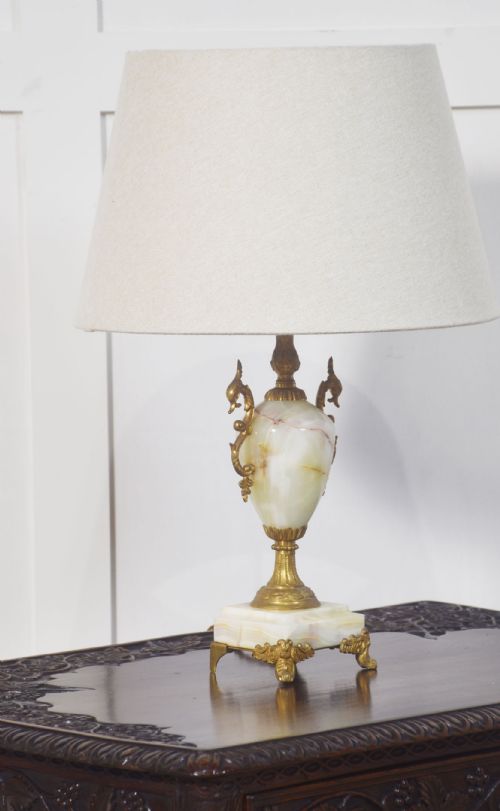


Stone Urn Table Lights
Stone urn table lights bring classical weight and luminous carved stone into a room, offering both sculptural presence and soft light.
Stone Urn Table Lights
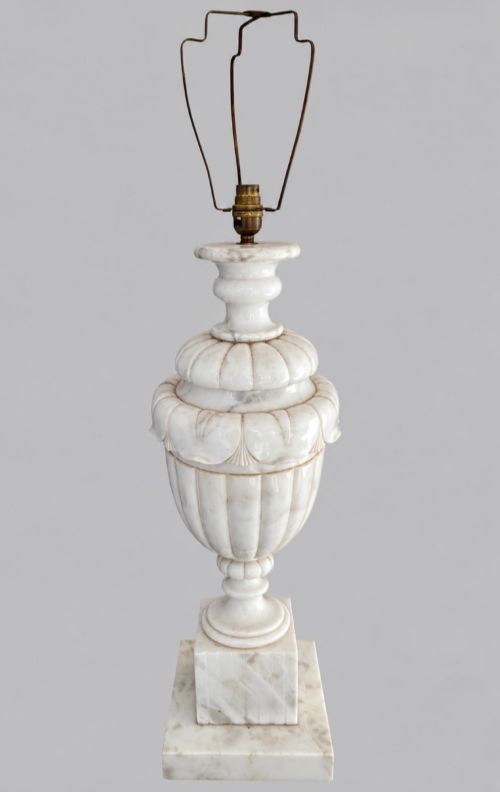
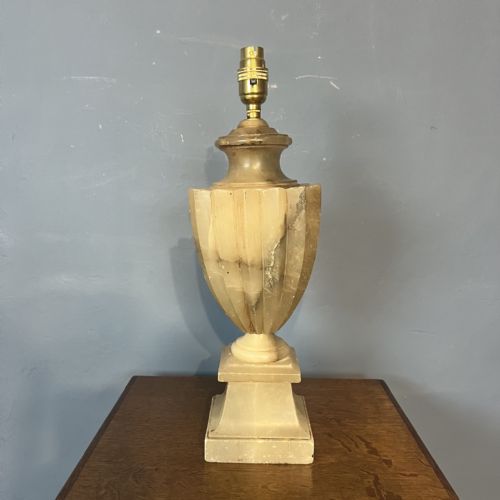
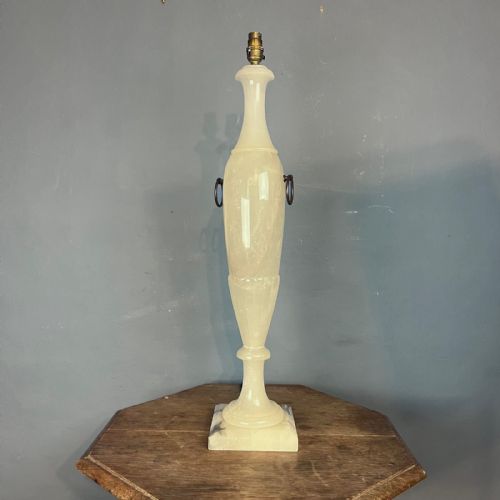
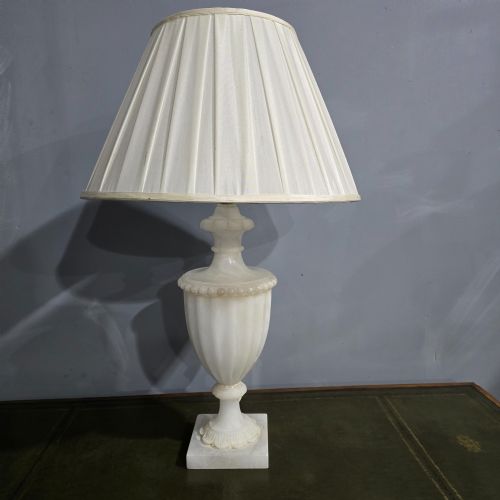
Stone urn table lights take the form of classical vessels adapted for interior illumination, drawing on neoclassical and classical revival designs from the nineteenth and early twentieth centuries. These pieces translate architectural motifs into domestic lighting through carved urns and amphorae mounted on decorative bases.
You are most likely to encounter Edwardian and early twentieth-century examples shaped from translucent alabaster, white onyx, and varied marbles. Many of these lamps survive in pairs, often elevated by gilt metal mounts, bronze detailing, or paw feet reflecting French neoclassical taste.
Materials and construction
The body of each lamp is turned or carved from solid stone such as alabaster, marble, or onyx, utilising natural veining and translucency to catch the light. Artisans shaped these heavy mineral blocks into classical urn profiles, hollowed them to house internal wiring, and polished the exterior to a smooth finish.
Metal components such as brass, gilt metal, and gilt bronze were cast and chased to form collars, handles, bases, and paw feet. These metal mounts were then fitted mechanically to secure the stone sections and support the fabric shade above.
Stone Urn Table Lights Retail Price Guide 2026
Typical asking prices for stone urn table lights among the pieces listed under this phrase on Sellingantiques today, from the lower quarter to the upper quarter. They describe what is for sale here now, not the wider market.
Listings span the nineteenth century through the nineteen-thirties, dominated by alabaster, marble, and onyx paired with gilt metal and bronze.
Distinctions in quality
Quality rests primarily on the crispness of the stone carving and the selection of the raw mineral block, where even marbling and high translucency elevate the visual impact. Finer examples display harmonious proportions between the stone urn and its metal mounts, avoiding clumsy or heavy-handed collars.
The integration of cast bronze or gilt metal elements separates standard production from superior pieces, particularly where mounts like paw feet or cassolette lids are finely chased rather than cast simply. The weight and stability of the assembled base also dictate how successfully the lamp holds a substantial fabric shade.
The Stone Urn Table Lights Glossary
- Alabaster
- A soft, fine-grained stone prized for its milky translucency when lit from within. It absorbs light gently and shows varied natural veining.
- Onyx
- A banded variety of chalcedony or calcite used for decorative vessels, displaying distinct parallel strata and rich colour variation. This material takes a high polish.
- Cassolette
- A decorative vase or urn designed with a reversible lid that can function as a burner or display a solid surface. In lighting, this form is adapted into a lamp body.
- Neoclassical
- A style drawing inspiration from the classical art and architecture of ancient Greece and Rome. It relies on symmetry, restraint, and classical urn motifs.
Stone Urn Table Lights: Frequently Asked Questions
What are stone urn table lights?
These pieces are decorative lamps fashioned from carved stone vessels like alabaster, marble, and onyx. They adapt classical urn and amphora shapes for interior illumination.
Most surviving examples date from the nineteenth and early twentieth centuries, reflecting revivalist design movements across Britain and France.
How were they used historically?
These lamps stood on side tables, consoles, and mantelpieces in formal reception rooms and parlours. Their primary role was to provide gentle ambient illumination while serving as sculptural ornaments.
When unlit, their carved stone bodies functioned as classical decorative objects that signalled the owner's refined taste.
How do I live with stone urn lamps?
Place them on sturdy surfaces such as heavy wooden sideboards or marble-topped tables to safely support their substantial weight. Pair them with simple fabric shades that complement the natural tones of the stone.
Keep them away from damp areas and clean the stone gently with a dry cloth to preserve the polished surface without damaging the material.
How can I tell the periods apart?
Nineteenth-century examples often feature heavier bronze mounts and more elaborate French cassolette forms with hand-chased details. Edwardian and early twentieth-century pieces tend toward simpler alabaster or onyx urns with restrained metal collars.
Examining the wiring channels, internal fixings, and the style of the gilt metal mounts helps clarify the date of manufacture.