


Stone Urn on Pedestal
These stone urn on pedestal assemblies bring classic architectural form to garden and interior spaces, uniting carved vessel and supporting plinth in lasting display.
Stone Urn on Pedestal
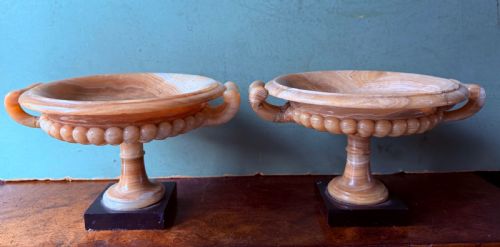
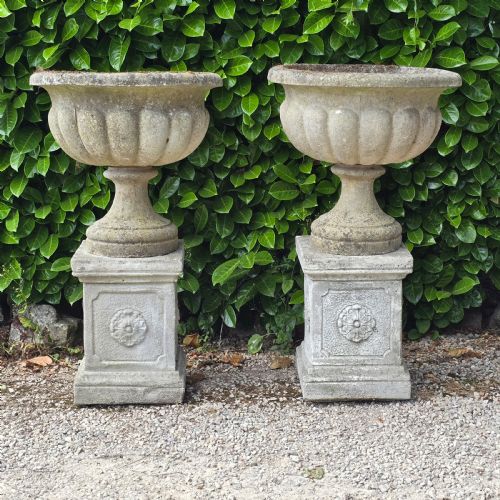
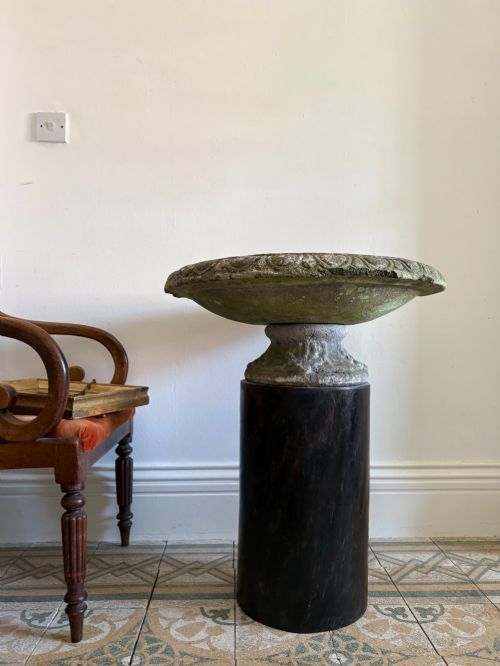
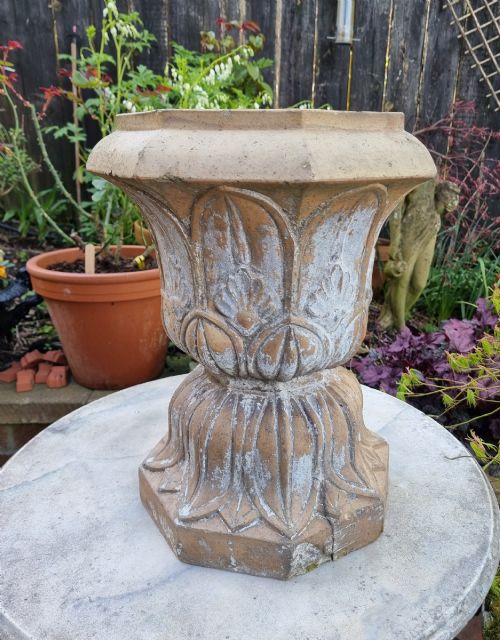
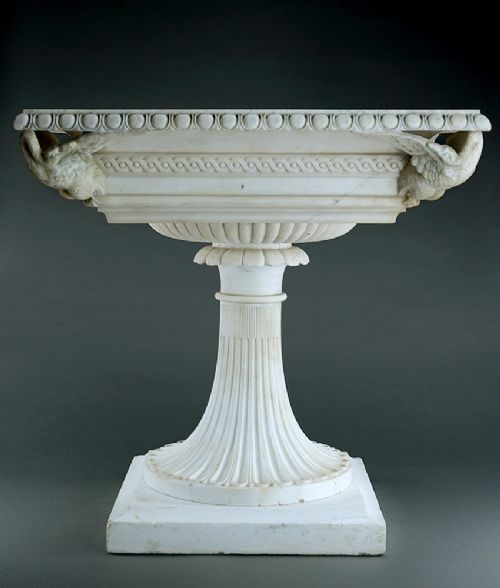
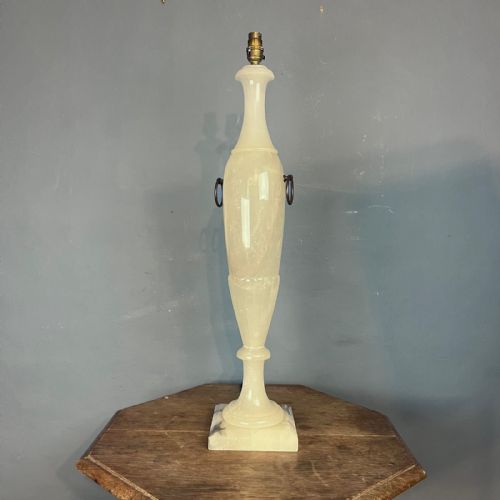
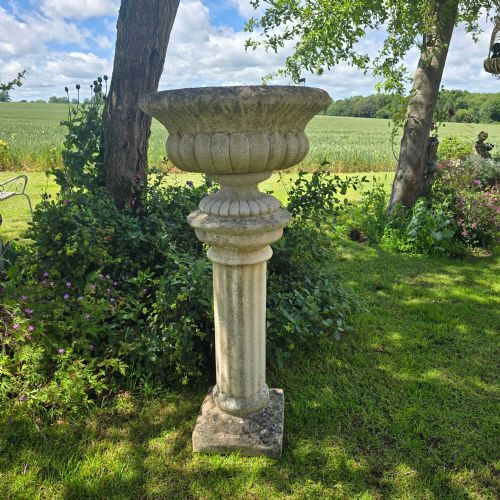
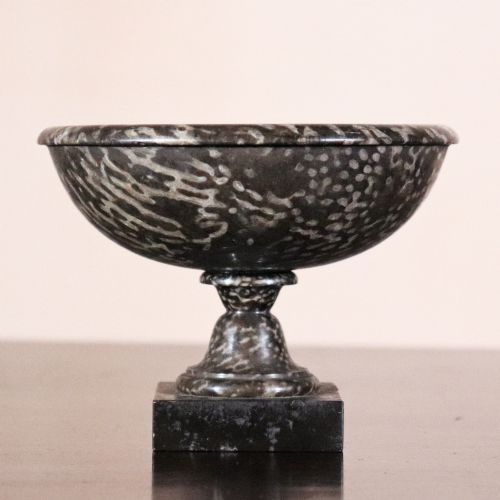
When you search for a stone urn on pedestal, you encounter pieces designed to elevate garden vessels or interior display objects upon matching bases. The tradition spans interior decorative forms like alabaster and marble tazzas down to robust garden structures in cast stone, limestone and terracotta.
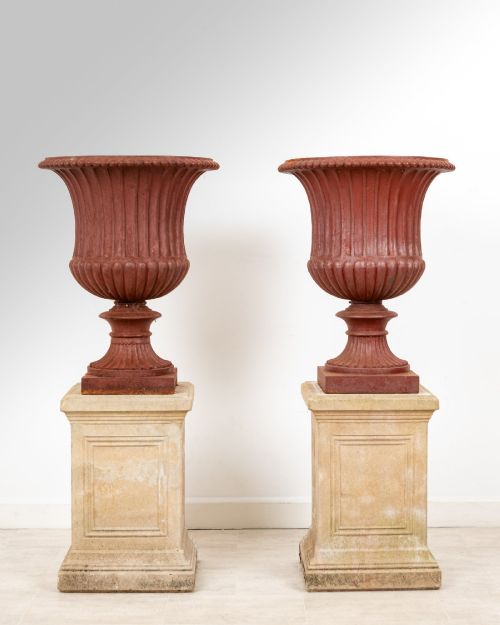
The pieces appearing on this page range from nineteenth-century Grand Tour souvenirs carved in Italy to weathered Victorian and early twentieth-century garden ornaments. You will find campana shapes, classical columns and composite plinths created for both formal landscape schemes and domestic rooms.
Materials and Methods
Makers utilised durable stones and cast metals, shaping limestone, marble and alabaster through hand-carving or forming composite and cast stone mixtures in moulds. Iron foundries produced heavy campana vessels and decorative planters using traditional sand casting techniques.
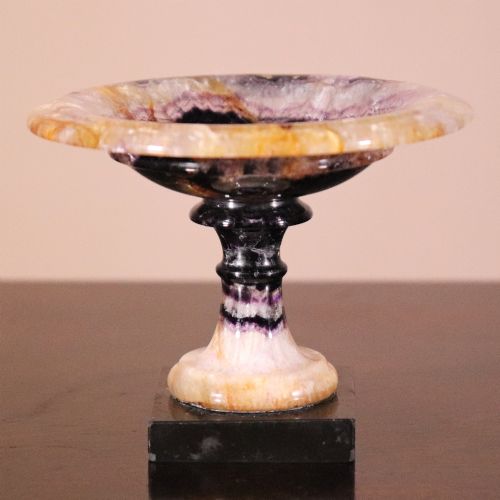
Surfaces received differing treatments, from the natural weathering of exposed terracotta and stoneware to the highly polished finishes applied to decorative mineral marbles and Blue John. Bases and plinths were frequently constructed in separate sections to support the weight of the primary vessel.
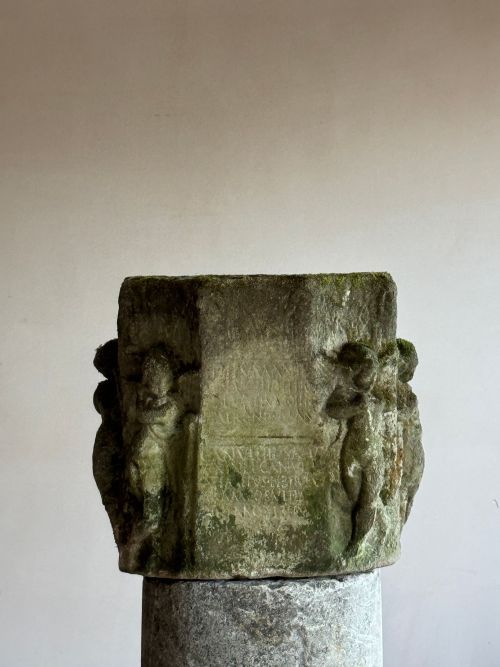
Several pieces preserve stubborn historical garden moss that refuses to leave despite changing continents and centuries.
Distinctions in Execution
The standard of a stone urn on pedestal rests upon the crispness of the carving and the purity of the chosen material, whether fine-grained Carrara marble or dense cast stone. Superior examples display correct classical proportions and harmonious balance between the vessel and its supporting base.
Age and exposure introduce organic weathering that alters the surface texture, turning uniform manufactured concrete into patinated stone with distinct lichen growth or softening the sharp edges of foundry cast iron. The distinction lies in how gracefully the material ages while retaining its structural integrity.
Andrew Handyside·Coalbrookdale
The Stone Urn on Pedestal Glossary
- Campana urn
- A bell-shaped garden vessel with an everted rim and a flaring body, originating in classical antiquity.
- Tazza
- A shallow saucer-shaped vessel or cup mounted on a stem and foot, frequently carved from decorative marbles during the Grand Tour period.
- Plinth
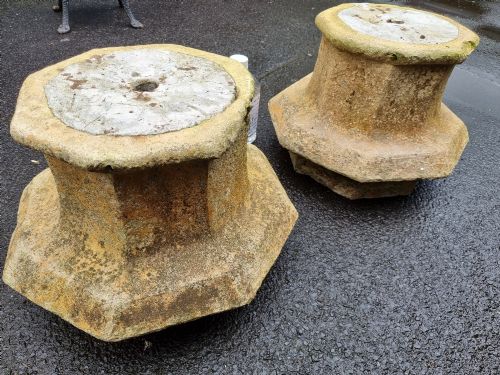
- A heavy rectangular or square block supporting a statue, column or urn.
- Alabastro egiziano
- A finely figured calcareous alabaster highly prized by Italian carvers for small-scale souvenir objects.
- Grand Tour
- The eighteenth and nineteenth-century custom of travel through Europe undertaken by upper-class young men to collect classical antiquities and souvenirs.
Stone Urn on Pedestal: Frequently Asked Questions
Are these urns frost proof?
Many exterior compositions of cast stone, terracotta and iron handle winter weather well, though porous materials require monitoring during hard freezes.
Indoor decorative pieces carved from soft alabaster or delicate marbles must remain protected from moisture and extreme temperature shifts.
How do I clean weathered stone?
Gentle brushing with water removes surface dirt without disturbing the natural patination built up over decades outdoors.
Avoid harsh chemical cleaners or abrasive scouring pads that strip away the historical surface character.
Can these support heavy planting?
Robust garden pieces made from cast iron or thick reconstituted stone easily accommodate soil and substantial plantings.
Lighter interior specimens serve primarily as decorative architectural accents rather than functional garden planters.
How do I date a cast iron urn?
Nineteenth-century examples often exhibit foundry marks, registration numbers and multi-part construction bolted together securely.
Early production pieces typically show deeper hand-finished details and heavier casting weights than later reproductions.