



Still Life Study
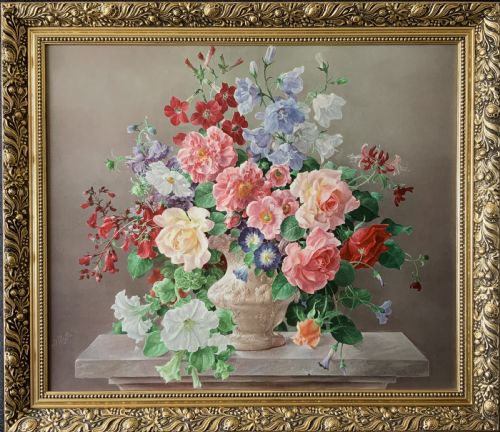
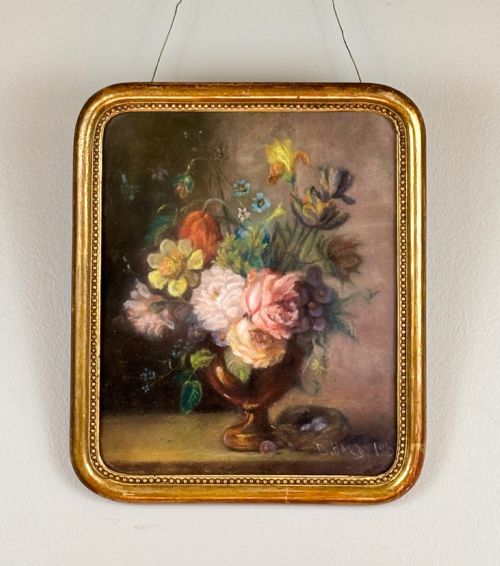
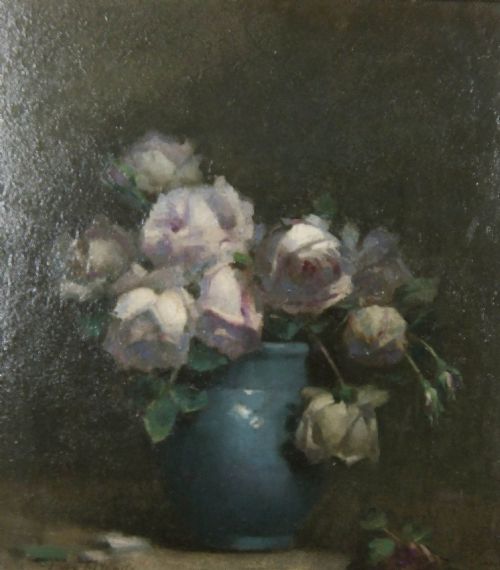
Still life study works capture arranged fruit, flowers and household objects across centuries of diverse British and European painting traditions.
Still Life Study
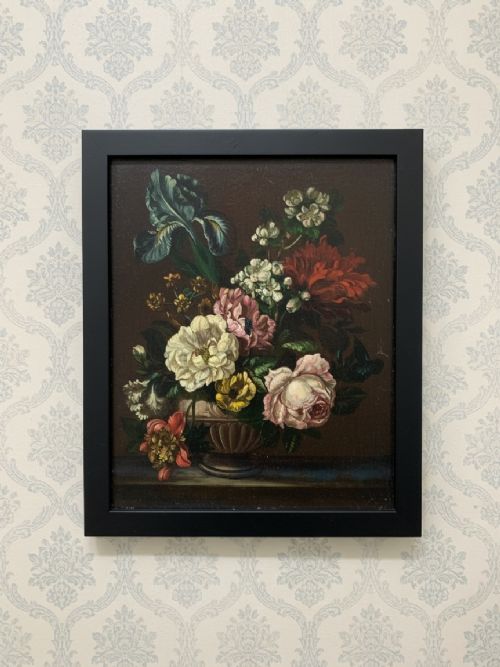
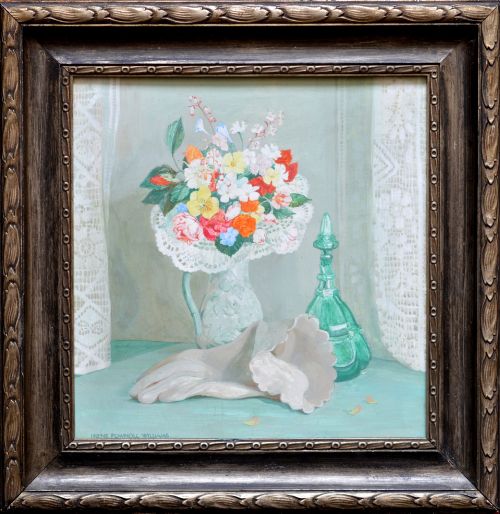
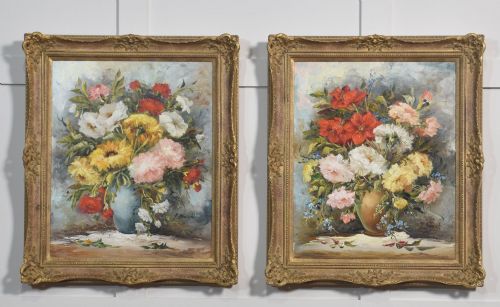
A still life study represents inanimate subject matter such as fruit, flowers, and domestic items arranged in a composed setting. These works range from tightly rendered academic exercises to looser modern interpretations spanning the nineteenth and twentieth centuries.
Domestic interiors and studio setups provide the primary context for these pieces, reflecting shifting artistic approaches from Victorian academic precision towards mid-century European modernism. Oil and watercolour dominate the available forms.
How they were made
Artists painted these subjects primarily in oil on canvas or panel, building up rich surfaces through layered application and brushwork. Watercolour and gouache on paper offer a lighter alternative, capturing delicate transparency in floral studies.
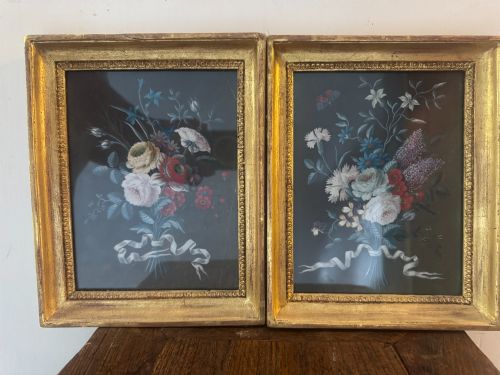
Gilded wooden frames with gesso ornamentation frequently house these works, providing structural support and visual definition suited to the period of creation. Pastel and tempera also appear as distinct mediums across panel and paper supports.
Still Life Study Retail Price Guide 2026
Typical asking prices for still life study among the pieces listed under this phrase on Sellingantiques today, from the lower quarter to the upper quarter. They describe what is for sale here now, not the wider market.
Victorian art students regularly painted swords and chairs alongside fruit to prove their mastery of difficult metallic and organic textures.
What varies in quality
The handling of light, shadow, and spatial depth distinguishes finer compositions from more rigid decorative output. Masterful brushwork brings texture and life to fruit and petals, whereas lesser examples rely on flat application and formulaic arrangement.
The integrity of the original support and framing influences the overall standard of a piece. Works retaining their period gilt frames and stable canvas tension demonstrate superior preservation.
Irene Christobelle Pownoll Williams·Harold Clayton·Manuela Bonati·William Thomas Wood·Sir Matthew Smith·Edith Barrow·Thomas Hooper·Phyllis I Hibbert·Lena M Alexander·Marian Chase·Jennifer Toombs·Alice Macallan Swan·Marion Broom·Annie Mary Youngman·Margaret Evangeline Wilson·John Robertson Reid·John Sherrin·Owen Bowen
The Still Life Study Glossary
- Gouache
- An opaque watercolour paint mixed with a binding agent, producing a flat, matte surface finish. It allows for vibrant colour saturation on paper or board supports.
- Gesso
- A plaster-like mixture applied to wood panels or canvas as a prepared base for painting, or moulded onto frames for decorative relief. It creates a smooth foundation for subsequent layers.
- Tempera
- A permanent, fast-drying painting medium consisting of coloured pigments mixed with a water-soluble binder medium such as egg yolk. This technique yields a durable, matte finish often seen on wood panels.
- Grisaille
- A painting executed entirely in shades of grey or neutral monochrome, often used as a preparatory underpainting or as a finished study in its own right.
- Oleograph
- A mechanical colour print on canvas that simulates an oil painting through textured roller application. These reproductions mimic the appearance of genuine brush-painted works.
Still Life Study: Frequently Asked Questions
What is a still life study?
A still life study is an artwork depicting inanimate subject matter, typically including fruit, flowers, ceramics, and everyday objects arranged by the artist.
These pieces served as foundational training exercises for artists as well as finished decorative works celebrating domestic interiors and nature.
How do I date a still life painting?
Dating relies on stylistic markers, framing techniques, and the artist's recorded working period. Victorian academic pieces display tight realism, whereas mid-century works show looser brushwork and bolder palettes.
Signatures, inscriptions on the reverse, and the material composition of the canvas or panel provide additional chronological evidence.
Where should I hang these paintings?
These works suit dining rooms, studies, and hallways where intimate arrangements complement domestic spaces. Their varied scales allow them to sit comfortably alongside traditional or contemporary interiors.
Avoid placing canvas and paper works in direct sunlight to protect the pigments from fading over time.
What mediums were commonly used?
Artists worked in oil paint on canvas or wooden panels for durable, textured surfaces. Watercolour and gouache on paper were favoured for botanical precision and delicate floral studies.
Pastel and tempera appear less frequently, offering distinct powdery or matte textures that capture soft light.