





Sterling Tea Strainer
A sterling tea strainer is a silver utensil designed to catch loose leaves when pouring tea, offering a refined touch to the ritual.
Sterling Tea Strainer
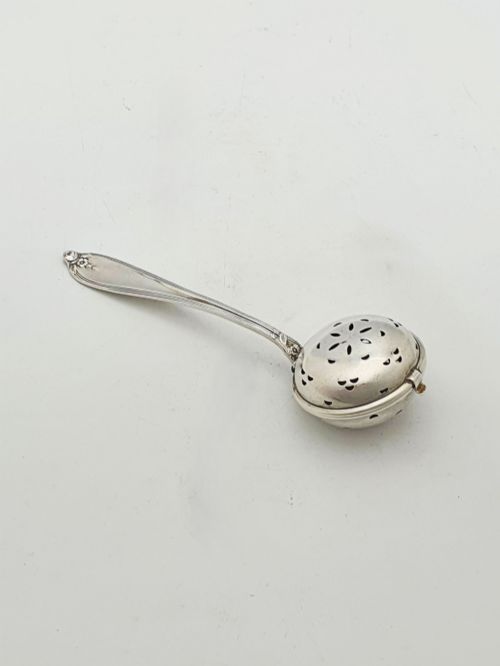
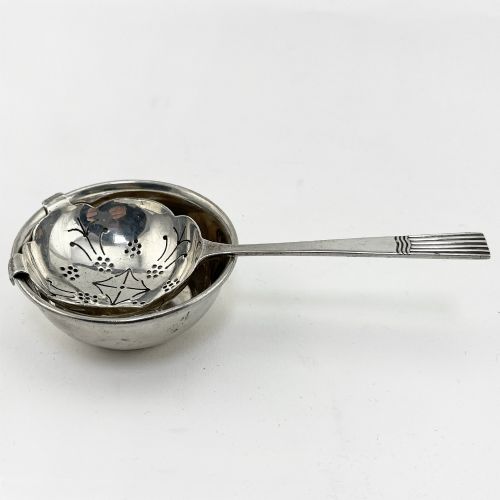
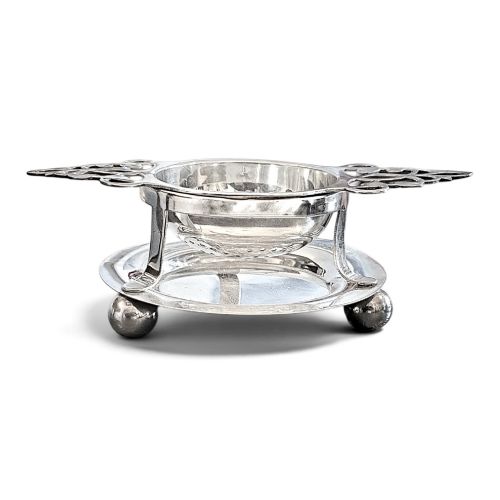
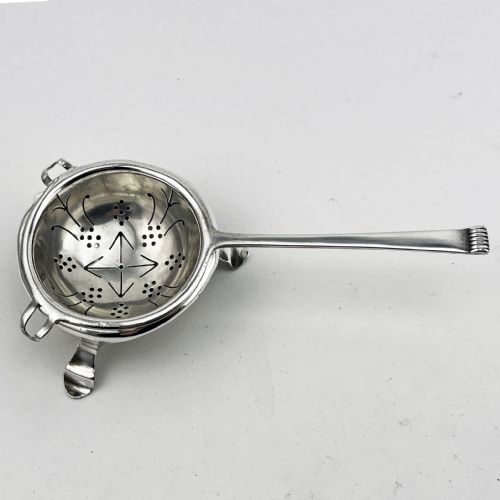
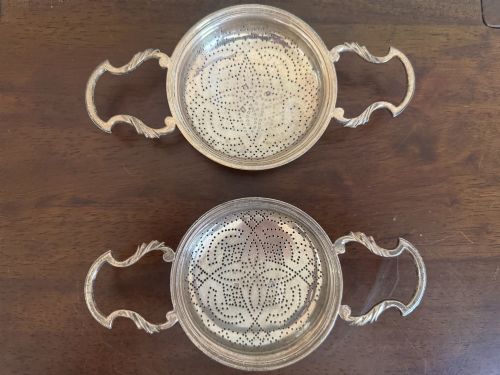
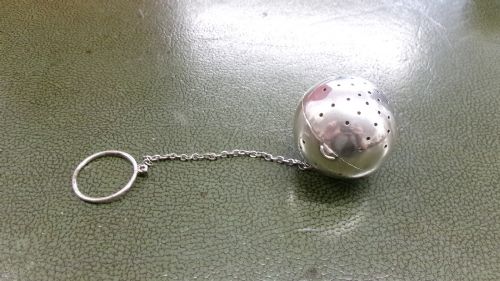
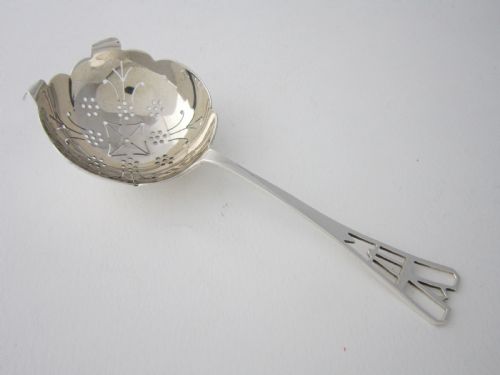
A sterling tea strainer handles loose leaves with precision, featuring perforated bowls designed to rest neatly across the rim of a teacup. The listings show forms ranging from traditional bowls with handles to infusers on chains and specialised spoons.
Most examples found here date from the Georgian, Victorian, and Edwardian eras, alongside mid-century twentieth-century pieces like Art Deco designs. Buyers frequently encounter standard tea strainers alongside matched pairs and mote spoons.
Origin details vary across British and continental workshops, encompassing specific makers from London and Denmark. Each object reflects the domestic tea customs of its respective period.
How they were made
Silversmiths constructed these utensils primarily from sterling silver, shaping the bowls through hammering and piercing intricate patterns for the drainage holes. Handles were often cast separately and soldered securely to the body.
Makers integrated functional elements such as matching stands, hanging chains, and integrated drip trays. Surface finishing involved polishing to a bright shine, complemented by clear hallmarks stamped into the metal.
Sterling Tea Strainer Retail Price Guide 2026
Typical asking prices for sterling tea strainer among the pieces listed under this phrase on Sellingantiques today, from the lower quarter to the upper quarter. They describe what is for sale here now, not the wider market.
The selection includes specialised tea accessories like mote spoons alongside traditional strainers and infusers on chains.
What varies in quality
Quality rests in the crispness of the pierced work and the thickness of the silver used in the bowl and handle. Superior examples maintain structural rigidity and balanced weight when resting on a cup rim.
The clarity of the hallmarks and the presence of matching stands or original components elevate certain pieces above standard utilitarian items.
Hammond, Turner and Sons·David Hennell·Jeremiah Lee
The Sterling Tea Strainer Glossary
- Sterling silver
- A silver alloy containing 92.5 percent pure silver by mass, with the remainder consisting of other metals like copper. This standard provides the durability required for functional tableware.
- Mote spoon
- A specialised eighteenth-century perforated spoon used to skim stray tea leaves from the surface of brewed tea. The tapered tail end was often used to clear blocked spouts.
- Hallmark
- An official stamp applied by an assay office indicating the purity of the metal, the maker, and the year of manufacture. These marks provide definitive historical context.
- Infuser
- A self-contained device holding loose leaves that steeps directly in the pot or cup. Many feature chains to secure them to the vessel rim.
Sterling Tea Strainer: Frequently Asked Questions
How do I use a tea strainer?
Place the strainer directly over the top of your teacup before pouring the brewed tea from the pot. The perforated bowl catches the loose leaves while allowing the liquid to pass through cleanly.
Many strainers come with a small matching stand to catch drips once you finish pouring. This keeps tabletops clean and provides a tidy resting place between cups.
What is the difference between a strainer and a mote spoon?
A standard tea strainer is a bowl-shaped utensil with handles that rests across the cup to catch leaves during the pour. A mote spoon is an earlier eighteenth-century utensil featuring a pierced bowl and a pointed tail.
The mote spoon was designed to remove floating leaves already in the cup and clear tea leaves stuck in the teapot spout. They represent distinct eras of tea preparation.
How do I date a silver tea strainer?
Dating relies heavily on the hallmarks stamped directly onto the metal surface by official assay offices. These marks indicate the specific year of production and the maker.
Stylistic cues such as Art Deco geometric lines or Georgian ornamentation also help narrow down the period. Comparing the form to documented examples confirms the era.
How should I clean sterling silver tea strainers?
Wash the strainer gently in warm soapy water after use and dry it thoroughly with a soft cloth. Avoid harsh abrasives that can scratch the polished silver surface.
Store the piece in a dry environment to prevent natural tarnishing over time. Regular gentle care preserves the detail of the pierced work.