


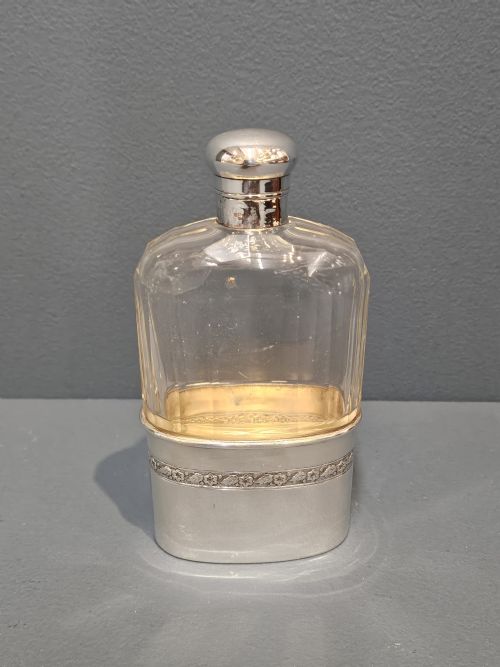

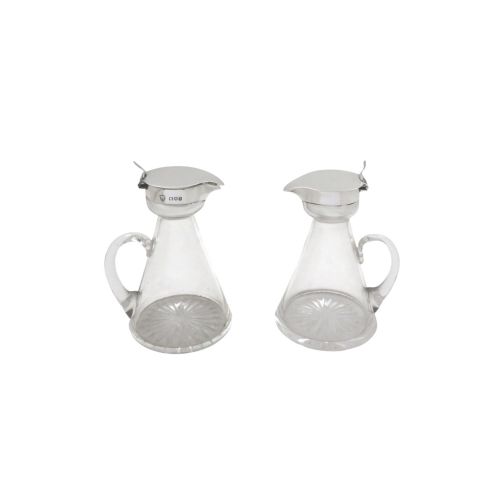


Sterling Silver Whiskey Decanter
A sterling silver whiskey decanter brings period craftsmanship and cut glass elegance straight to the home bar.
Sterling Silver Whiskey Decanter
When you search for a sterling silver whiskey decanter, you encounter a range of heavy barware spanning the Victorian, Edwardian, and mid-century periods. These drinking vessels combine cut crystal or clear glass bodies with hallmarked silver mounts, collars, and stoppers.
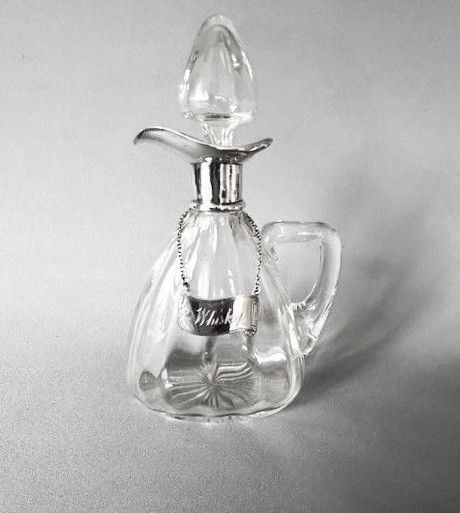
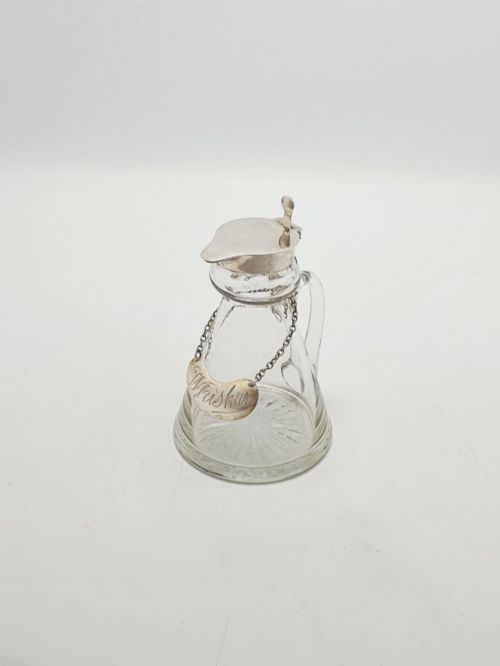
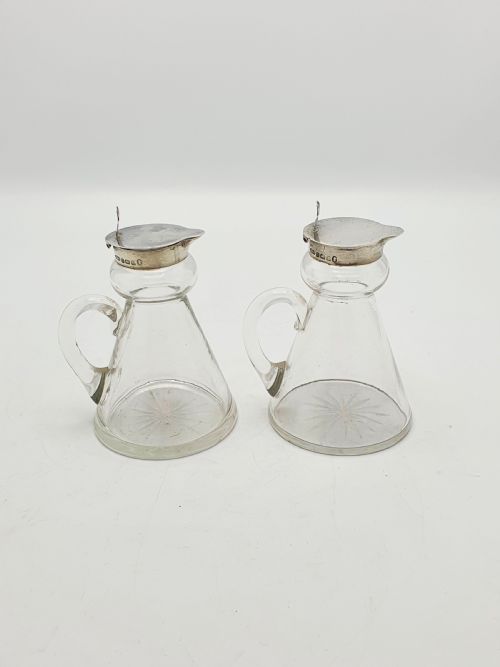
You are most likely to meet the whisky noggin on this page, a small single-serving jug designed for a dram of spirits. Larger spirit bottles, locking decanters, hip flasks, and matching decanter labels also appear across the listings.
The objects originate primarily from traditional British workshops and silversmiths operating during the late nineteenth and early twentieth centuries. Pieces range from simple George V table jugs to elaborate Art Deco crystal bottles.
Materials and Construction Techniques
The pieces are constructed using heavy-gauge sterling silver combined with hand-blown glass or cut crystal. Silversmiths formed mounts, collars, and hinged tops to fit snugly over poured glass rims, often incorporating locking mechanisms with integral keys.
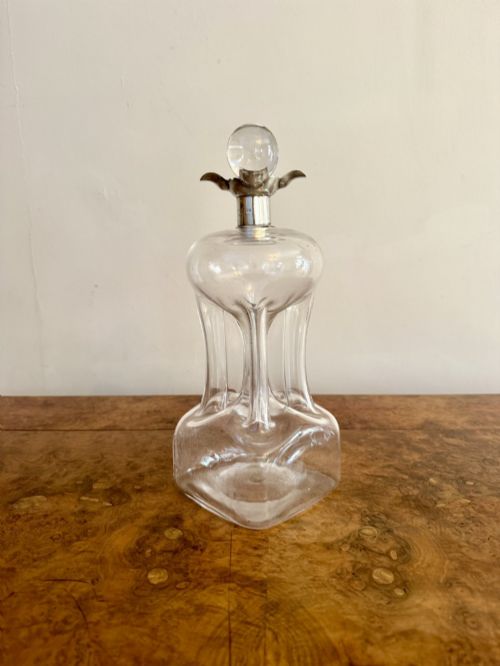
Glass bodies feature deep wheel-cut patterns, smooth panel cutting, or glug-glug designs that regulate the pour. Additional decorative elements include enamel work and mother of pearl detailing on associated labels and flasks.
Sterling Silver Whiskey Decanter Retail Price Guide 2026
Typical asking prices for sterling silver whiskey decanter among the pieces listed under this phrase on Sellingantiques today, from the lower quarter to the upper quarter. They describe what is for sale here now, not the wider market.
Materials appearing across the inventory include cut crystal, clear glass, enamel, and mother of pearl alongside solid silver.
Judging Quality and Execution
Quality rests in the crispness of the glass cutting and the weight of the sterling silver mounts. Finer examples display deep, clear hallmarks, substantial metal thickness, and perfectly fitted stoppers that maintain an airtight seal.
Design sophistication separates standard barware from exceptional pieces, particularly in locking decanters and specialised forms by notable makers. The clarity of the crystal and the integrity of the silver hinges dictate the overall standard.
Hukin and Heath·Betjemann Brothers
The Sterling Silver Whiskey Decanter Glossary
- Whisky noggin
- A small single-service decanter or jug used specifically for serving a measure of whisky. These vessels typically feature a loop handle and a lip spout.
- Hallmark
- An official stamp applied to precious metals indicating the standard of purity, the assay office, and the date letter. British silver carries these marks on the neck mounts and bottle collars.
- Locking decanter
- A spirit bottle secured within a metal frame and locked with a key to prevent unauthorized access. This design dates back to the Victorian era for household security.
- Decanter label
- A small silver tag hung by a chain around the neck of a decanter to identify the contents. These often read whisky, port, or sherry.
- Glug-glug decanter
- A flat-sided spirit bottle with a convoluted neck that produces a characteristic bubbling sound when liquid is poured. The shape maximises aeration.
Sterling Silver Whiskey Decanter: Frequently Asked Questions
What is a whisky noggin?
A whisky noggin is a small individual decanter designed to hold a single measure of spirits. It typically includes a handle and a pourer spout for convenience at the table.
These pieces were popular in British homes during the Edwardian and George V periods for private evening drinks.
How do I clean sterling silver mounts?
Clean the silver mounts using a soft cloth and specialised silver polish, taking care to avoid getting harsh chemicals onto the glass body. Gentle maintenance preserves the antique patina.
Wash the interior of the decanter with warm water and bottle brushes rather than submerging mounted pieces in hot water.
How do I date these decanters?
Dating relies primarily on the assay office hallmarks stamped directly into the sterling silver collars or mounts. These letter stamps and maker marks provide the exact year of manufacture.
Style characteristics such as Edwardian proportions or Art Deco geometric cutting also help place the piece within a specific decade.