



Sterling Silver Serving Set
A sterling silver serving set brings proper weight to the table, uniting spoons, forks, and blades from Georgian, Victorian, and Edwardian dining rooms.
Sterling Silver Serving Set
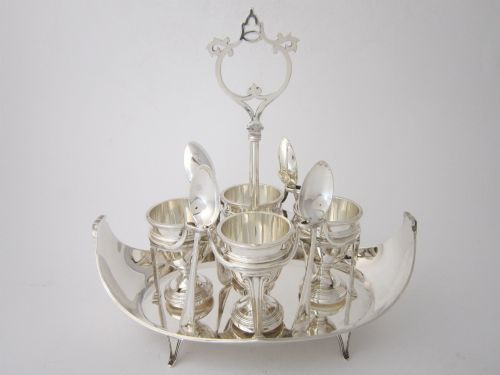
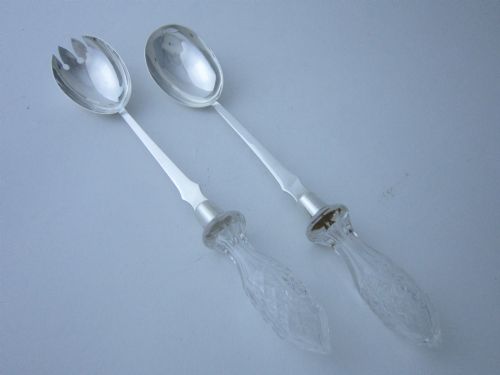
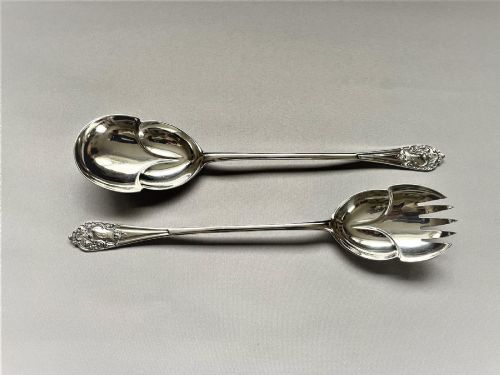
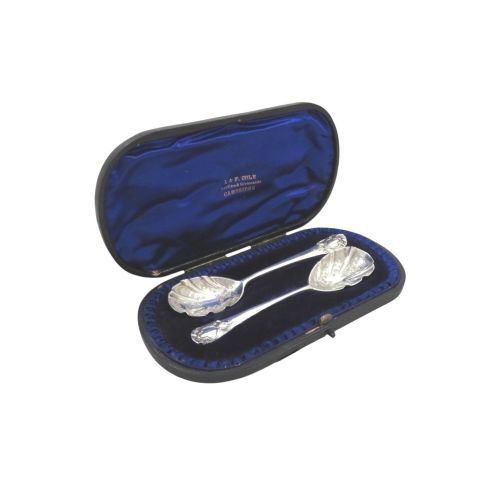
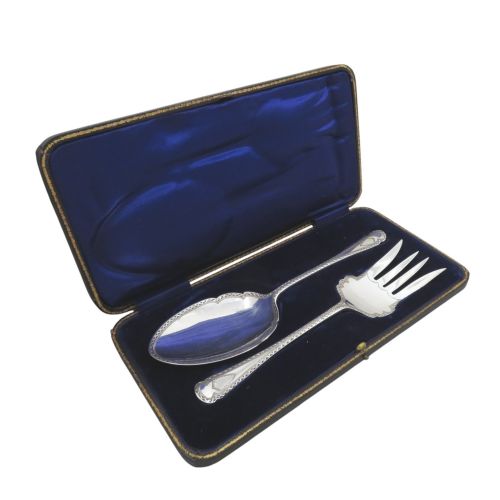
When you search for a sterling silver serving set, you encounter matched pairs and cased collections spanning the eighteenth century through the Edwardian era. The pieces range from large serving spoons and salad servers with glass or horn handles to dedicated fish servers, berry spoons, and fruit knives.
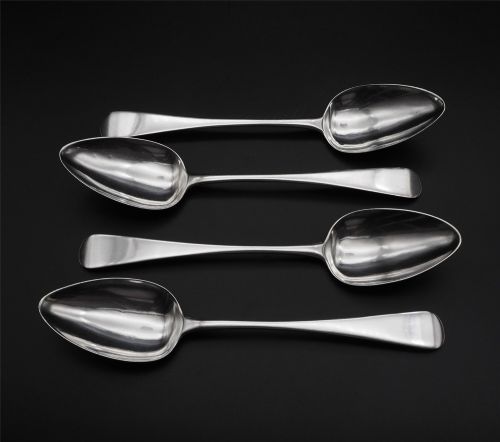
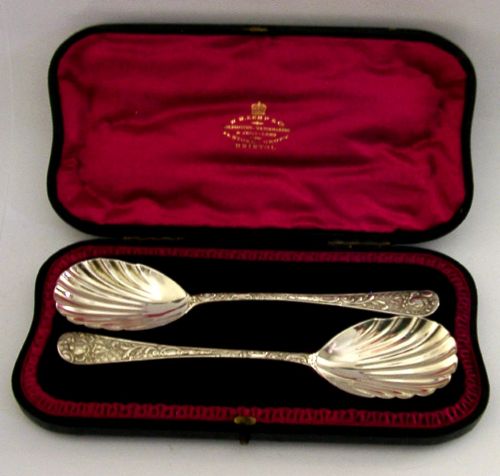
You are most likely to meet Victorian and Edwardian cased sets on this page, often lined with velvet or satin inside fitted leatherette boxes. Earlier Georgian and eighteenth-century examples tend to appear as pairs of tablespoons, basting spoons, or Dognose spoons without original packaging.
Materials and Technique
Makers shaped these sets from solid sterling silver, frequently employing silver gilt for berry spoons and fruit services to protect the metal from acidic juices. Handles often incorporate organic materials such as mother of pearl, antler, cow horn, or carved wood alongside cut glass bowls for salad servers.
Working methods combined traditional silversmithing with specialised techniques like piercing, chasing, and engraving. Bowls and tines were hammered for resilience, while fitted presentation cases utilised wood covered in leatherette and lined with silk, satin, or velvet.
Sterling Silver Serving Set Retail Price Guide 2026
Typical asking prices for sterling silver serving set among the pieces listed under this phrase on Sellingantiques today, from the lower quarter to the upper quarter. They describe what is for sale here now, not the wider market.
Listings feature serving sets spanning the eighteenth century, Georgian, Victorian, and Edwardian periods, utilising sterling silver, silver gilt, cut glass, and mother of pearl.
Distinctions in Quality
Quality rests in the substantial gauge of the silver, the crispness of chased decoration on handles and bowls, and the integrity of fitted presentation cases. Heavy metal weight provides balance in the hand and resists bending during use.
Maker execution separates standard production from superior work. Finely detailed piercing on fish servers, sharp engraving on berry spoons, and undamaged original linings in velvet or silk elevate certain sets above ordinary domestic cutlery.
John Locker·J Ladyman·Walter & John Barnard·The Cooper Brothers·Cartier
The Sterling Silver Serving Set Glossary
- Berry Spoon
- A large serving spoon, often dating from the Georgian or Victorian period, chased and repoussed with fruit and foliage long after initial manufacture. These spoons were designed for serving soft fruits.
- Silver Gilt
- Sterling silver coated with a thin layer of gold, also known as vermeil. This technique prevents discoloration when serving acidic foods like berries or fish.
- Dognose Spoon
- An early form of English spoon dating from the late seventeenth and early eighteenth centuries, featuring a notched upturned terminal. They represent a precursor to the modern standard tablespoon pattern.
- Rat Tail
- A prominent tapering spine running down the back of a spoon bowl where it joins the stem, reinforcing the joint. This feature appears frequently on early eighteenth-century cutlery.
- Queens Pattern
- A heavily ornamented Victorian cutlery pattern featuring shell and scroll motifs along the borders. It remains popular for formal dining services.
Sterling Silver Serving Set: Frequently Asked Questions
What pieces are included in a serving set?
A serving set typically comprises larger utensils designed for communal dining rather than individual places at the table. Common configurations include pairs of serving spoons, salad servers with forks, fish slices, and cake forks with matching prongs.
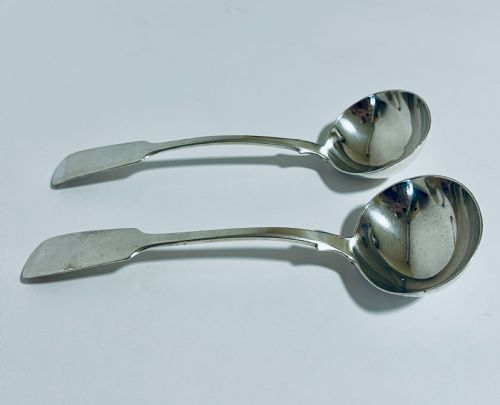
Many examples arrive in fitted presentation cases containing anywhere from two pieces to a full dozen. Specialised services also feature jam spoons, butter knives, and gravy ladles tailored to specific courses.
How do I date a silver serving set?
Dating relies heavily upon the hallmarks stamped into the silver, which record the assay office, the maker's mark, and a date letter specific to the year of manufacture. Stylistic clues such as handle shape, engraving style, and the presence of fitted velvet boxes also point to specific periods like the Georgian or Edwardian eras.
Earlier eighteenth-century pieces often display simpler lines and hallmarks near the top of the stem, whereas Victorian and Edwardian sets frequently show elaborate stamped patterns and factory-made cases.
How were these sets used originally?
These utensils served food from communal platters and bowls to individual plates during formal meals. Specialised shapes ensured that hosts could handle delicate items like fish, berries, salad, and pastry without damaging the food or the main tableware.
Cased sets were often given as wedding gifts or presentation pieces, remaining stored in velvet-lined boxes between major dinner parties. Daily use was reserved for wealthy households, while middle-class families brought them out for special occasions.
How should I store a silver serving set?
Store silver serving sets in dry conditions away from direct sunlight to prevent tarnish and damage to original fabric linings. Fitted wooden cases lined with velvet, silk, or satin provide ideal protection against scratches and dust.
Avoid wrapping silver in ordinary rubber bands or certain plastics, which can react with the metal. Regular use helps maintain a natural lustre, reducing the need for harsh chemical cleaning.