


Sterling Silver Fruit Serving Spoons
These sterling silver fruit serving spoons bring weight and bright reflection to a formal dessert table, making light work of heavy berries.
Sterling Silver Fruit Serving Spoons
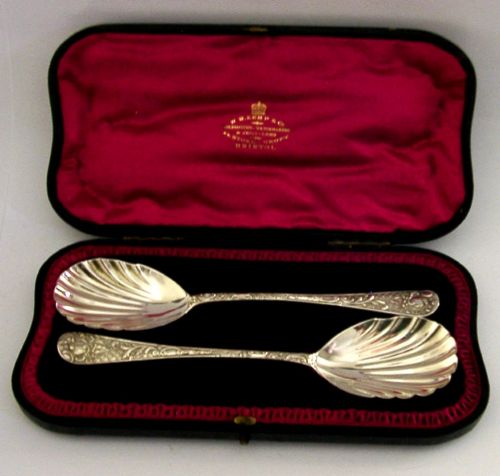
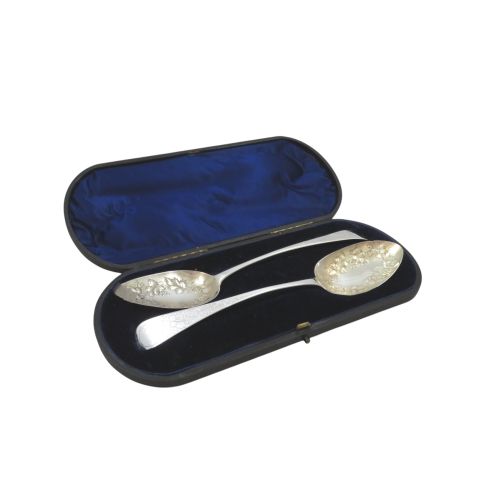
When you search for sterling silver fruit serving spoons, you encounter substantial serving utensils designed for the dessert course, often featuring deep bowls shaped like shells or heavily embossed with fruit known as berry spoons. The examples on this page span the Georgian, Victorian, and Edwardian eras, appearing frequently in pairs and occasionally nestled within velvet or silk lined presentation cases.
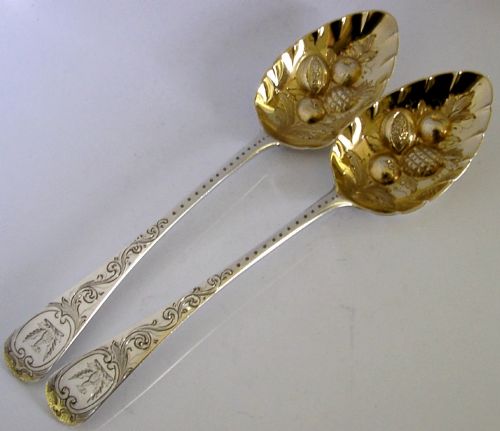
Many of these serving utensils began life as standard flatware before undergoing later Georgian or Victorian embellishment, where skilled hands chased fruit and foliage onto the original bowls. You will also find pieces shaped as naturalistic leaves or shell forms, reflecting the changing tastes of nineteenth and early twentieth century dining.
How they were made
Silversmiths shaped these pieces from solid sterling silver, hammering and rolling the metal to achieve the correct balance between bowl capacity and handle rigidity. Silver gilt versions received a thin layer of gold applied to the interior of the bowl, providing a warm contrast to the bright white silver of the stem.
Decoration relied on hand chasing and engraving, pushing the metal from behind to raise fruit, leaves, and intricate scrollwork into high relief across the bowl and handle. Fitted presentation boxes lined with satin, leatherette, or velvet protected these delicate surfaces when not in use.
Listings span from the mid-eighteenth century through the Edwardian period, utilising materials such as sterling silver, silver gilt, velvet, and silk.
What varies in quality
Quality rests upon the crispness of the chased decoration and the original weight of the metal used to form the spoon. Finer pieces retain deep, sharp detailing in the embossed fruit and foliage, whereas heavily polished examples lose definition over the high points of the design.
The integrity of the original hallmarks stamped into the silver also determines distinction, showing clear maker marks and date letters. Presentation cases lined in silk or velvet that retain their original hinges and clasps add notable substance to the set.
peter & Anne Bateman·William Chawner II·Sebastian Crespell·Whiting Co.
The Sterling Silver Fruit Serving Spoons Glossary
- Berry spoon
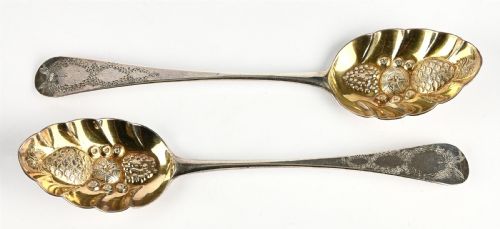
- A large serving spoon with a deep bowl, typically embossed and engraved with fruit during the Victorian period or later. These pieces were specifically intended for serving soft fruits at the end of a meal.
- Silver gilt
- Sterling silver that has been coated with a thin layer of gold. This treatment was often applied to the bowls of dessert spoons to prevent acidic fruits from tarnishing the base metal.
- Hallmark
- A series of official stamps applied to precious metal items indicating the maker, the standard of silver, the assay office, and the year of manufacture. These marks provide the primary evidence for dating an antique piece.
- Chasing
- A metalworking technique where the smith pushes the surface of the silver from the front using hammer and punches to create raised decorative patterns. This method shapes the fruit and leaf motifs seen on many serving spoons.
- Sifter
- A specialised serving utensil featuring pierced or slotted holes in the bowl. It allowed liquid to drain away when serving juicy fruits from a compote.
Sterling Silver Fruit Serving Spoons: Frequently Asked Questions
What is the difference between berry spoons and standard serving spoons?
Berry spoons feature heavily embossed fruit and foliage chased into the bowl, a decorative treatment frequently added during the Victorian era to earlier Georgian blanks.
Standard serving spoons maintain smooth, unembossed bowls intended for general service rather than specifically for fruit.
How should I care for antique silver serving spoons?
Wash them gently by hand in warm soapy water and dry them immediately with a soft cloth to preserve the surface finish.
Avoid abrasive metal polishes that wear down the hand-chased details and engravings over time.
Were these spoons originally sold in presentation cases?
Many fine sets were housed in fitted boxes lined with velvet, silk, or satin, often added by retailers to enhance the presentation for gift giving.
Cases frequently feature leatherette exteriors and secure clasps designed to protect the spoons from knocks.
Why do some spoon bowls have a gold wash?
The gold wash, or silver gilt, protected the underlying sterling silver from the corrosive acids found in fresh fruits.
This treatment also added a decorative contrast between the gilded bowl and the bright silver handle.