



Sterling Silver Desk Tidy
These sterling silver desk tidy pieces organise correspondence and writing implements with period grace, bringing tactile polish to any working surface.
Sterling Silver Desk Tidy
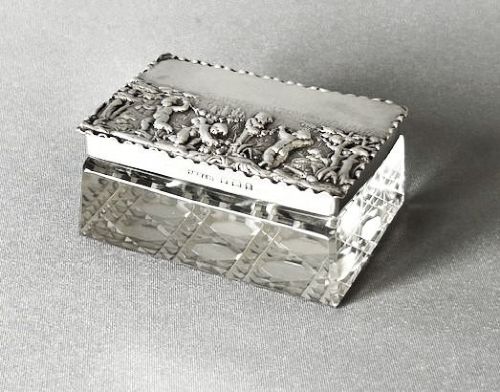
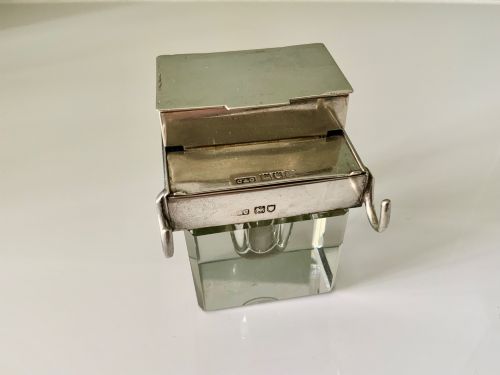
A sterling silver desk tidy gathers the small instruments of writing into one dedicated vessel, spanning inkwells, stamp boxes, stationery boxes, and pen trays. These desk accessories serve to keep the writing surface ordered while displaying the metalwork of their respective eras.
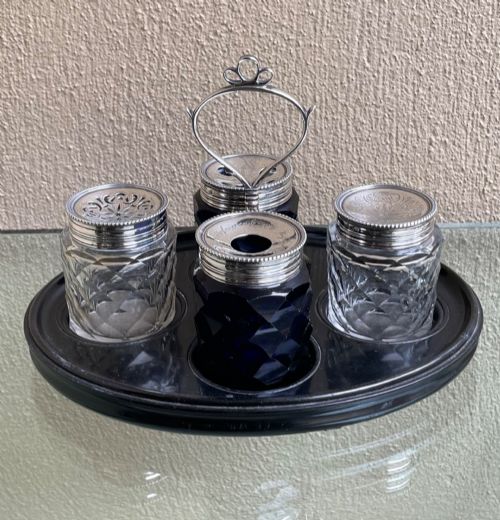
The versions most commonly met across these listings are Victorian and Edwardian examples, alongside Georgian inkstands and later Art Deco pieces. Makers from these periods combined sterling silver with cut glass, hobnail glass, ebony, leather, and enamel to create functional desk furniture.
Forms range from simple stamp boxes and paper clips to elaborate double inkstands fitted with chambersticks or cut glass bottles. Each object reflects the administrative rituals of writing desks from the late eighteenth century through to the early twentieth century.
How they were made
Silversmiths shaped sterling silver through hand-raising, stamping, and casting, applying hallmarks to certify the metal standard. Mounts, hinges, and lids were engineered to fit snugly against glass bodies, wood bases, or leather interiors.
Combinations of sterling silver with cut glass, hobnail glass, and ebony required varied workshop disciplines, uniting metalworking with glass-cutting and cabinet-making. Guilloche enamel panels were occasionally applied to metal surfaces, adding coloured decoration beneath translucent layers.
Sterling Silver Desk Tidy Retail Price Guide 2026
Typical asking prices for sterling silver desk tidy among the pieces listed under this phrase on Sellingantiques today, from the lower quarter to the upper quarter. They describe what is for sale here now, not the wider market.
Listings feature Victorian, Edwardian, and Georgian periods alongside George V and Art Deco styles.
What varies in quality
Quality rests in the crispness of the chasing, the gauge of the sterling silver, and the structural integrity of hinged lids and glass inserts. Thicker silver sheets resist denting and maintain sharp detail across engraved or cast ornament over decades of handling.
The integration of mixed materials dictates distinction, seen in the clarity of cut glass bottles and the precise fitting of silver mounts to ebony or leather bases. Maker marks and clear hallmarks further distinguish pieces produced in established London workshops from unmarked vernacular work.
Robert Garrard
The Sterling Silver Desk Tidy Glossary
- Sterling silver
- A silver alloy containing 92.5 percent pure silver by mass and 7.5 percent other metals, usually copper. This standard composition provides the necessary durability for functional desk accessories.
- Hallmark
- An official stamp applied to precious metals indicating the standard of purity, the assay office, and the date letter. These marks allow collectors to trace the origin and year of manufacture.
- Guilloche enamel
- A decorative technique where a precise geometric pattern is mechanically engraved beneath a transparent layer of enamel. It adds depth and colour to surfaces on boxes and letter racks.
- Hobnail glass
- A heavy moulded glass pattern featuring regular raised pyramidal knobs across the outer surface. It provides texture and weight to inkwells and desk bodies.
- Chamberstick
- A small portable candleholder fitted with a handle and a shallow drip pan. Some double inkstands incorporate these directly into the desk tidy design.
Sterling Silver Desk Tidy: Frequently Asked Questions
What is a sterling silver desk tidy?
A sterling silver desk tidy is a functional container or stand designed to hold writing paraphernalia such as ink, pens, stamps, and paper. These items kept Victorian and Edwardian writing tables orderly.
Materials typically include sterling silver paired with cut glass, ebony, or enamel, reflecting the functional requirements of nineteenth and early twentieth century correspondence.
How were inkstands used?
Inkstands held inkwells alongside pen trays and sometimes stamp boxes or tapersticks, serving as the central writing station on a desk. Writers dipped their pens into the central ink reservoir before writing letters.
Many examples feature hinged lids to prevent the ink from drying out quickly when not in use throughout the day.
How do I date a desk tidy?
Dating relies primarily on the legible hallmarks stamped into the sterling silver components, which record the assay office and specific year of production. Stylistic markers such as Art Deco geometric lines or Victorian chased flora also indicate the period.
Accompanying materials like hobnail glass or guilloche enamel further narrow down the likely manufacturing decade.
Are glass inserts original?
Many desk tidies retain their original cut glass or hobnail glass ink bottles, which were specifically shaped to fit the silver collars and mounts. Original glass typically matches the wear and patination found on the surrounding silver framework.
Replacements can occur over time due to the fragility of glass during daily use on busy desks.