

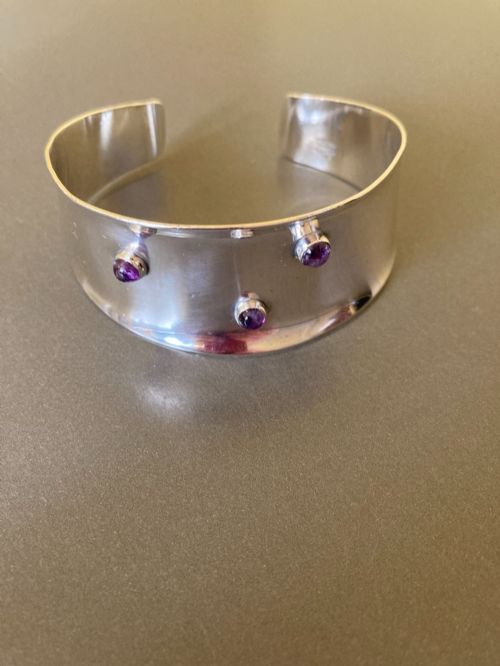


Sterling Silver Amethyst
Sterling silver amethyst pieces bring together rich purple stones and bright metalwork across styles from the Edwardian era to the mid-century.
Sterling Silver Amethyst
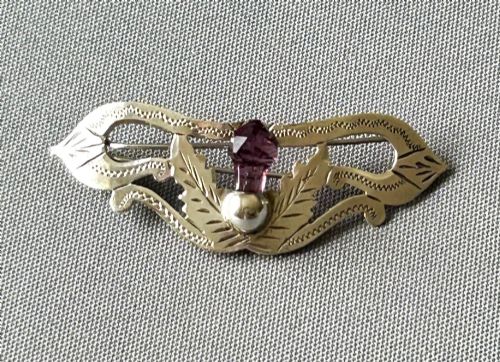
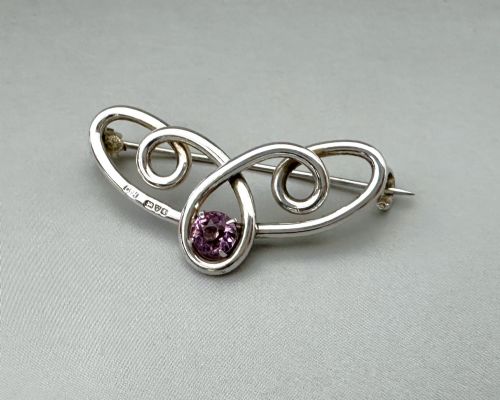
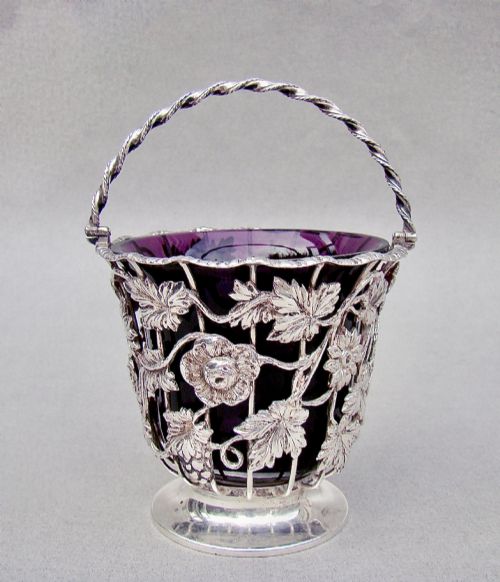
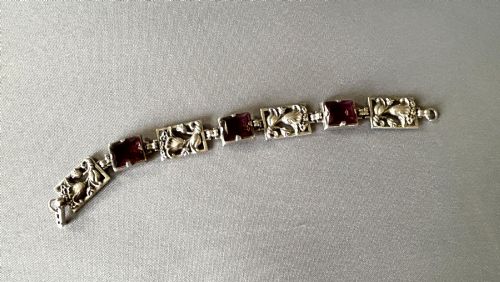
Sterling silver amethyst items encompass a diverse range of jewellery and decorative objects, including necklaces, rings, bangles, pendants, vases, pill boxes, and vanity jars. These pieces emerge from multiple distinct eras, spanning the nineteenth century through the Edwardian period, the nineteen-twenties, nineteen-thirty, and nineteen-sixty.
Buyers browsing sterling silver amethyst will frequently encounter mid-century modernist Scandinavian designs alongside earlier Arts and Crafts, Art Deco, Celtic Revival, and Edwardian creations. Forms range from Danish silver bangles and rings to Irish sterling silver vases and English silver-mounted overlay glass rouge pots.
The aesthetic vocabulary shifts considerably between these movements, moving from intricate early twentieth-century wirework and floral motifs to bold cabochon settings and clean modernist lines. Each period brings distinct mounting techniques and stone cuts that define the character of the object.
How they were made
Construction relies heavily on sterling silver and silver mounts, which are shaped to house amethysts, amethyst glass, and paste stones. Makers frequently incorporated supplementary materials such as pearls and marcasite to accent the central purple gems.
Techniques vary from hand-wrought arts and crafts settings to modernist Danish smithing and silver overlay applied to glass vessels. Metal is hammered, cast, or drawn into bezels and prongs that secure the stones firmly within the design.
Sterling Silver Amethyst Retail Price Guide 2026
Typical asking prices for sterling silver amethyst among the pieces listed under this phrase on Sellingantiques today, from the lower quarter to the upper quarter. They describe what is for sale here now, not the wider market.
Listings feature sterling silver and silver combined with amethyst, glass paste, and pearls across five distinct historical periods.
What varies in quality
Quality differences emerge in the weight and gauge of the silver used in the mountings, as well as the depth of colour and clarity within the amethyst stones. Heavier, substantial silver work provides greater structural integrity to rings, bangles, and vases.
The distinction between standard commercial production and distinguished workshop output lies in the finesse of the stone setting and the distinctiveness of the stylistic execution, whether in a Danish modernist ring or an Edwardian pendant.
N E From·Vivianna Torun Bulow Hube·Georg Jensen
The Sterling Silver Amethyst Glossary
- Cabochon
- A gemstone shaped and polished with a smooth, rounded domed top rather than faceted edges. This cut is frequently utilised for amethysts in mid-century modernist Danish silver rings and bangles.
- Marcasite
- Small, faceted pieces of iron pyrite polished and set closely together in silver to create a sparkling, gem-like border. It often appears alongside amethysts in mid-century cross pendants.
- Sknvirke
- A Scandinavian design style that parallels the Arts and Crafts movement, focusing on organic forms and natural motifs. It appears in early twentieth-century silver and amethyst pieces.
Sterling Silver Amethyst: Frequently Asked Questions
What periods do these pieces cover?
The selection includes items from the nineteenth century, the Edwardian era, and the nineteen-twenties, nineteen-thirties, and nineteen-sixties.
Design styles shift across these decades from traditional Arts and Crafts to Art Deco and mid-century modernism.
How do I care for silver and amethyst?
Store sterling silver items in dry conditions to minimise tarnishing, and clean them gently with a soft cloth designed for precious metals. Avoid exposing amethysts to harsh chemicals or prolonged direct sunlight, which can alter the stone colour.
Regular, gentle maintenance preserves both the polished finish of the silver mount and the lustre of the purple gemstone.
What forms do these items take?
The available forms span personal adornment and decorative domestic objects. Necklaces, rings, bangles, pendants, and cocktail rings represent the jewellery categories.
Vanity jars, pill boxes, and vases comprise the decorative objects made from silver and glass.