

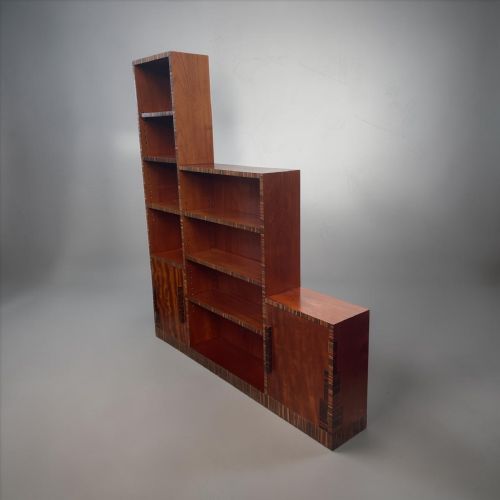
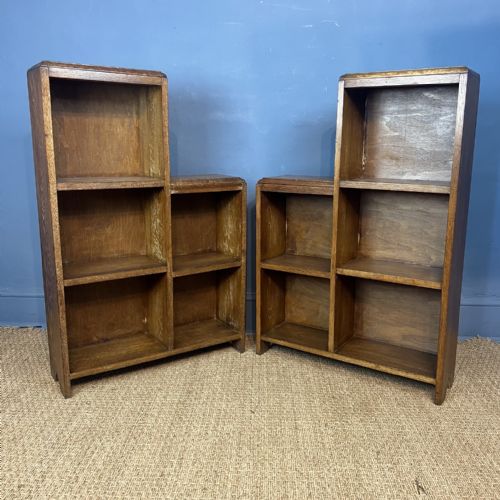


Stepped Bookcase Unit
These stepped bookcase unit pieces combine striking architectural form with practical shelving, offering a distinctive display for books and objects.
Stepped Bookcase Unit
A stepped bookcase unit is a functional piece of furniture defined by its graduating shelf heights or receding tiers, creating a geometric silhouette. These items span from the Victorian and Edwardian eras through to the 1930s, encompassing distinct design movements such as Art Deco.
The most common examples encountered on this page date from the 1930s, featuring the characteristic tiered arrangement associated with Art Deco design. Alongside these, buyers find earlier Edwardian and Victorian iterations, including waterfall bookcases and open shelving formats.
Origin and material variations range from British oak and walnut veneer pieces to early 20th century Chinese display cabinets. This variety ensures that each stepped bookcase unit serves both as a practical repository for volumes and a strong decorative focal point within a room.
Materials and Construction
Construction relies upon traditional cabinet-making timbers, predominantly oak and walnut, alongside walnut veneer surfaces that showcase rich grain patterns. Hardwood and pine also appear in the structural framework of these tiered units.
Surface treatments vary from polished wood finishes to painted execution, complemented occasionally by brass hardware details. These construction methods deliver the structural stability required to support graduated tiers of books and decorative objects.
Stepped Bookcase Unit Retail Price Guide 2026
Typical asking prices for stepped bookcase unit among the pieces listed under this phrase on Sellingantiques today, from the lower quarter to the upper quarter. They describe what is for sale here now, not the wider market.
A painted finish on a 19th-century waterfall bookcase proves that Victorians enjoyed a splash of colour just as much as modern decorators.
Assessing Quality and Distinction
Quality in a stepped bookcase unit rests upon the integrity of the timber selection and the precision of the stepped tiers. Finer examples display carefully matched walnut veneer and clean architectural lines that define the Art Deco style.
The distinction between standard commercial pieces and superior examples often lies in the authorship of the design, such as works associated with specific makers or notable firms. Proportion, balance, and the execution of the stepped silhouette ultimately dictate the standing of each piece.
Heals·Betty Joel
The Stepped Bookcase Unit Glossary
- Stepped bookcase unit
- A bookcase featuring graduating shelf heights or receding tiers that form a stepped silhouette. This design provides dynamic visual interest alongside functional display space.
- Waterfall bookcase
- A piece of furniture with shelves that recede in depth from bottom to top, often following a curved or stepped profile. This form is frequently seen in Edwardian and nineteenth-century examples.
- Walnut veneer
- A thin layer of walnut timber applied to a secondary wood base to provide a decorative surface. It permits intricate grain patterns across the flat planes of Art Deco furniture.
- Art Deco
- A design style prevalent in the 1930s characterised by sleek geometric shapes, stepped forms, and modern industrial materials. It represents a sharp departure from heavy Victorian ornamentation.
Stepped Bookcase Unit: Frequently Asked Questions
What is a stepped bookcase unit?
A stepped bookcase unit is a shelving piece characterised by tiers that recede in height or depth, creating a distinctive stepped profile.
Such designs became particularly popular during the Art Deco period, offering both storage and a striking architectural display.
How do I style a stepped bookcase unit?
These units suit placement against flat walls or as room dividers, where their geometric stepped profile remains fully visible.
Arrange books horizontally and vertically alongside decorative objects to complement the graduating lines of the shelves.
What periods do these bookcases come from?
The selection spans several decades, including Victorian, Edwardian, and 1930s Art Deco examples.
Each period imparts distinct characteristics, from traditional walnut finishes to streamlined modernist stepped silhouettes.
Are walnut veneer surfaces durable?
Walnut veneer provides a stable and highly decorative surface when applied to solid hardwood carcasses by skilled cabinet makers.
Proper care involves maintaining stable humidity levels and avoiding excessive moisture on the polished wood.