


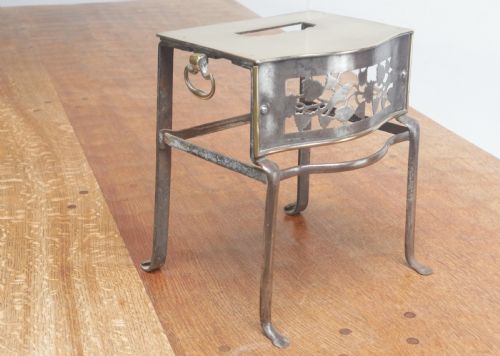


Steel Fireplace Accessories
Steel fireplace accessories combine utility and form, bringing period craftsmanship and robust metalwork to the hearth.
Steel Fireplace Accessories
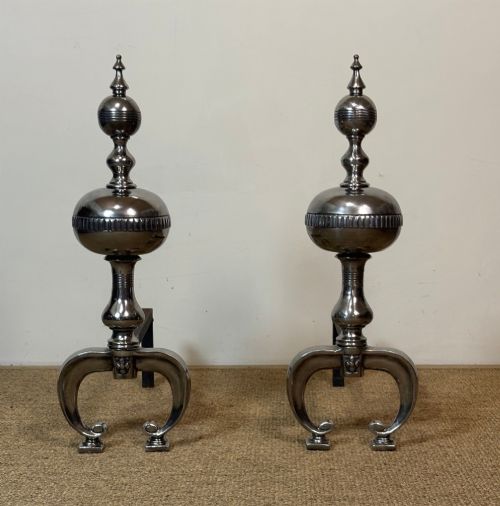
Steel fireplace accessories encompass the functional ironmongery used around the hearth, including fire dogs, fire irons, fenders, and footmen. These pieces served to manage coal or wood fires and protect the room while adding a polished metallic finish to the chimney breast.
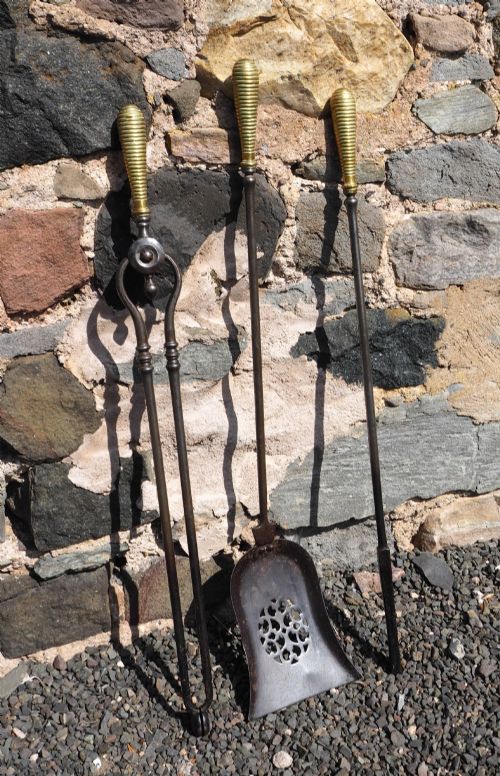
The selections available range from sturdy 18th-century Georgian designs to ornate Victorian revivals and Arts and Crafts examples. Buyers most frequently encounter sets of fire irons, fenders, and companion tools forged or polished for domestic service.
Originating largely from English and Welsh workshops, these items utilise durable metals designed to withstand daily heat and use. Their forms vary from simple hearth curbs to intricate brass-mounted companion sets intended to be seen.
How they were made
Makers shaped these items using traditional blacksmithing and metalworking techniques, working iron and steel into functional bars, pokers, and fire dogs. Polished steel surfaces required careful burnishing to achieve a bright, reflective finish that caught the firelight.
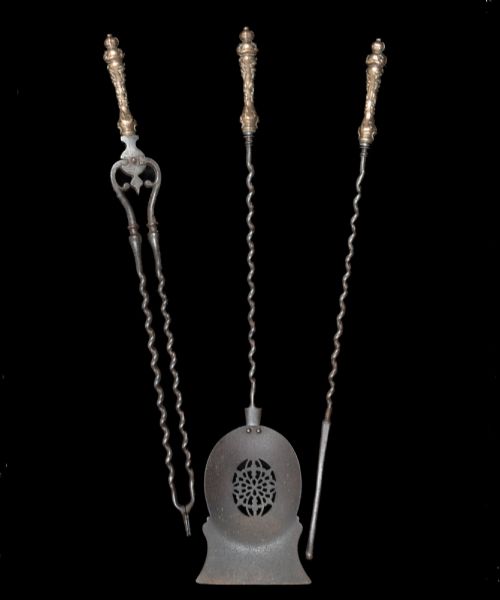
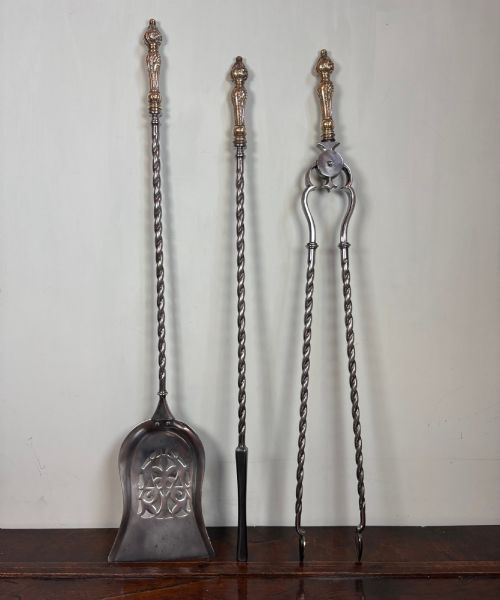
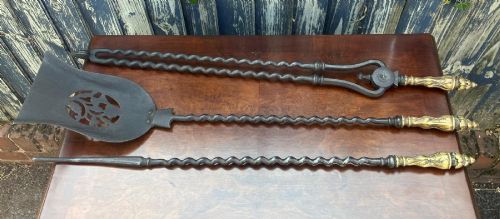
Brass and gilt brass accents were frequently combined with the base steel or iron structure, providing visual contrast through finials, handles, and pierced plates. Wrought iron and gunmetal also appear in certain pieces, showcasing varied metallurgical applications across different periods.
A revolving fireplace toaster with copper inlaid hearts warms bread while adding a touch of romance to the morning hearth.
What varies in quality
The distinction between standard utility items and finer examples rests on the crispness of the forging and the refinement of the brass mounts. Superior pieces display balanced proportions, clean turning on handles, and integrated detailing such as copper inlay.
The degree of original polish and the preservation of the metal surface dictate the visual impact of each piece. Heavier gauge steel and solid construction indicate domestic items built for long-term service rather than lighter commercial production.
The Steel Fireplace Accessories Glossary
- Fire dogs
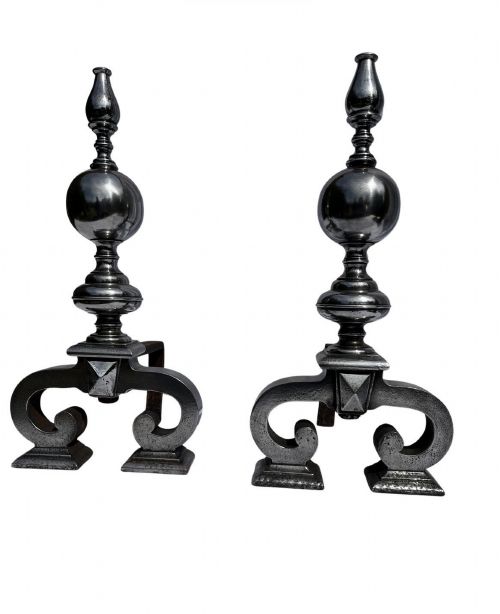
- Andirons used to support logs in an open fireplace, elevating the wood to allow better airflow. They often feature decorative vertical fronts made of polished steel or iron.
- Fender
- A low metal guard placed on the hearth to contain stray embers and ash from spilling onto the floor. They appear in styles ranging from simple steel curbs to elaborate brass-mounted frames.
- Footman
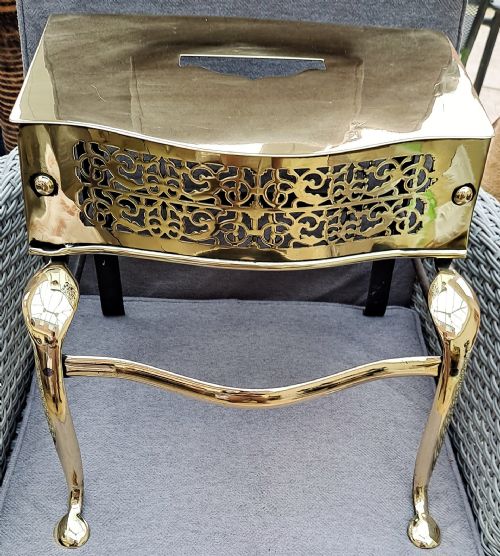
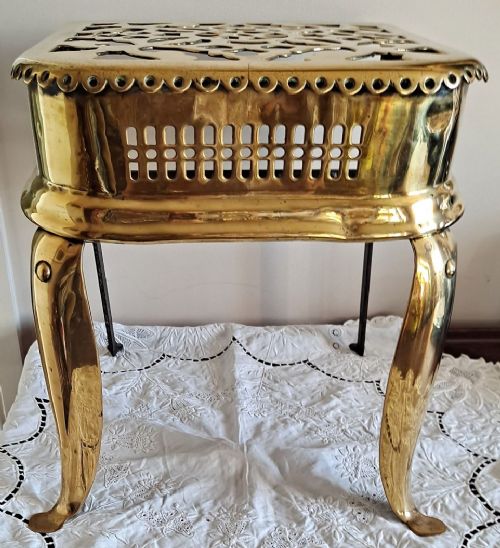
- A metal stand or trivet placed by the fire to keep food or water warm. These items typically feature a flat top and sturdy legs, sometimes incorporating brass handles and pierced decoration.
- Companion set
- A coordinated collection of fireside tools usually comprising a poker, tongs, and shovel. They are often displayed together on a stand or hung from a matching frame.
Steel Fireplace Accessories: Frequently Asked Questions
What is a footman used for?
A footman is a traditional hearth accessory designed to hold kettles or dishes near the fire for warming. Its elevated position allows heat to circulate underneath without placing items directly into the coals.
In period homes, these stands formed part of the daily culinary routine by the fireplace. Today, they serve primarily as decorative items reflecting domestic history.
How do I tell Georgian from Victorian fire irons?
Georgian fire irons typically exhibit restrained classical proportions with simpler turned handles and balanced steel shafts. They rely on clean lines and functional integrity rather than heavy ornamentation.
Victorian pieces often incorporate more eclectic revival styles, such as Gothic or Arts and Crafts influences. They frequently mix materials, pairing steel with brass fittings, gunmetal, or elaborate cast details.
Can these accessories be used with a working fire?
Many solid steel and iron accessories remain structurally capable of supporting logs and managing daily fires. Wrought iron and heavy steel were originally engineered precisely for this demanding thermal environment.
However, delicate items with fine polish or mixed metals are often reserved for decorative hearth display. Assessing the metal gauge and overall condition helps determine suitability for active use.