


Steel Fire Surround
A steel fire surround provides a striking focal point, combining robust metalwork with period character to anchor a room.
Steel Fire Surround
A steel fire surround or fender creates a defined boundary around the hearth while introducing industrial strength and refined detail to a room. Buyers seeking a steel fire surround often encounter fireplace fenders and hearth guards dating from the Georgian, Victorian, and Edwardian eras.
The selection ranges from simple low curbs to substantial club fenders upholstered in leather or oak. Many examples combine steel with brass, copper, or bronze, reflecting the decorative priorities of their respective periods.
Materials and construction
Blacksmiths and metalworkers shaped these pieces using steel, cast steel, and iron, often incorporating brass finials, galleries, or mounts. Polished steel surfaces required meticulous finishing to achieve a bright, reflective sheen that contrasted with darker ironwork.
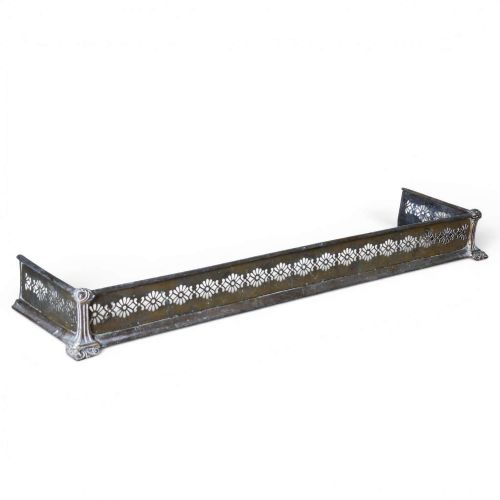
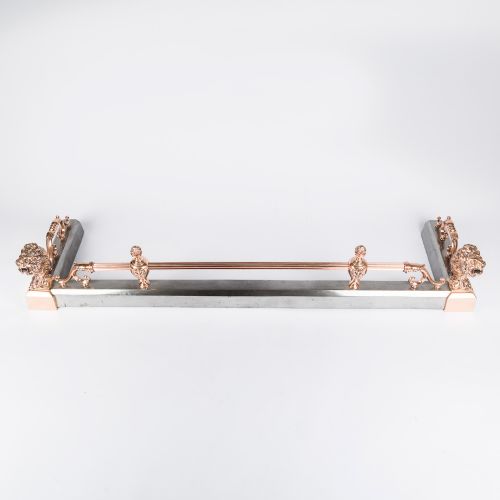
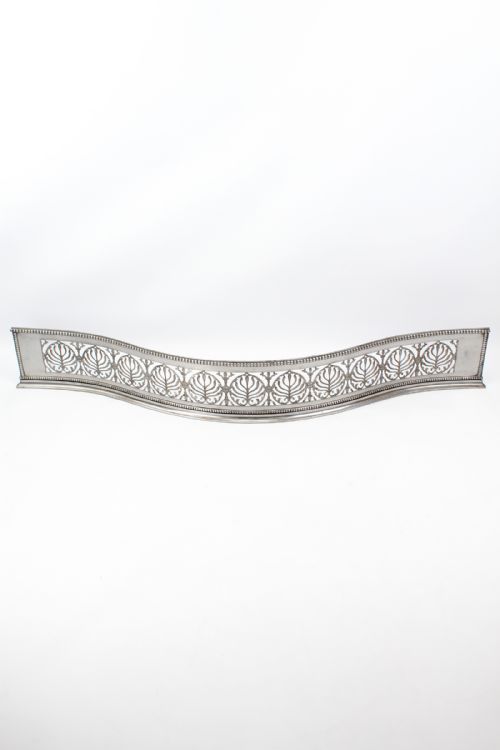
Makers integrated secondary materials such as leather upholstery, oak, and copper to add comfort and tonal variety to club fenders. Pierced metalwork, engraved serpentine profiles, and applied details like lions or floral motifs demonstrate advanced foundry and metal-shaping techniques.
Materials recorded include polished steel, cast steel, iron, brass, copper, bronze, oak, and leather.
Factors of quality and distinction
Quality rests in the crispness of the metal engraving, the weight of the cast steel, and the integrity of the structural joints. Superior examples display balanced proportions, such as clean serpentine lines or finely pierced friezes that maintain their rigidity.
The integration of secondary elements, from heavy brass galleries to neatly stitched leather seating on club fenders, separates utilitarian pieces from those made for principal rooms. Original surface patination and the absence of clumsy repairs further distinguish the best specimens.
The Steel Fire Surround Glossary
- Club fender
- A low hearth guard featuring upholstered corner seats, traditionally used in an estate smoking room or library.
- Serpentine
- A curved front profile undulating in a gentle S-shape, frequently seen on Georgian steel fenders.
- Pierced work
- Metal perforated in decorative patterns, allowing light and shadow to play across the fender frieze.
- Hearth fender
- A protective metal barrier placed directly on the floor around the hearth opening to contain stray embers.
Steel Fire Surround: Frequently Asked Questions
How do I clean a steel fire surround?
Maintenance involves removing dust with a soft, dry cloth and applying a microcrystalline wax to protect polished surfaces from moisture. Avoid abrasive cleaners that strip the historic patination.
For pieces with brass or copper elements, use dedicated metal polishes sparingly to prevent transfer onto the steel.
What is a club fender?
A club fender is a hearth guard fitted with padded seats, allowing people to sit close to the fire for warmth. They became popular in country houses during the late nineteenth and early twentieth centuries.
The upholstered top is typically finished in leather and supported by a robust steel or brass frame.
How do I date a steel fender?
Dating relies on stylistic clues, construction methods, and materials that align with periods like the Georgian, Victorian, or Edwardian eras. Neoclassical motifs and serpentine shapes often point to the eighteenth century.
Later Victorian and Edwardian iterations frequently incorporate pierced sheet steel, mixed metals, or upholstered seating sections.
Can these fenders be used with modern fires?
These pieces suit both working open hearths and decorative fireplace settings, provided the dimensions match the hearth space. Measure the width and depth carefully to ensure adequate clearance around the fire opening.
Protection from direct excessive heat preserves the original steel and any attached leather or fabric.