

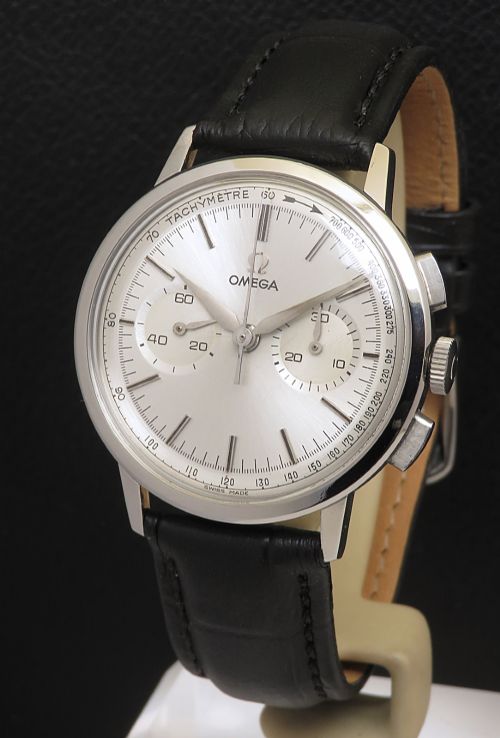
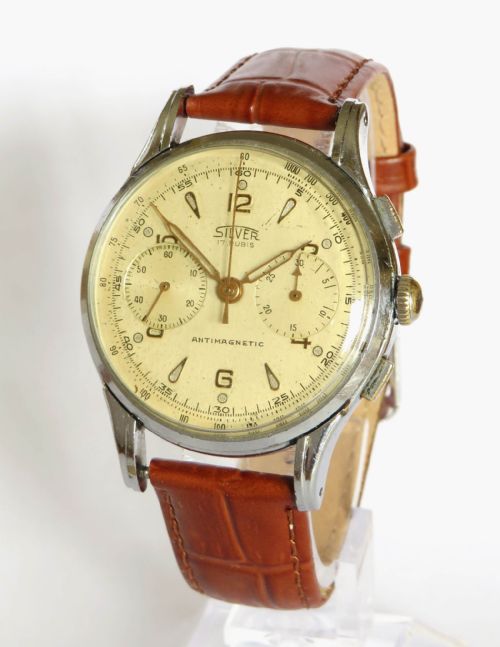
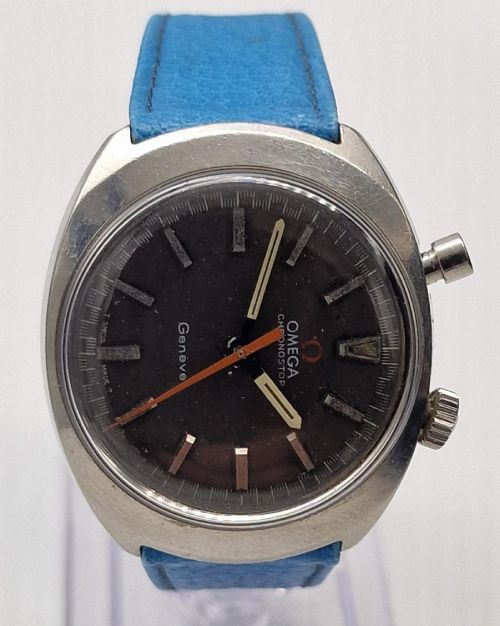
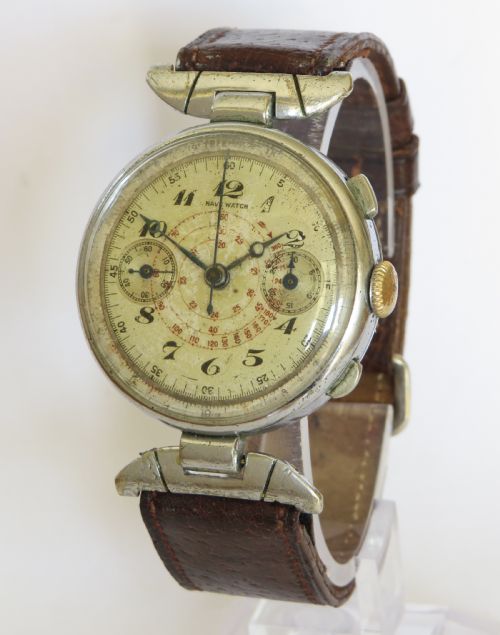
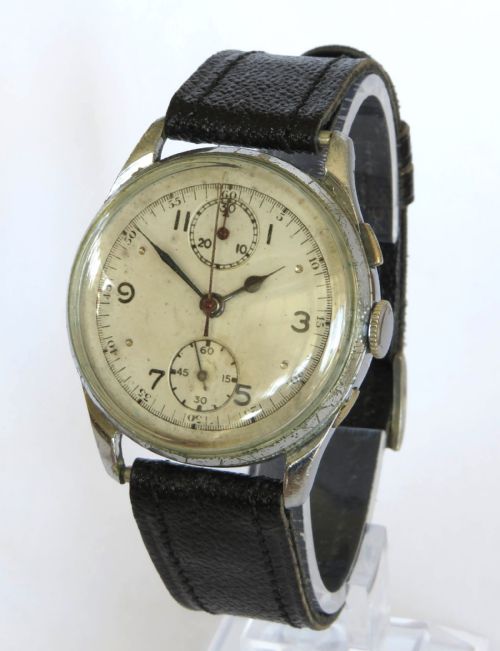


Steel Chronograph
A steel chronograph brings mechanical precision to the wrist, offering complex timekeeping housed in durable metal cases from the mid-twentieth century.
Steel Chronograph
A steel chronograph is a specialised timepiece designed to measure elapsed intervals alongside standard hours and minutes, utilising stopwatch mechanisms driven by manual wind movements. When searching for a steel chronograph, buyers encounter wristwatches and pocket watches spanning several decades of horological development.
The selections on this page concentrate heavily on mid-century production, running from the 1930s through to the late 1960s. Wristwatches dominate the offerings, though specialised military pocket watches also appear.
Makers represented range from historic Swiss watchmakers to aviation and military suppliers. The forms vary from minimalist dress pieces to utilitarian pilot instruments and complex triple-date calendars.
Construction and materials
Cases are formed predominantly from stainless steel, chrome, and nickel, paired with protective crystal or acrylic glass over the dial. Leather straps provide the standard mounting for wristwatches, securing the heavy metal housings.
Internal movements rely on complex mechanical engineering, utilising movements supplied by specialised caliber houses such as Landeron and Venus alongside proprietary manufacturer movements. Dials incorporate painted or applied markers, sub-dials, and specialised scales for aviation or maritime utility.
Steel Chronograph Retail Price Guide 2026
Typical asking prices for steel chronograph among the pieces listed under this phrase on Sellingantiques today, from the lower quarter to the upper quarter. They describe what is for sale here now, not the wider market.
Listings span periods from the 1930s through to the late 1960s, featuring stainless steel, chrome, and leather constructions.
Factors of distinction
Quality in these timepieces rests upon the preservation of the original dial layout, the crispness of the case edges, and the complexity of the internal movement. Pieces retaining original signed dials and unpolished steel cases command greater interest from collectors.
The sophistication of the caliber itself dictates much of the standing within the market, moving from basic single-register stopwatches to intricate triple-calendar mechanisms and split-second rattrapante complications.
Omega·Antoremi·Hahn Landeron·Venus·Breitling·Invicta·Benrus·Fludo·Chronographe Suisse·Beltane·Heuer
The Steel Chronograph Glossary
- Caliber
- The internal mechanical movement of a watch. This term designates the specific design and manufacturer of the gear train and escapement.
- Chronograph
- A watch equipped with a function to measure elapsed time independently of the time of day. It typically utilises independent sweep hands and sub-registers.
- Panda Dial
- A watch dial featuring a light background with contrasting dark sub-registers. This configuration enhances legibility during timing operations.
- Rattrapante
- A complex split-second chronograph mechanism featuring two overlapping stopwatch hands. One hand can be stopped to record an intermediate time while the other continues running.
- Triple Calendar
- A watch complication displaying the day, date, and month alongside standard timekeeping. These displays are often integrated into chronograph layouts.
Steel Chronograph: Frequently Asked Questions
What is a steel chronograph?
A steel chronograph is a mechanical watch housed in a durable metal case that combines standard timekeeping with a stopwatch function. These instruments utilise manual wind movements to measure elapsed seconds, minutes, and hours.
Such watches became essential tools for aviation, military operations, and professional timing tasks during the middle decades of the twentieth century.
How do I date a vintage chronograph?
Dating these timepieces requires examining the internal movement caliber, serial numbers engraved on the case back, and stylistic markers on the dial. Design shifts between decades, from 1930s aviator styles to 1960s sport layouts, provide clear chronological clues.
Manufacturer archives and reference number registries also help narrow the production year with considerable accuracy.
How do I care for a mechanical chronograph?
Mechanical chronographs require regular servicing by a qualified horologist to clean and lubricate the intricate gear trains and stopwatch levers. Avoiding moisture exposure is essential, as vintage water resistance seals degrade over time.
Wind the watch gently at consistent intervals and avoid operating the chronograph functions excessively when the movement is unserviceable.
What is a Landeron movement?
Landeron was a prominent Swiss movement blank manufacturer that supplied chronograph calibers to numerous watch brands during the mid-twentieth century. Their movements are known for reliability and innovative cam-switching designs.
Encounters with Landeron calibers are common in mid-century chronographs, providing robust performance for daily wear.