




Steel Belt Pistol
A steel belt pistol is a historic firearm designed to tuck into a waistband, offering self-defence and military utility across centuries.
Steel Belt Pistol
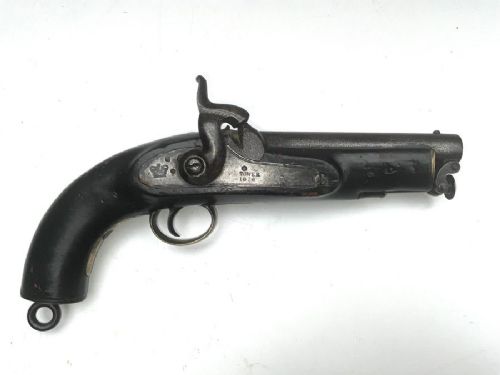
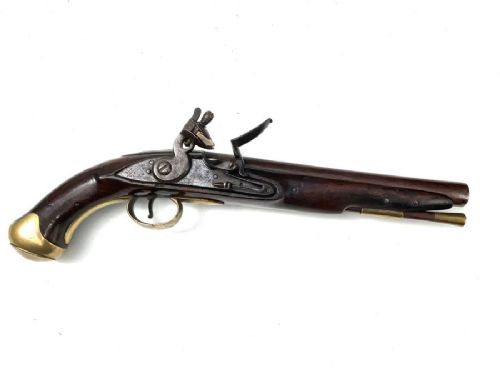
A steel belt pistol represents a portable firearm category designed for personal carriage, frequently encountered in Georgian and Victorian military configurations. These pieces span the eighteenth and nineteenth centuries, including flintlock and percussion ignition systems.
The inventory demonstrates various regional and service origins, ranging from Scottish Highland scroll-butt designs to British light dragoon and sea service examples. Makers such as Harrison of London, John Campbell of Doune, Henry Nock, and George Sherwood appear across the listings.
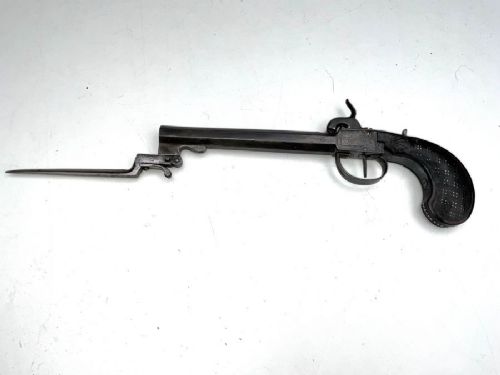
Forms vary from standard military regulation pieces to specialised pocket or belt variants equipped with integral bayonets. Buyers will encounter both flintlock mechanisms from around eighteen hundred and later percussion conversions or models from the mid-nineteenth century.
Materials and construction
Construction relies heavily on forged steel and iron for barrels and locks, paired with stocks fashioned from dense woods like walnut. Brass and silver occasionally appear for mounts, trigger guards, and decorative wire inlay.
Lock mechanisms involve precise metalworking, spring tensioning, and flintlock or percussion ignition assembly. Metal components are often stamped with maker marks, government inspection stamps, or Tower ordnance proofs.
Some nineteenth-century models tucked a folding bayonet underneath, just in case the gunpowder ran dry.
Assessing quality and condition
Quality rests in the crispness of the maker engraving, the original integration of metal and wood stock, and the mechanical integrity of the lock action. Examples retaining clear maker signatures and unpolished metal surfaces command greater historical interest.
The refinement of domestic civilian pieces versus standard military regulation issue creates a clear distinction in finish and decorative detail. Stock carving, metal chasing, and specialised additions like folding bayonets elevate individual pieces.
Harrison of London·John Campbell of Doune·Henry Nock·George Sherwood of Portsmouth
The Steel Belt Pistol Glossary
- Flintlock
- An ignition mechanism utilising a piece of flint held in a cock to strike a steel frizzen, creating sparks to ignite the priming powder. This system predominated before the adoption of percussion caps in the nineteenth century.
- Percussion
- A later ignition system relying on a hammer striking a priming cap placed on a nipple, transferring flame to the main charge. It offered greater reliability in damp weather compared to flintlock systems.
- Scroll-butt
- A distinctive grip shape curving downward into a volute or scroll, frequently seen on Scottish Highland pistols. This form provided a secure one-handed hold for pistol retention.
- Sea service
- A specific military specification for naval firearms, featuring corrosion-resistant treatments and robust construction to endure marine environments. These arms were issued to naval personnel and marines.
- Bore
- The interior diameter of the barrel, historically measured by the weight of a lead ball fitting it, such as twelve bore or fourteen bore. This measurement determines the calibre of the firearm.
Steel Belt Pistol: Frequently Asked Questions
What is a steel belt pistol?
A steel belt pistol is a historical firearm designed to be carried tucked into a belt or sash for personal defence or military use.
These pieces encompass both flintlock and percussion ignition systems dating from the eighteenth and nineteenth centuries.
How do flintlock and percussion differ?
Flintlock mechanisms use a piece of flint striking steel to create sparks that ignite loose gunpowder in a pan. Percussion systems rely on a hammer striking a sealed metal cap containing explosive compound.
Percussion ignition generally offered improved reliability in wet weather and replaced the flintlock system by the mid-nineteenth century.
Were these pistols used by the military?
Many examples on the market are regulation military issue intended for cavalrymen, naval personnel, or dragoon regiments. These often feature government inspection stamps and robust steel construction.
Other pieces were privately purchased by officers or civilians for personal protection during travel.
How are Scottish Highland pistols different?
Scottish Highland pistols are distinctively constructed with all-metal stocks or specific scroll-butt wooden grips originating in Scotland during the eighteenth century. They frequently display intricate metal engraving and distinct structural forms.
These regional pieces contrast with standard English military regulation arms of the same period.