





Steamship Seascape Painting
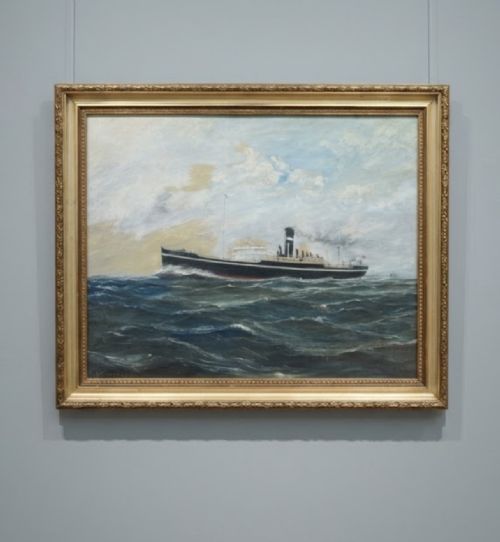
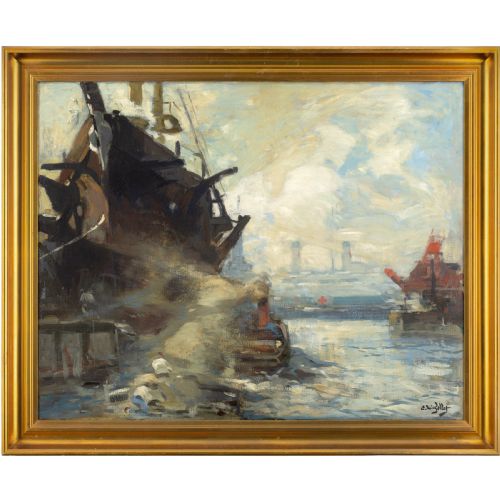
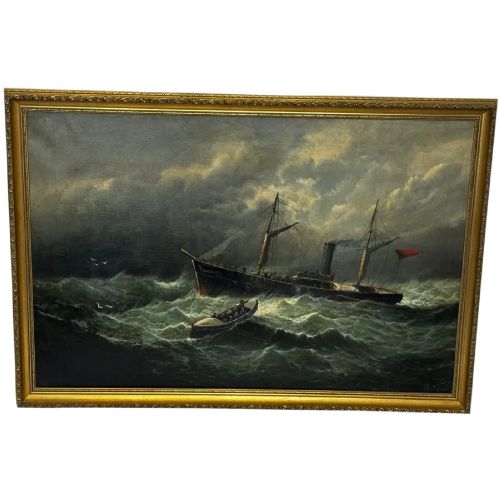
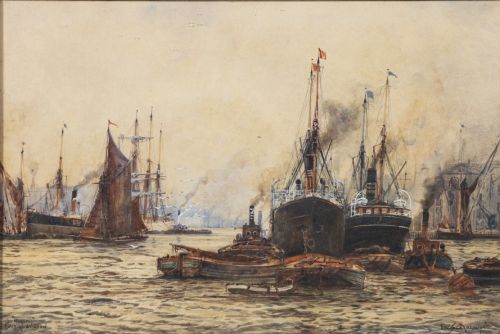
These steamship seascape painting works capture the industrial pulse of maritime history through detailed studies of vessels upon water.
Steamship Seascape Painting
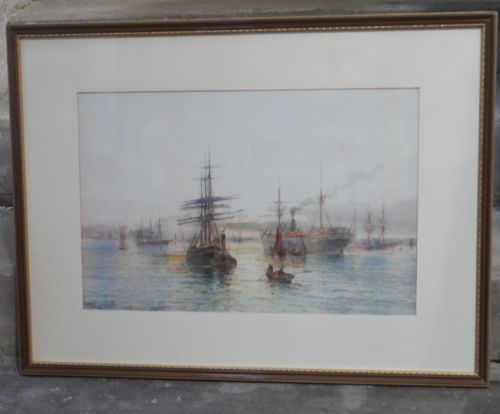
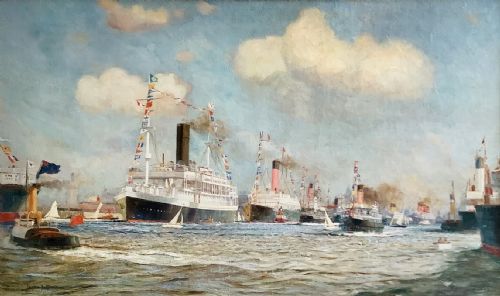
A steamship seascape painting represents a distinct branch of maritime art focusing on steam-powered vessels navigating rivers, ports, and open waters. The examples found here span from the nineteenth century into the twentieth century, recording commercial vessels, rescue boats, and famous liners.
The compositions vary from calm river scenes on the Thames and Mersey to dramatic depictions of steamers in rough waters and wartime service. Collectors encounter both finished oil paintings and works on paper such as watercolours across these listings.
Works range in origin from domestic harbour views around London, Dublin, and Scarborough to international waters near Gibraltar and Copenhagen. These pieces document the transition from sail to steam through the eyes of period artists.
Evaluating quality and execution
Quality in these works rests upon the artist's ability to render the specific anatomy of steam vessels alongside the movement of water and atmospheric smoke. Superior pieces demonstrate confident handling of perspective and light, particularly in complex harbour settings crowded with shipping traffic.
The significance of the subject matter also influences distinction, with named vessels, identifiable locations such as the Pool of London or specific liner companies, and documented historical events adding depth to the execution. Furthermore, the preservation of the original framing and the condition of the canvas or watercolour surface contribute to the overall standard.
Steamship Seascape Painting Retail Price Guide 2026
Typical asking prices for steamship seascape painting among the pieces listed under this phrase on Sellingantiques today, from the lower quarter to the upper quarter. They describe what is for sale here now, not the wider market.
One intrepid artist recorded a polar expedition from the deck of an actual Arctic steamship.
Eugène-Louis Gillot·William Broome·Frank William Scarbrough·F Corpuz·Charles William Wyllie·Ernest Dade·Pauwels·Dr Frederick A Cook·Frances E Nesbitt·J Syer·Johan Jens Neumann·James Scrimgeour Mann
The Steamship Seascape Painting Glossary
- Watercolour
- A painting method in which the paints are made of pigments suspended in a water-soluble vehicle. These works on paper require protection behind glass.
- Oil on Canvas
- Pigments bound in a drying oil applied to a woven fabric stretched across a wooden frame. This medium allows for rich textures and deep colour layering.
- Gilt
- A thin layer of gold applied to wood or other materials to create a decorative frame finish. It provides a traditional border for maritime artworks.
- Maritime Art
- Artistic works that depict or draw inspiration from the sea, ships, and coastal environments. This genre encompasses both commercial shipping and naval subjects.
- Post-Impressionism
- An art movement extending the boundaries of impressionism while rejecting its limitations. Artists focus on symbolic content and heavier brushwork.
Steamship Seascape Painting: Frequently Asked Questions
What periods do these paintings cover?
The selection spans from the nineteenth century through the Edwardian era and into the mid-twentieth century. Artists recorded the changing technology of shipping across these decades.
Most pieces date from the late Victorian period up to the 1930s, capturing both commercial vessel movements and wartime naval scenes.
Are these works painted on canvas or paper?
The listings feature both oil paintings on canvas and watercolours on paper. Framed oil works often include gilt surrounds.
Watercolour examples are generally glazed with glass to protect the paper medium from environmental damage.
How do I identify specific ships in the paintings?
Many titles and signatures reference specific vessels such as ocean liners, tugs, or hospital ships. Artists often inscribed names or documented the exact port location.
Researching the named shipping lines, such as the Cunard or White Star Line, helps contextualise the specific vessel depicted.
Where are most of these steamship scenes set?
The locations frequently focus on British waterways and ports, notably the River Thames in London, the River Mersey in Liverpool, and Scarborough.
Other scenes reach further afield to international locations such as Dublin Bay, Gibraltar, Copenhagen, and polar expedition routes.