


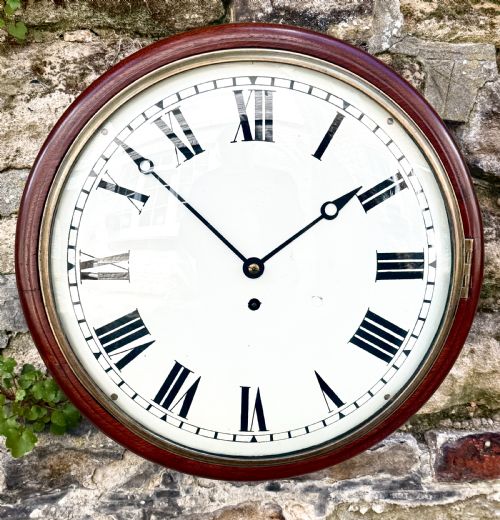


Station Drop Dial Clock
A station drop dial clock brings utilitarian British timekeeping directly into a room, valued for its robust circular face and characteristic wooden trunk.
Station Drop Dial Clock
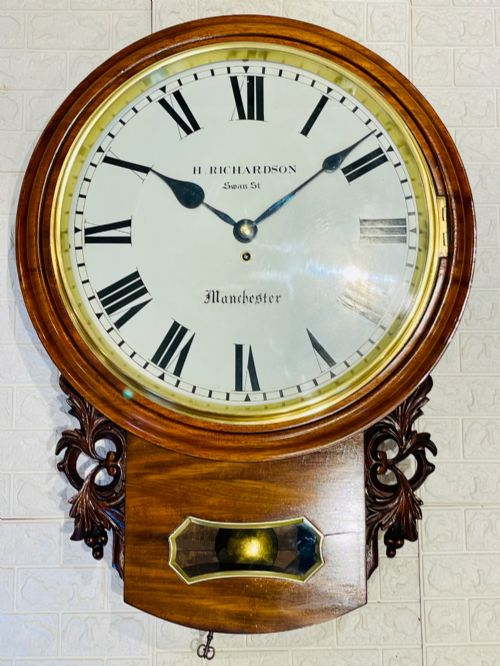
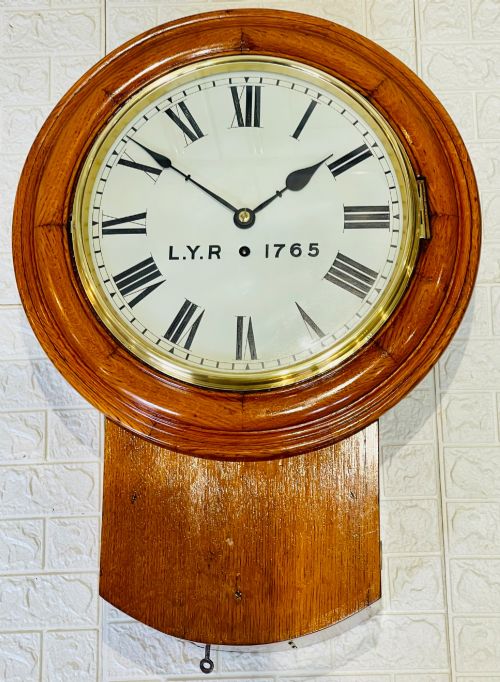
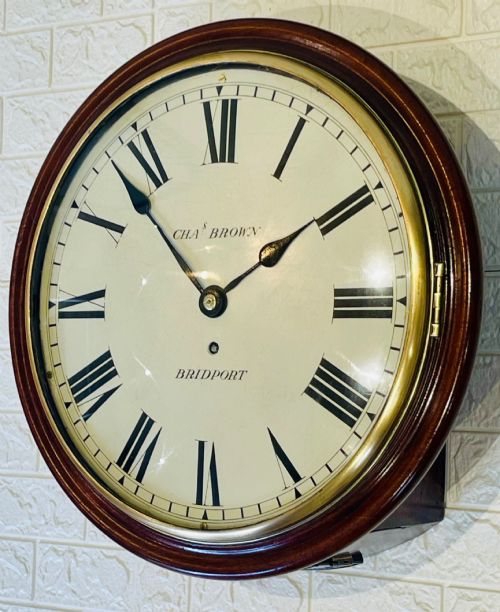
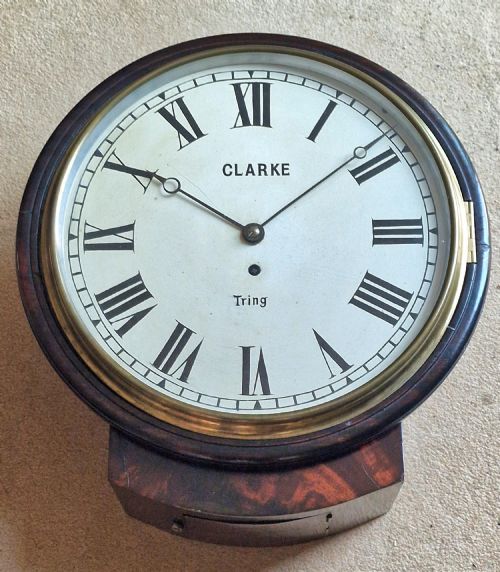
A station drop dial clock combines a prominent circular dial with an extended lower wooden trunk designed to house a pendulum. These pieces emerge primarily from the Victorian and Georgian periods, reflecting an era when reliable public and private timekeeping became essential.
Mahogany and oak form the predominant casework for these timepieces, often accompanied by brass bezels protecting the glass face. Examples range from simple domestic models to large railway company regulators utilised by networks such as the Great Western Railway.
Most entries encountered on this page display single fusee movements designed to maintain even tension as the mainspring unwinds. Certain variants incorporate twin-fusee striking trains or painted metal dials bearing regional maker signatures.
Materials and construction
Solid mahogany and oak provide the structural rigidity required for wall-mounted hanging cases, jointed with traditional woodworking methods. Iron and steel components govern the internal gear trains, while brass forms the heavy bezels and plates supporting the escapement.
Dials are constructed from painted iron, metal, or timber, finished with clear glass covers and delicate hands. Fusee movements rely on a conical pulley that regulates the pull of the spring to ensure consistent timekeeping across the duration of the wind.
Station Drop Dial Clock Retail Price Guide 2026
Typical asking prices for station drop dial clock among the pieces listed under this phrase on Sellingantiques today, from the lower quarter to the upper quarter. They describe what is for sale here now, not the wider market.
Listings feature timber cases in mahogany and oak, housing fusee movements dating from the Georgian period through to the early twentieth century.
Distinctions in craftsmanship
The precision of the fusee movement and the crispness of the dial engraving distinguish finer examples from standard utility pieces. High-grade models feature substantial brass plates and clean wheel cut, whereas simpler variants utilise heavier, less refined industrial components.
Timber selection and case joinery dictate the visual authority of the clock, particularly around the curved lower trunk and side access doors. Well-preserved mahogany grain and intact brass locking hooks demonstrate superior original workshop standards.
George Clarke Tring·Rudge Swindon·Dent of London·Atkins of Warwick·Camerer Cuss·C Coleman London·J Beckett of London·Sansom
The Station Drop Dial Clock Glossary
- Fusee
- A conical pulley connected to the mainspring by a cord or chain, designed to equalise the declining power of the spring as it unwinds. This mechanism ensures consistent torque reaches the escapement for accurate timekeeping.
- Drop dial
- A clock design featuring a circular dial mounted above an extended wooden trunk or box that encloses the pendulum swing. This proportion allows for a larger dial while maintaining a balanced wall profile.
- Bezel
- The brass or wooden ring that holds the protective glass cover in place over the dial face. Hinged bezels allow easy access for setting the hands and winding the movement.
- Trunk
- The lower portion of the wooden case situated beneath the dial. It often includes a small side or front door providing access to the pendulum and regulating nut.
- Railway clock
- A robust timepiece commissioned or utilised by transport networks for station platforms and offices. These clocks prioritised high legibility and dependable fusee movements under heavy daily use.
Station Drop Dial Clock: Frequently Asked Questions
How do station drop dial clocks work?
These clocks operate via a weight or spring-driven movement, with the fusee mechanism regulating the power delivered to the gear train. The pendulum swings within the lower wooden trunk to control the escapement speed.
Most examples require a key to wind the mainspring through a hole in the dial face. Regular winding ensures the fusee chain maintains uniform tension for steady timekeeping.
Where were these clocks originally used?
Railway companies installed drop dial wall clocks in booking halls, platform offices, and administrative rooms to coordinate train schedules. Domestic properties also utilised them in hallways, kitchens, and offices for reliable timekeeping.
Their clear circular faces and secure wall-mounting design suited high-traffic environments where legibility mattered. Railway-issued pieces often bear specific company lettering or inventory numbers on the dial.
How do I hang a wall clock securely?
Wall clocks require direct fixing into structural timber studs or masonry using appropriate heavy-duty screws and wall plugs. The weight of mahogany cases and brass movements demands a secure mounting bracket or internal fixing lug.
Ensuring the case hangs level prevents the pendulum from catching against the interior trunk sides. Adjusting the regulating nut on the pendulum bob allows fine-tuning of the clock speed.
How do I identify the period of a dial clock?
Georgian and early nineteenth-century examples often feature wooden dials or simpler mahogany trunk proportions without heavy railway markings. Victorian and later nineteenth-century pieces frequently display painted iron dials and railway company provenance.
Case construction details, such as the shape of the side inspection doors and the style of the brass bezel, provide further clues to the manufacturing decade.