



Standing Needlepoint Screen
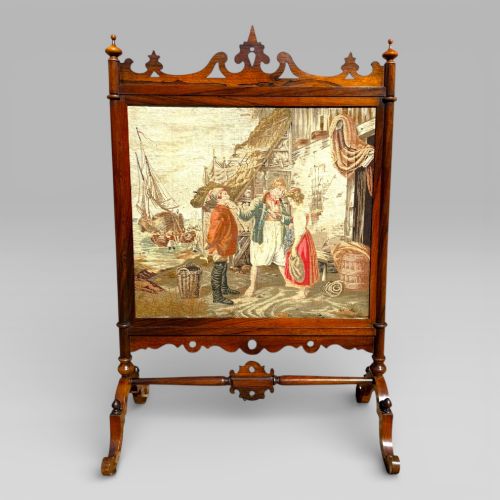
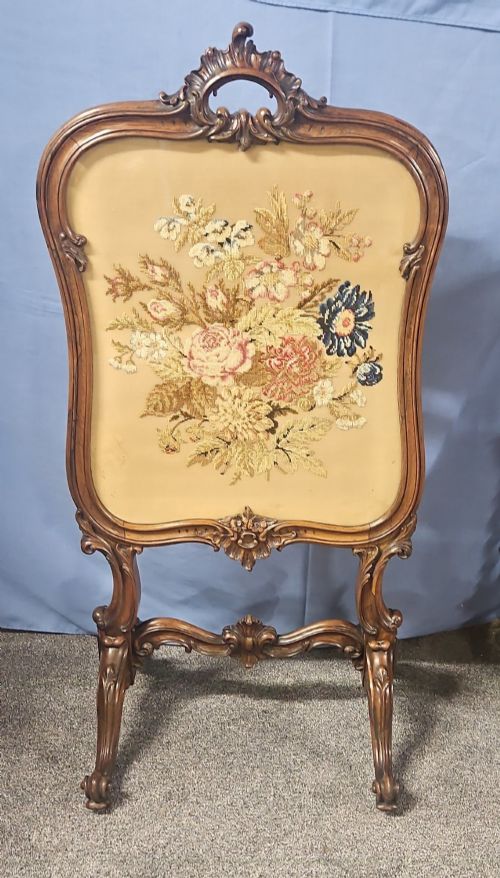
A standing needlepoint screen is a fireside screen designed to shield the face from open flame, combining a decorative wool panel with a timber stand.
Standing Needlepoint Screen
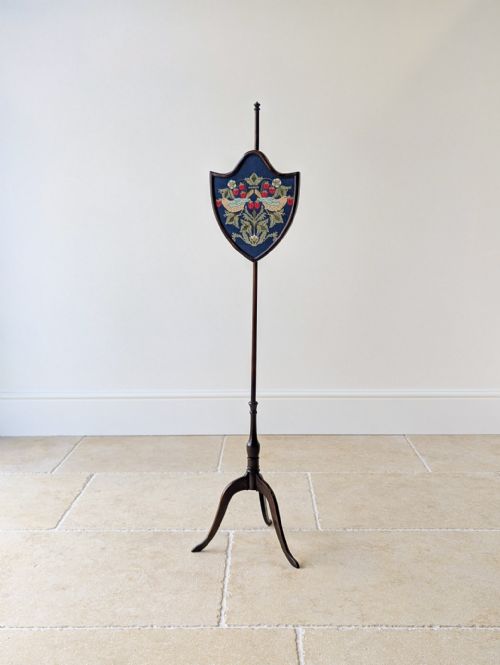
A standing needlepoint screen, frequently termed a pole screen or firescreen, is a traditional domestic accessory designed to protect a person's complexion from the intense heat of an open fireplace. The pieces seen on this page span the Georgian, Regency, William IV, and Victorian periods, reflecting shifting interior tastes across the nineteenth century.
The most common form on this page is the pole screen, which mounts a framed embroidery panel on a vertical wooden shaft supported by a tripod or platform base. These panels slide up and down the pole to adjust the height, allowing the user to deflect the warmth as needed.
Beyond pole screens, the selection includes cheval screens and larger static firescreens designed to stand directly on the hearth or floor. Materials range from dense timbers such as mahogany, rosewood, walnut, and satinwood to intricate wool tapestry and needlepoint panels.
How they were made
Cabinetmakers constructed the stands using traditional timber turning and joinery techniques, employing dense hardwoods like mahogany and rosewood that could be carved with sturdy tripod bases or decorative pedestals. Brass mechanisms were frequently integrated into pole screens to allow the needlework panel to slide smoothly and lock into position.
The textile panels themselves display painstaking handwork, utilising wool and tapestry threads worked onto canvas grounds in needlepoint and embroidery stitches. These panels were then stretched tightly within wooden frames to maintain their tension and shape over time.
Standing Needlepoint Screen Retail Price Guide 2026
Typical asking prices for standing needlepoint screen among the pieces listed under this phrase on Sellingantiques today, from the lower quarter to the upper quarter. They describe what is for sale here now, not the wider market.
Victorian ladies utilised adjustable pole screens to keep the heat of the hearth from melting their wax-based facial cosmetics.
What varies in quality
The distinction between standard and superior standing needlepoint screens rests largely on the ambition of the timber carving and the complexity of the needlework. Finely turned pedestals, crisp acanthus leaf carving on tripod legs, and balanced proportions signal higher workshop standards.
The quality of the textile panel also plays a defining role, with finely shaded wools, detailed pictorial subjects, and dense stitching separating standard decorative pieces from exceptional examples of period needlework.
The Standing Needlepoint Screen Glossary
- Pole screen
- A type of firescreen consisting of an adjustable panel mounted on a vertical wooden shaft with a supporting base. It allowed users to position the needlework shield precisely where it was needed.
- Cheval screen
- A firescreen supported by two upright pillars and feet, allowing the panel to swing or remain fixed within a stable standing frame. This form provides a broader shield than a traditional pole screen.
- Needlepoint
- A form of counted thread embroidery stitched onto an open-weave canvas ground. It forms the decorative and functional panel of these screens.
- Tripod base
- A three-legged support commonly used on the bottom of pole screens to ensure stability on uneven floors. These bases often feature carved cabriole legs.
- Palisander
- A dense, richly grained exotic timber often used during the Regency period for high-status cabinet work. It appears on this page in connection with fine tapestry fire screens.
Standing Needlepoint Screen: Frequently Asked Questions
How do you adjust a pole screen?
A pole screen uses an internal or external friction collar that grips the vertical shaft. By sliding the framed panel up or down the pole, the user can set the height.
Over time, the internal mechanisms can loosen from frequent use, so owners often handle the panel gently when adjusting its position.
Where were these screens placed?
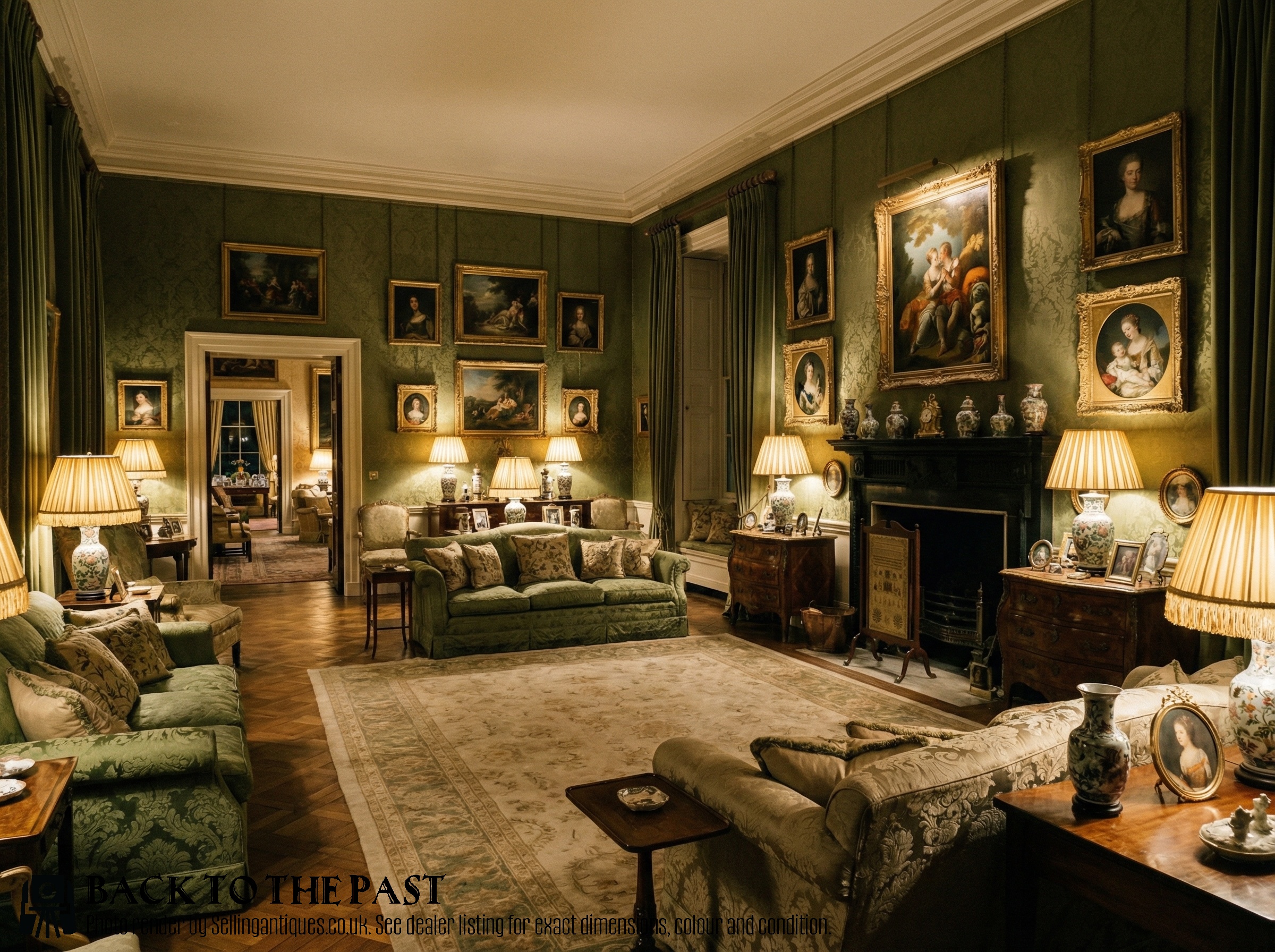
These screens were positioned close to the fireplace in principal rooms such as drawing rooms and parlours. They stood between the seated individual and the hearth.
When not in use for blocking heat, they served as decorative items that displayed the needlework skills of the household.
How do I identify a Regency screen?
Regency screens often feature classical proportions, rosewood or mahogany timbers, and specific decorative motifs inspired by ancient Greek and Roman designs. They typically date from the early nineteenth century.
Turned columns, brass mounts, and crisply carved tripod bases are common characteristics of pieces from this period.