

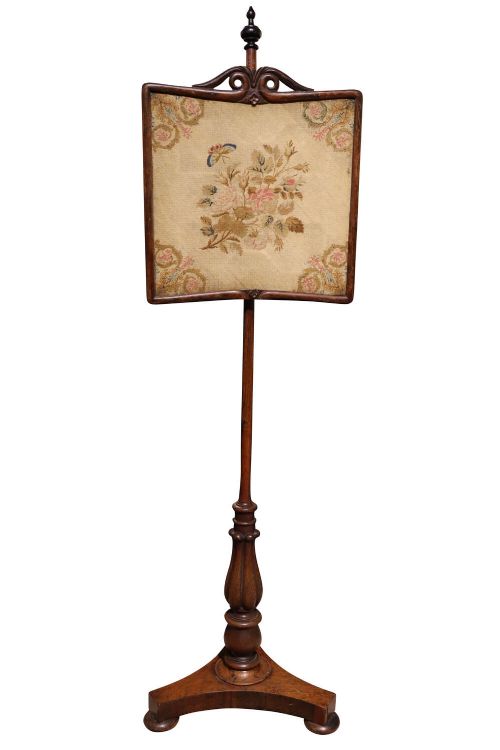
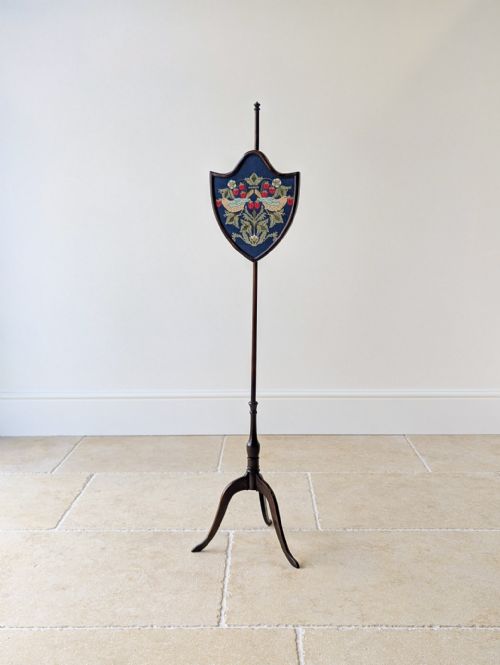


Georgian Needlework Screen
A georgian needlework screen is a fireside screen designed to shield a face from the blaze, blending polished timber with fine stitched panels.
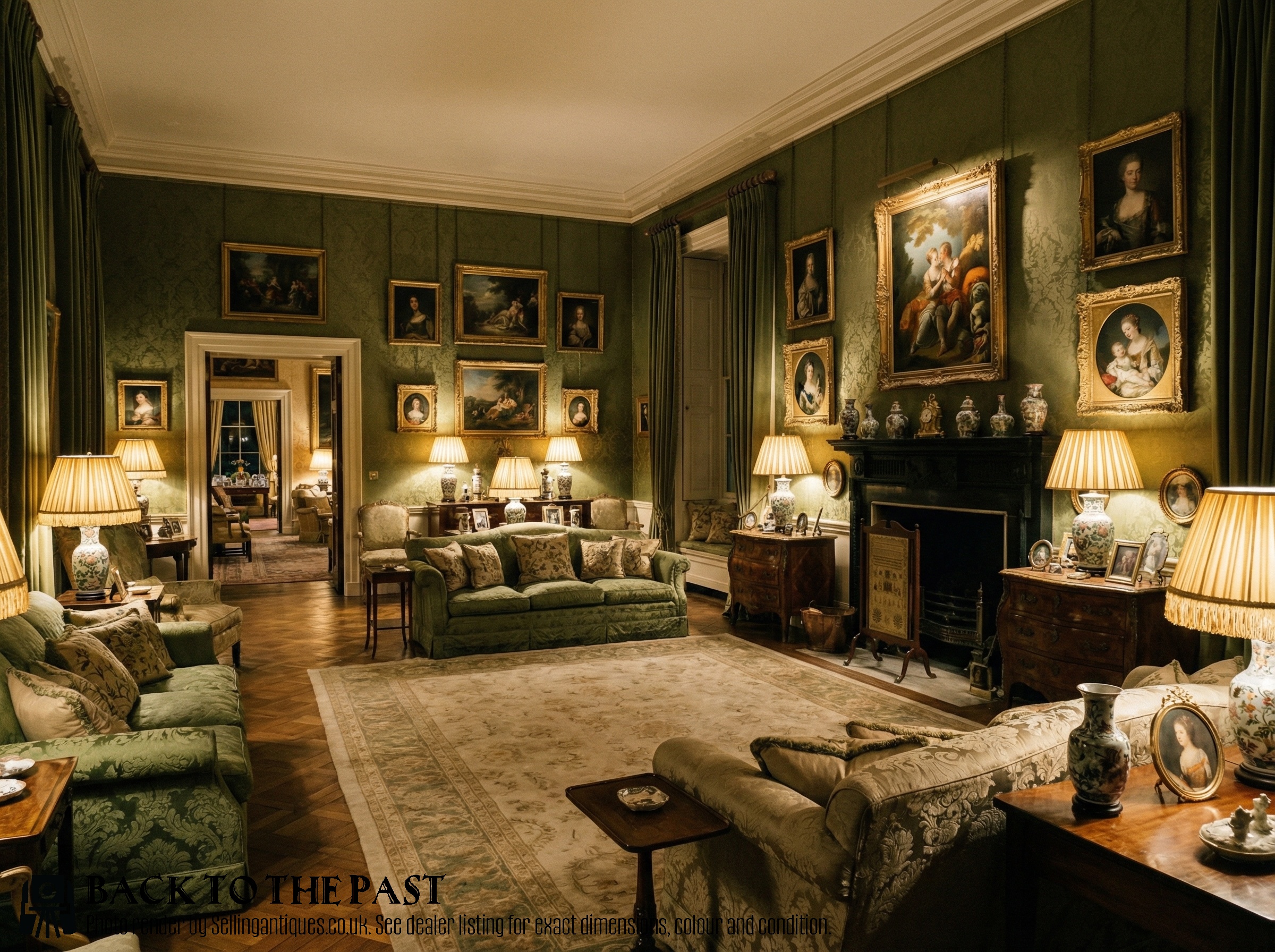
Georgian Needlework Screen
A georgian needlework screen is primarily encountered on this page as a pole screen or a privacy screen, drawing on periods from the eighteenth century through to the nineteenth century. These pieces combine wooden frames in mahogany, rosewood, or goncalo alves with textile work.
The forms span tripod pole screens, fireside shields, and larger room dividers, originating from English workshops. Buyers will find variations ranging from George III tripod designs to Regency pole screens featuring needlepoint, tapestry, and embroidery.
Materials and construction
Frames are turned and carved from dense hardwoods such as mahogany and rosewood, often supported by tripod bases with brass details. The timber is shaped to hold an adjustable panel aloft.
Panels display textile art worked in wool, silk, and linen threads upon a foundation canvas. These needlework, needlepoint, or embroidery pieces are held within framed shields or mounted directly to poles.
Georgian Needlework Screen Retail Price Guide 2026
Typical asking prices for georgian needlework screen among the pieces listed under this phrase on Sellingantiques today, from the lower quarter to the upper quarter. They describe what is for sale here now, not the wider market.
Periods represented across these items span the eighteenth century, the Regency era, and the nineteenth century.
Assessing quality
Quality rests upon the crispness of the timber carving on the base and pole, alongside the finesse and preservation of the needlework panel itself. Finer examples display intricate joinery and balanced proportions.
The integration between the adjustable mechanism and the main upright shaft dictates how well a piece functions. Superior execution balances decorative woodwork with skilled textile artistry.
The Georgian Needlework Screen Glossary
- Needlework
- Hand-stitched textile decoration created with yarn or thread on a woven mesh ground. It forms the central decorative panel of these screens.
- Tripod base
- A three-legged support system commonly found on the lower portion of pole screens. It allows the upright timber to stand firmly upon floorboards.
- Goncalo alves
- A dense, heavily figured exotic hardwood utilised in the framing of specific nineteenth-century pieces. It provides a striking grain pattern.
Georgian Needlework Screen: Frequently Asked Questions
What is a pole screen?
A pole screen is a standing furnishing designed to protect a person from the intense heat of an open hearth. The framed panel slides up and down the central wooden shaft to block the warmth.
These pieces populated formal sitting rooms across the Georgian and Regency periods. They served both a practical purpose and a decorative function in the home.
How do I date a screen?
Dating relies upon the stylistic details of the woodwork, such as the carving on the tripod base and the turning of the pole. Earlier pieces often exhibit George III or Chippendale traits.
Later examples incorporate Regency or William IV characteristics alongside altered timber choices like goncalo alves. The textile panel may sometimes date from a different decade than the frame.
Were these used for privacy?
While most functioned primarily beside the fireplace, larger folding examples were built as room dividers and privacy screens. These taller versions sectioned off parts of a chamber.
Such multi-panel variants utilise the same needlework and textile techniques seen in the smaller fireside shields. They offer a broader expanse of decorative fabric.
How do I place one?
Position a pole screen near a seating area or a fireplace where its adjustable panel can block radiant heat. The tripod footprint requires adequate floor space to stand securely.
Keep them away from direct sunlight to protect the fragile silk, wool, and linen threads within the panel. Regular dusting of the timber frame preserves the polish.