


Standing Glazed Book Cabinet
A standing glazed book cabinet displays and protects volumes behind glass doors while anchoring a room with timber construction.

Standing Glazed Book Cabinet
A standing glazed book cabinet provides upright storage for volumes, combining timber frames with glass door panels. These pieces span Georgian, Victorian, Edwardian, and twentieth-century periods, with styles ranging from plain utility to revival designs.
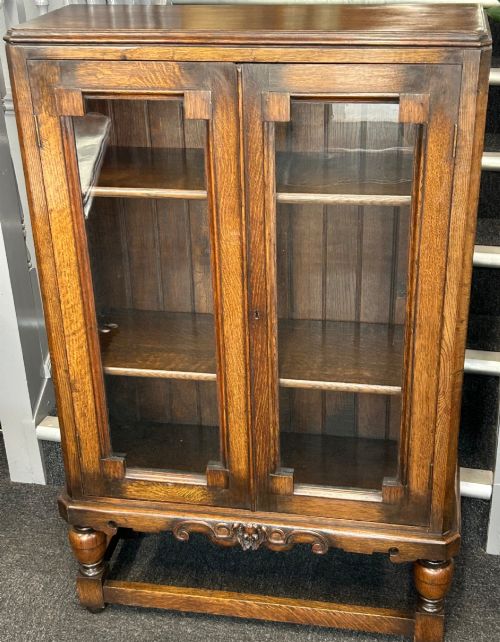
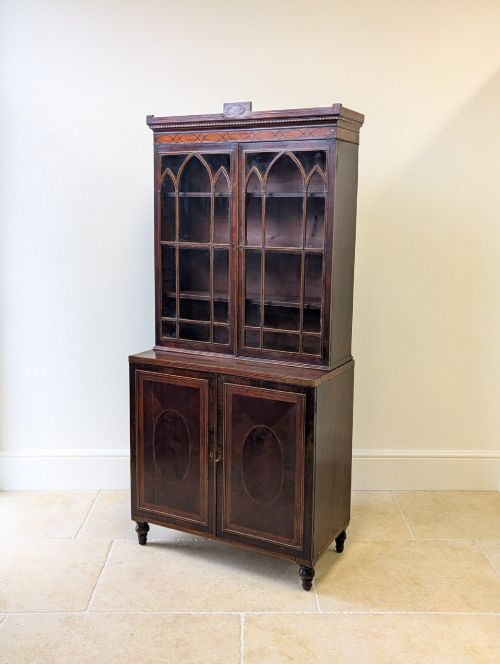
The versions most frequently met on this page belong to the Edwardian and later periods, often rendered in oak or mahogany. Many examples incorporate glazed sections above enclosed cupboards or drawers, creating a versatile piece for domestic libraries.
Makers and workshops produced these cabinets to suit varying domestic spaces, leading to both tall library bookcases and smaller scaled cupboards with galleries. The structural forms remain consistent: a vertical carcass resting directly on the floor, fronted by glass.
Materials and Construction
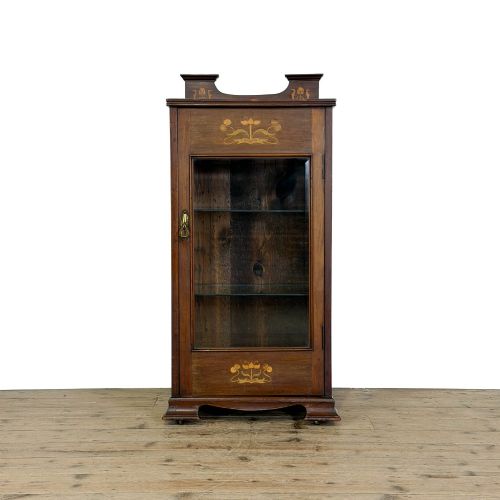
Makers constructed these cabinets primarily in mahogany and oak, occasionally employing walnut and satinwood for finer surfaces. Timber inlay and brass fittings frequently accent the primary woods, adding decorative detail to the structural frame.
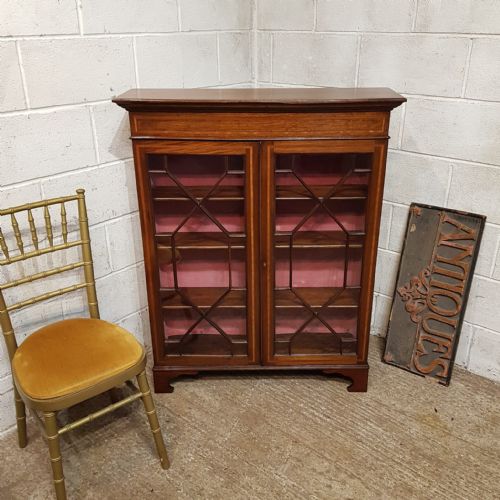
Glazing techniques involve timber astragals or lead to hold individual glass panes within the doors. Cabinet makers joined the main carcass using traditional woodworking joints, ensuring stability for heavy collections of books.
A small gallery added to the top of an Edwardian bookcase offers just enough space to display a stray pocket watch.
Factors of Quality
Quality in a standing glazed book cabinet rests on the selection of timber and the precision of the joinery. Finer examples display carefully chosen wood grain and clean timber inlay, whereas utilitarian pieces rely on simpler construction.
The execution of the glass framing and the weight of the hardware distinguish workshops. Superior cabinets maintain tight joints in the astragals and solid timber backs, rather than relying on thin modern laminates.
The Standing Glazed Book Cabinet Glossary
- Astragal
- The narrow wooden moulding that divides individual panes of glass within a glazed door. These bars form geometric patterns typical of Georgian and Edwardian cabinet work.
- Gallery
- A low decorative railing or raised edge positioned along the top surface of a cabinet. It prevents displayed items from sliding off.
- Inlay
- A technique where contrasting woods or other materials are inserted into recesses cut into the primary surface. This creates flat decorative patterns on the timber.
- Carcass
- The main structural body or frame of a piece of furniture before doors, shelves, and hardware are fitted. It provides the core stability for the cabinet.
Standing Glazed Book Cabinet: Frequently Asked Questions
What is a standing glazed book cabinet?
A standing glazed book cabinet is a floor-dwelling piece of furniture designed to hold books behind glass doors. These cabinets protect volumes from dust while keeping titles visible.
They appear in various styles from the Georgian period through the Edwardian era and beyond. The primary function remains the combination of storage and display within a room.
How do I date an oak bookcase?
Dating an oak bookcase involves examining the construction methods, timber selection, and overall style. Edwardian and later twentieth-century pieces often show different joinery and simpler hardware than nineteenth-century examples.
Stylistic cues such as Arts and Crafts influences or Jacobean revival details help narrow down the decade of manufacture. Grain patterns and finish types also provide clues to the period.
Where should I place a heavy cabinet?
A heavy timber bookcase requires a stable, level floor to distribute its weight properly. Placing it against an interior wall away from direct sunlight protects the timber and the books inside from environmental fluctuations.
Leaving slight clearance behind the cabinet allows air circulation. Ensuring the floor is even prevents the tall carcass from twisting and jamming the doors.