






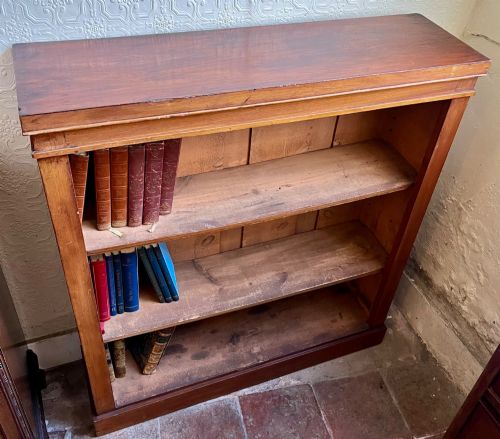
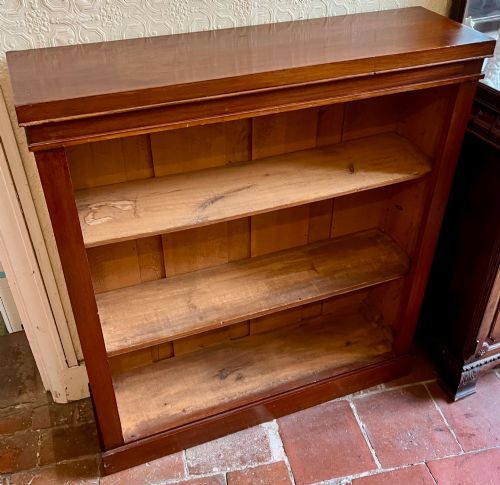
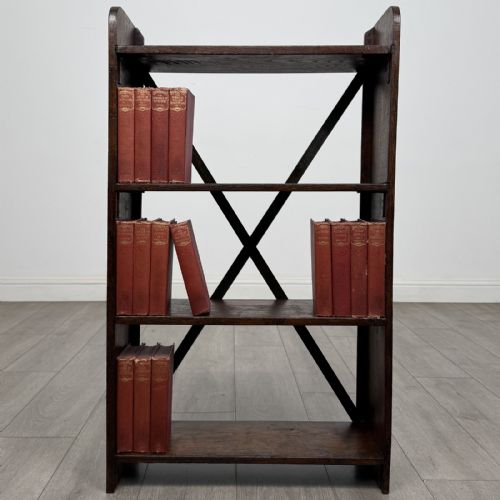
Standing Bookshelves
Standing bookshelves organise volumes where wall space is scarce, offering immediate access in freestanding timber frames.
Standing Bookshelves
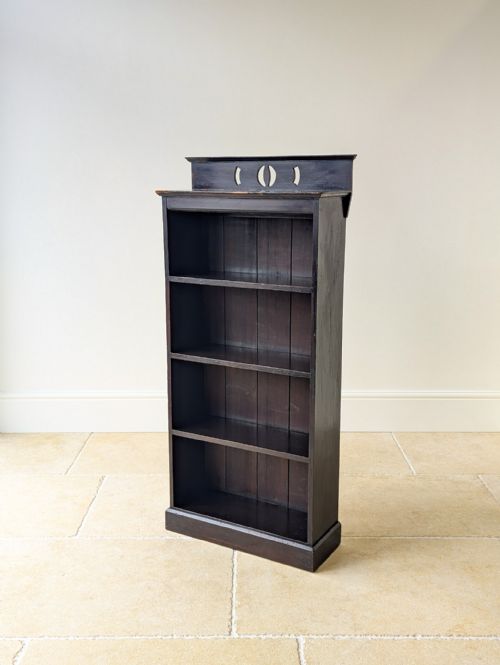
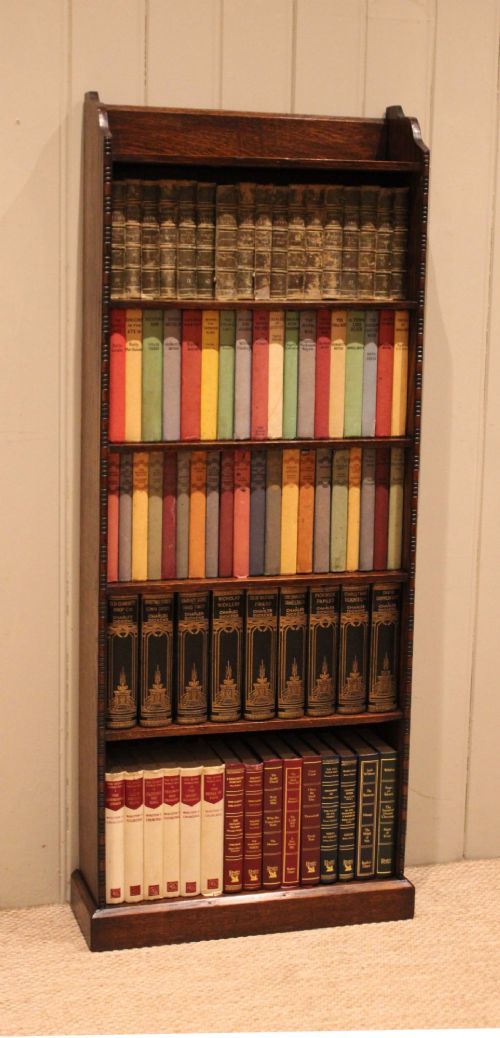
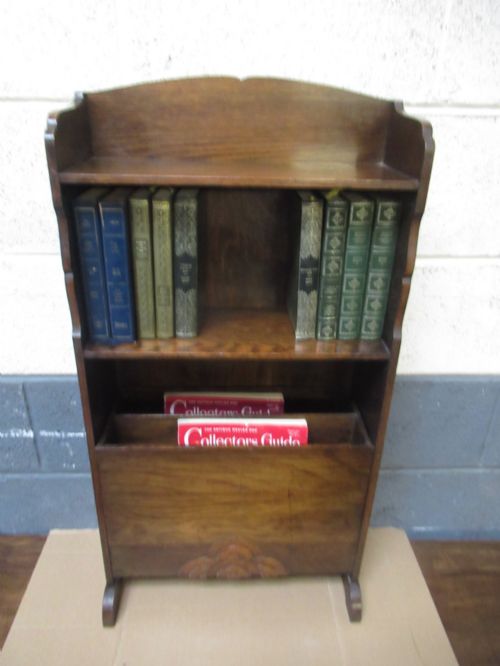
Standing bookshelves provide accessible storage for libraries and studies through open freestanding timber tiers. You are most likely to meet oak and mahogany open bookcases dating from the Edwardian period and the early twentieth century on this page.
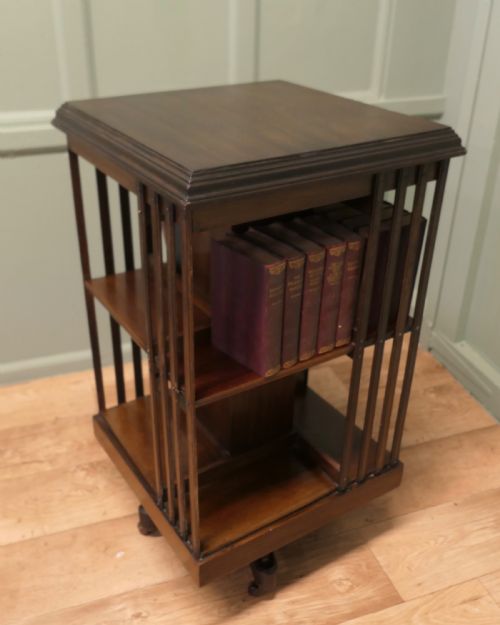
The selection ranges from narrow oak gallery-top designs and revolving library pieces to tall mahogany bookcases and compact side tables. These furnishings suit domestic interiors by holding collections without requiring permanent wall installation.
How they were made
Cabinet makers constructed these pieces primarily from solid oak, mahogany, walnut, and rosewood, incorporating brass hardware and iron cross braces for structural support. Timber selection dictated the durability and visual weight of each piece.
Joinery techniques included adjustable shelf mechanisms and raised galleries, whilst decorative variations involved inlaid details, carved oak surfaces, and slatted sides on revolving models.
Standing Bookshelves Retail Price Guide 2026
Typical asking prices for standing bookshelves among the pieces listed under this phrase on Sellingantiques today, from the lower quarter to the upper quarter. They describe what is for sale here now, not the wider market.
Materials recorded across these standing bookshelves include oak, mahogany, rosewood, walnut, satinwood, pine, brass, and iron.
What varies in quality
The standard of timber selection and complexity of cabinet work separate simpler utility items from finer parlour pieces. Grain figuring in walnut and mahogany or dense oak significantly alters the visual presence of a bookcase.
Refined detailing such as dentil cornices, architectural galleries, and smoothly functioning adjustable shelf systems distinguish superior examples from standard production pieces.
Gillows
The Standing Bookshelves Glossary
- Gallery top
- A raised railing or border along the upper edge of a bookcase that prevents items from sliding off. This feature appears frequently on Edwardian oak examples.
- Open bookcase
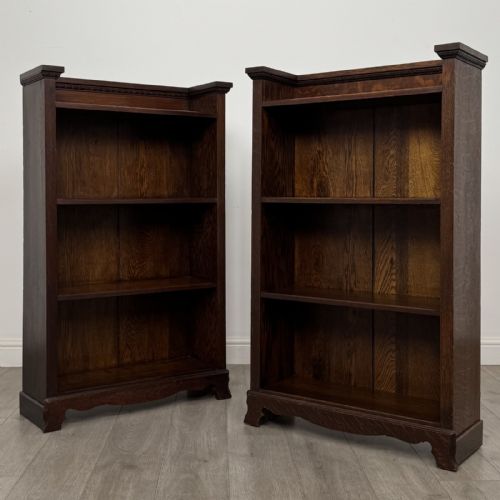
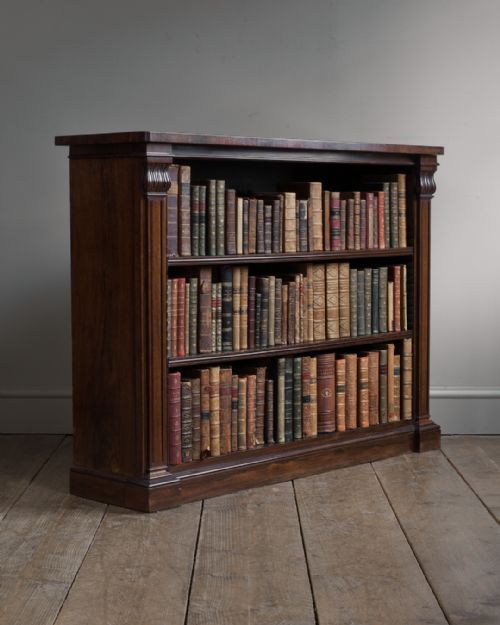
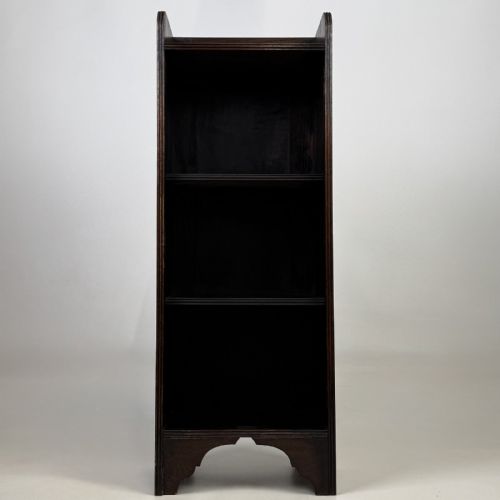
- A shelving unit without doors, allowing direct and immediate access to the books stored within. These pieces form the majority of the current selection.
- Revolving bookcase
- A freestanding tiered shelf designed to rotate on a central pivot base for easy book retrieval. They are typically compact enough to sit beside a desk or armchair.
- Whatnot
- A set of open shelves standing on legs, used originally for displaying ornaments and holding books. Examples range from Victorian carved oak to Indian hardwood and walnut variations.
- Waterfall bookcase
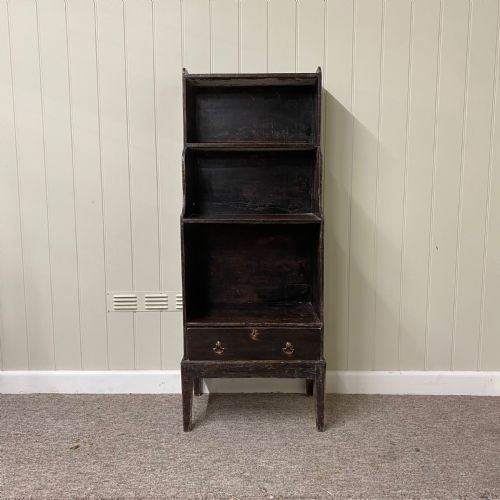
- A tiered shelving unit where each successive shelf steps back from the one below it. These display a distinctive cascading silhouette.
Standing Bookshelves: Frequently Asked Questions
How do I choose the right size?
Measure your available floor space and ceiling height carefully before selecting a freestanding bookcase. Consider whether a narrow oak design or a taller mahogany piece suits your room dimensions.
Account for the depth of the shelves as well, ensuring your volumes fit comfortably without protruding past the timber edges.
Are the shelves adjustable?
Many standing bookshelves feature movable shelves supported by pegs or ratchet strips. This flexibility allows you to accommodate unusually tall volumes or organise smaller paperbacks efficiently.
Check the individual descriptions to confirm whether a specific piece retains its original adjustable mechanism.
Where should I place a revolving bookcase?
Revolving library bookcases work best positioned beside an armchair, desk, or in the corner of a study. Their rotational design provides easy access to reference volumes from multiple seating angles.
Ensure there is sufficient clearance around the entire circumference for the tiers to spin freely without striking nearby furniture.
How do I care for antique timber?
Maintain the finish of oak, mahogany, and walnut bookcases by keeping them away from direct sunlight and strong heat sources. Regular dusting with a soft, dry cloth preserves the natural polish of the wood.
Avoid applying silicone-based polishes, which can build up on antique surfaces over time and attract dust.