




Staffordshire Pottery Horses
Staffordshire pottery horses bring robust Victorian character to a mantelpiece, offering collectors charming depictions of royalty, military heroes and riders.
Staffordshire Pottery Horses
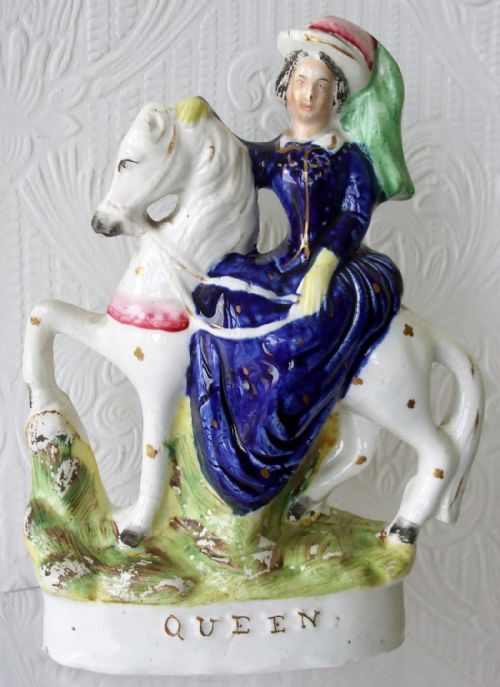
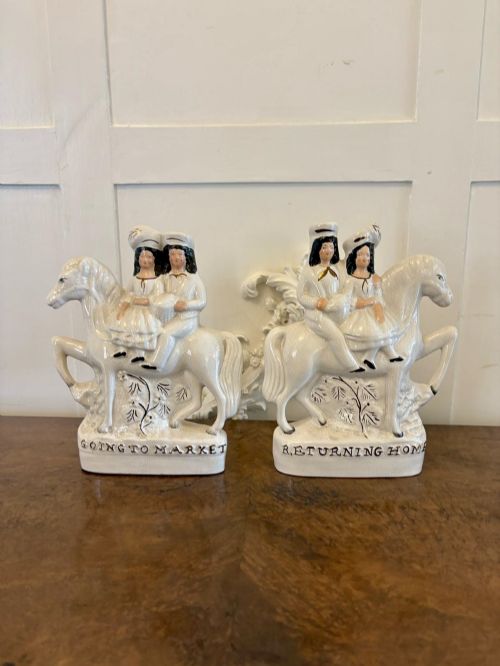
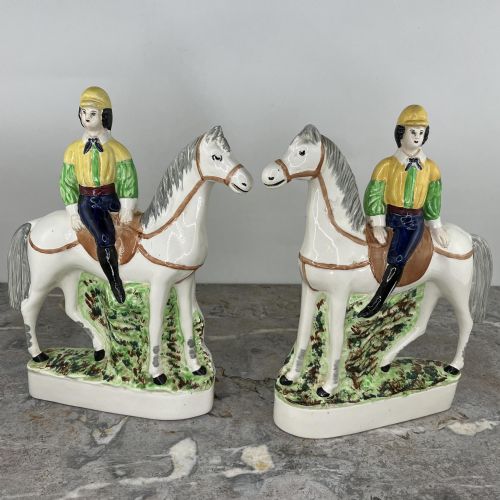
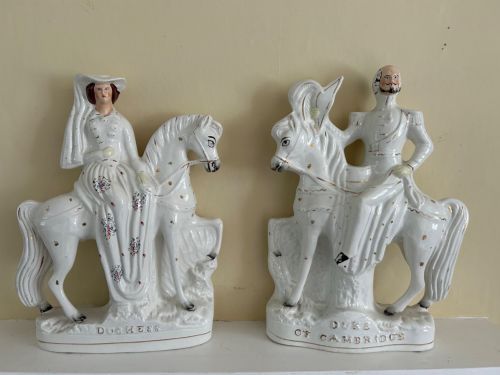
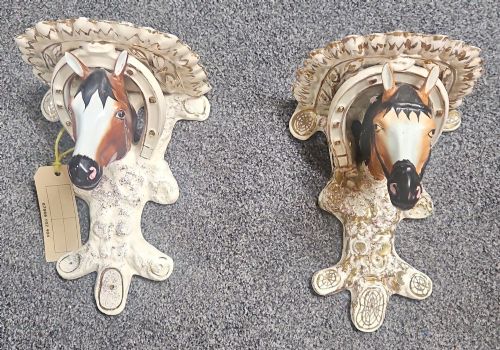
Staffordshire pottery horses are traditional ceramic figures and ornaments produced during the 19th century, frequently modelled as flatback pieces designed to stand against a wall. The selection spans single equestrian portraits and matched pairs, depicting notable figures such as the Duke and Duchess of Cambridge, Louis Napoleon, Joan of Arc and mounted jockeys. Alongside human riders, collectors find specialised forms like horse head wall brackets, Scottish Highlanders and highwaymen.
The versions most commonly met on this page are Victorian Staffordshire pottery figures dated between eighteen-sixty and eighteen-eighty. These pieces capture the era's taste for narrative ceramics, recording historical personages, literary characters and everyday equestrian scenes in glazed earthenware.
How they were made
These figures are shaped from earthenware and finished with lead glaze, utilising press-moulding techniques common to the Staffordshire potteries. The hollow flatback construction allowed larger figures to dry evenly in the kiln without cracking.
Colour is applied using underglaze enamels and occasionally gilt highlights, painted by hand before the final firing. This combination of ceramic body, glaze and enamel gives each horse figure its distinct surface texture and decorative finish.
Staffordshire Pottery Horses Retail Price Guide 2026
Typical asking prices for staffordshire pottery horses among the pieces listed under this phrase on Sellingantiques today, from the lower quarter to the upper quarter. They describe what is for sale here now, not the wider market.
Listings feature nineteenth-century earthenware and ceramic figures decorated with lead glaze and enamel, spanning the Victorian era.
What varies in quality
The survival of original gilt highlights and the preservation of the lead glaze without excessive crazing also distinguish superior pieces. Matched pairs with balanced proportions and strong visual presence command greater interest than worn single figures.
The Staffordshire Pottery Horses Glossary
- Flatback
- A ceramic figure designed with a finished front and a plain, unglazed or partially glazed flat rear side intended to be placed against a wall.
- Lead glaze
- A glossy coating containing lead oxide applied to earthenware before firing to seal the porous clay and provide a smooth surface.
- Earthenware
- A porous pottery body fired at lower temperatures, requiring a glaze to achieve impermeability to liquids.
- Enamel
- Opaque glass-like colours fused onto the surface of a fired ceramic during a secondary, lower-temperature firing.
- Spill vase
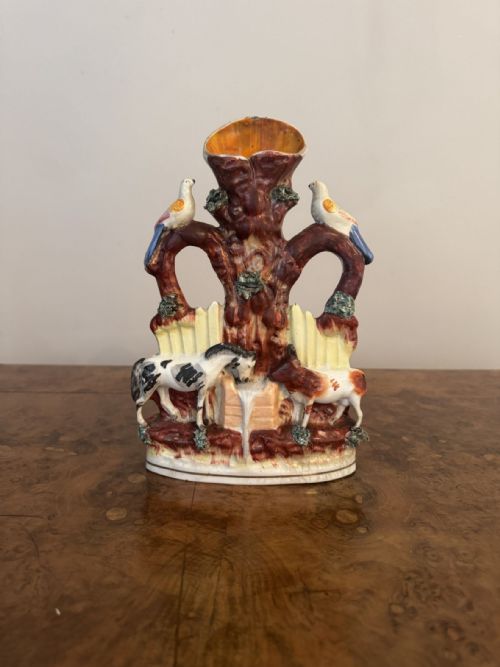
- A hollow cylindrical ceramic vessel incorporated into a figure group, traditionally used to hold wooden spills for lighting fires.
Staffordshire Pottery Horses: Frequently Asked Questions
What subjects do these figures show?
The pieces depict horses with various riders, including historical figures like Joan of Arc, royalty such as the Duke and Duchess of Cambridge, jockeys and highwaymen.
Other variations include matched pairs of animals, musicians on horseback and decorative horse head wall brackets.
How do I date a Staffordshire figure?
Dating relies on stylistic markers, costume details and the manufacturing characteristics associated with the Victorian period.
Most examples date from the mid to late nineteenth century, specifically between eighteen-sixty and eighteen-eighty.
Are these figures glazed all over?
Many nineteenth-century Staffordshire pieces are finished as flatbacks, meaning the reverse side is left largely unglazed and flat.
This construction method reflects their original placement on shelves or mantelpieces against a wall.
How should I display them?
These ceramic figures suit stable shelves, mantelpieces or dedicated display cabinets away from high-traffic areas.
Pairing matching figures together creates the balanced visual arrangement intended by the nineteenth-century makers.