



Staffordshire Hound Figures
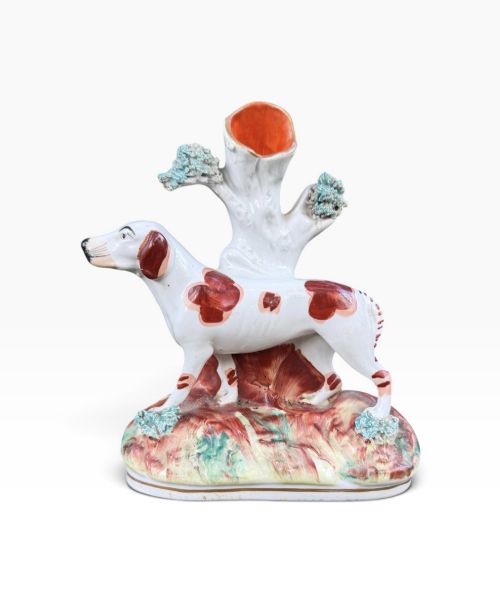
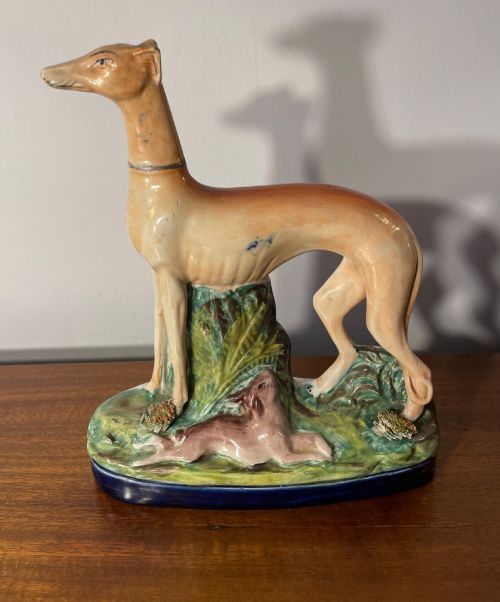
These staffordshire hound figures bring domestic nineteenth century character to a mantelpiece, fashioned in earthenware by regional potters.
Staffordshire Hound Figures
Staffordshire hound figures encompass earthenware ceramics modelled as greyhounds, setters, pointers, and hunting dogs, often produced as pairs or matched ornaments during the nineteenth century. The examples found here span the Georgian and Victorian eras, including spill vases and inkwells alongside standard decorative figurines.
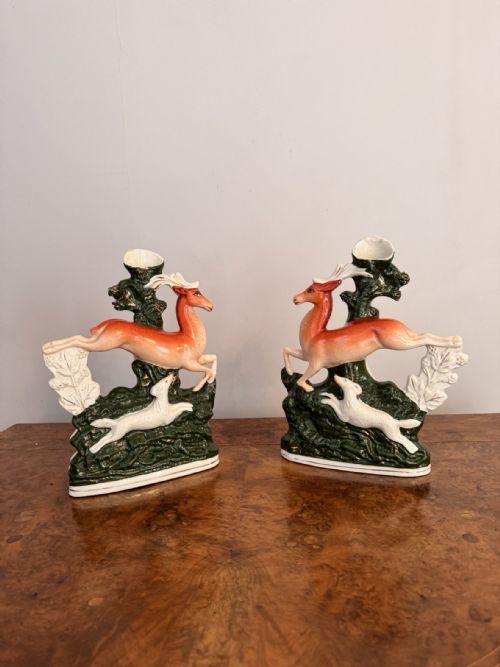
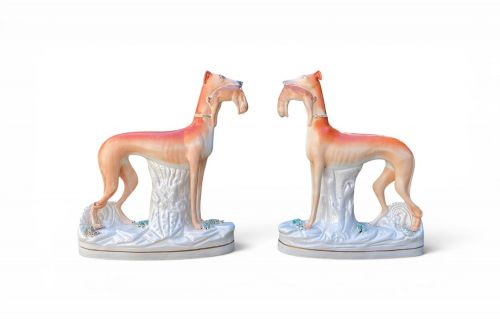
Buyers regularly encounter Victorian Staffordshire greyhounds and deer spill vases, which reflect the period's taste for animal subjects and country pursuits. These pieces range from early nineteenth century hound and hare groups to mid-Victorian pottery figures associated with makers such as Thomas Parr and Enoch Wood.
Materials and methods
The construction typically involves hollow slip-cast or pressed clay bodies finished by hand before kiln firing. Painters then applied coloured enamel details over the glaze to define the coats, eyes, and surrounding terrain of each hound.
Staffordshire Hound Figures Retail Price Guide 2026
Typical asking prices for staffordshire hound figures among the pieces listed under this phrase on Sellingantiques today, from the lower quarter to the upper quarter. They describe what is for sale here now, not the wider market.
Listings feature earthenware and porcelain materials decorated with enamel paint and gold leaf.
Judging quality
The application of glaze and gold leaf also distinguishes finer Victorian examples, where careful brushwork avoids overlapping the earthenware body. Pairs with matching proportions and well-preserved painted surfaces demonstrate greater workshop care than hurried domestic wares.
Thomas Parr factory·Enoch Wood factory
The Staffordshire Hound Figures Glossary
- Earthenware
- A porous pottery body fired at lower temperatures than stoneware or porcelain, requiring a glaze to hold liquids. It forms the primary material for most nineteenth century Staffordshire animal figures.
- Spill Vase
- A hollow vertical holder attached to a figure, designed to store wooden spills used for lighting candles and fires. These practical additions frequently accompanied Victorian dog figurines.
- Enamel Paint
- A glass-based pigment applied over a fired glaze and heated again to fuse with the surface. It provides the vibrant colours seen on nineteenth century hound coats.
- Lead Glaze
- A liquid glass coating containing lead oxide that melts during firing to create a shiny, protective waterproof shell. This finish gives Staffordshire pottery its characteristic glossy sheen.
Staffordshire Hound Figures: Frequently Asked Questions
How were spill vases used?
Spill vases incorporated a small cylindrical holder beside the dog figure to store thin strips of wood or paper. Users took these spills to transfer flames from a hearth fire to candles or lamps.
This practical addition allowed potters to combine decorative animal sculpture with a useful household accessory. They sat upon mantels where candles were regularly lit.
How do I date these figures?
Dating relies upon stylistic details, modelling characteristics, and the type of ceramic body or glaze used by the pottery. Early nineteenth century examples often feature simpler painting and heavier earthenware construction.
Victorian pieces from the mid-nineteenth century frequently incorporate brighter enamel colours and gilded accents. Comparing the modelling to documented factory pieces helps narrow down the period of manufacture.
How do I care for antique pottery?
Antique Staffordshire figures require gentle dusting with a dry, soft brush to protect the delicate enamel paint and gold leaf. Moisture and harsh cleaning agents can damage the porous earthenware beneath the glaze.
Displaying the pieces away from direct sunlight and areas of high humidity prevents fading and surface deterioration. Stable shelf placement ensures these hollow ceramic figures remain secure.