



Staffordshire Cow Figurine
These staffordshire cow figurine pieces capture pastoral charm with earthenware forms and enamel colour.
Staffordshire Cow Figurine
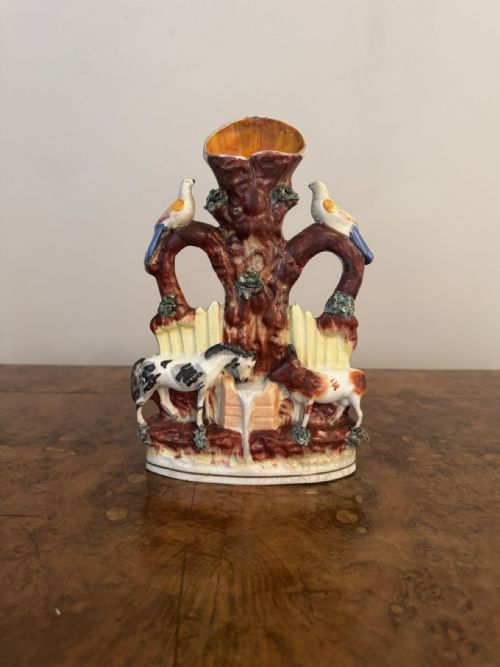
A staffordshire cow figurine brings domestic farmyard charm into the parlour through figures made in nineteenth century English potteries. These items take several domestic and decorative forms, including creamers, spill vases, and flatback figures.
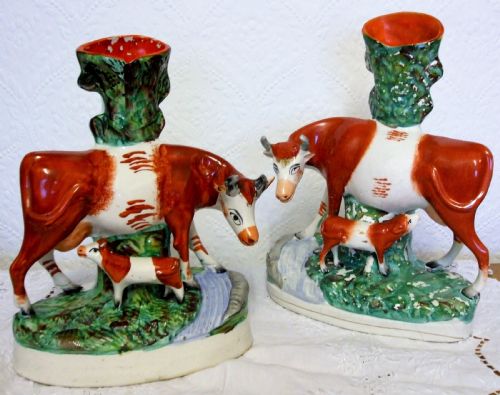
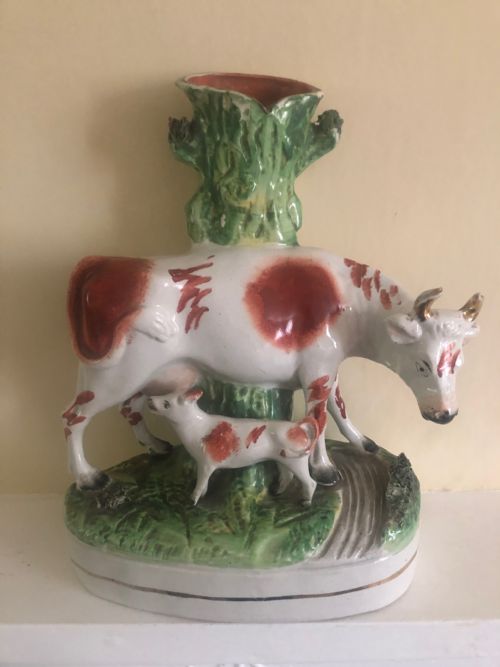
Buyers most frequently encounter Victorian examples alongside earlier Regency and Georgian pieces. Many of these ceramic animals appear as pairs featuring a cow and calf, sometimes accompanied by a milkmaid or boy.
Function blends with ornament in these vessels, where the animal's back often holds milk or its mouth acts as a pouring spout. Spill holders serve a practical purpose on the mantelpiece by keeping wooden tapers ready for lighting pipes and candles.
How they were made
Potters shaped these earthenware and pearlware figures using earthenware bodies finished with glaze and enamel paint. Artisans applied bright surface colours by hand before firing the ceramics in kilns.
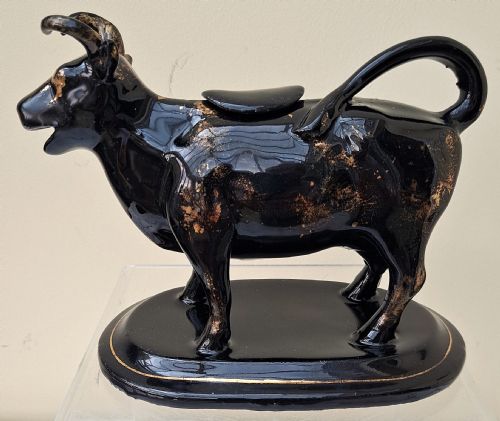
Gilt highlights and glossy glaze coats complete the decoration on many nineteenth century examples. Jackfield pottery pieces utilise a distinctive deep black glaze over the ceramic body.
Makers formed utilitarian cream jugs and decorative figurines with hollow interiors to save weight and material. Flatback models were designed specifically to sit flush against cottage mantelpieces.
Listings feature earthenware materials and glaze finishes across the nineteenth century, Georgian, and Regency periods.
What varies in quality
The sophistication of the form separates standard wares from superior pairs, particularly in balanced proportions and naturalistic poses. Glaze consistency and the careful application of gilt highlights further distinguish better pieces.
The Staffordshire Cow Figurine Glossary
- Earthenware
- A porous pottery body fired at lower temperatures, requiring a glaze to hold liquids. It serves as the primary material for these nineteenth century figures.
- Pearlware
- A refined earthenware developed during the Georgian period featuring a pale bluish glaze. This precursor to later Victorian ceramics often appears on earlier creamers.
- Spill vase
- A hollow ceramic holder designed to store wooden spills for lighting fires. These cylindrical additions sit behind or beside the animal figure.
- Flatback
- A figure modelled with a finished front and a largely unglazed, flat reverse. This construction allowed the ornament to sit neatly against a wall.
- Jackfield
- A type of British pottery known for its glossy black surface glaze. Pieces from this tradition often take the form of functional cream jugs.
Staffordshire Cow Figurine: Frequently Asked Questions
How were staffordshire cow figurines used?
These ceramic animals served both decorative and practical roles in nineteenth century homes. Creamers held milk at the tea table, while spill holders kept tapers ready by the fireplace.
Many examples functioned purely as mantelpiece ornaments, bringing a rustic pastoral aesthetic into Victorian parlours. Their dual nature as vessels and figures made them popular household items.
How do you tell regency from victorian pieces?
Regency and Georgian examples often utilise earlier body types like pearlware with subtle hand painted details. These earlier versions frequently take the form of functional cream jugs.
Victorian pieces tend to feature brighter enamel colours, heavier gilding, and distinct flatback modelling designed for mantel shelves. The presence of Jackfield black glaze also points towards the later nineteenth century.
What is a cow creamer?
A cow creamer is a ceramic milk jug modelled in the shape of a cow, often with a removable lid on the back. Milk is poured through an opening on the spine and dispensed through the animal's mouth.
These functional vessels combine whimsical folk art sculpture with practical tableware. They remain some of the most sought after animal forms from early British potteries.
Why do some cows have calves?
Maker workshops frequently paired a cow with a smaller calf to enhance the pastoral scene and visual balance of the sculpture. These paired groups often incorporated a central spill vase between the animals.
Such compositions appealed to Victorian buyers who favoured sentimental domestic imagery. Finding an original matching pair remains a notable feature for collectors.