



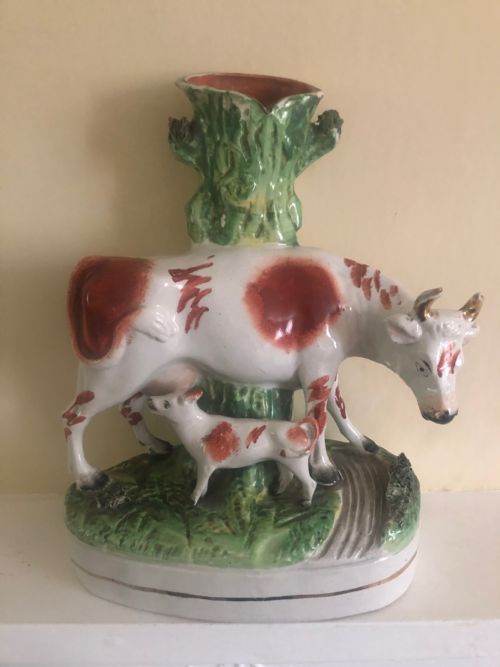


Staffordshire Ceramic Cow
A Staffordshire ceramic cow brings whimsical pastoral charm to a room, offering a delightful glimpse into rural folk art traditions.
Staffordshire Ceramic Cow
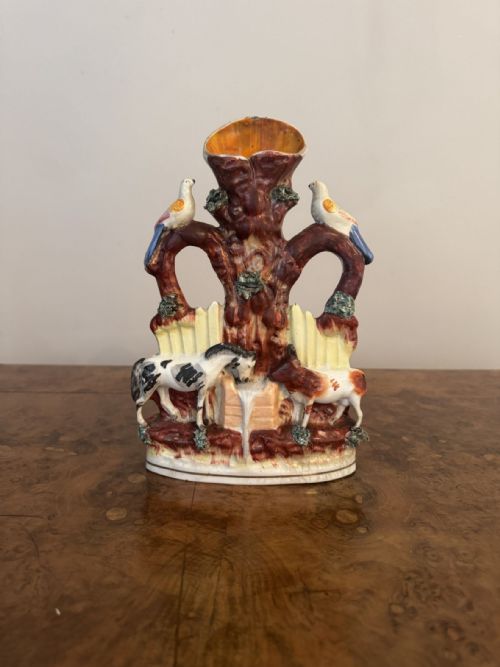
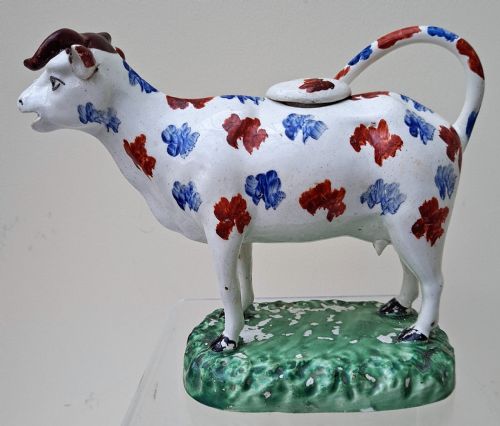
When searching for a Staffordshire ceramic cow, buyers encounter a variety of earthenware and pearlware figures produced during the nineteenth century. These pieces predominantly take the form of utilitarian creamers, milk jugs, and decorative spill vases, capturing domestic farm animals with rustic charm.
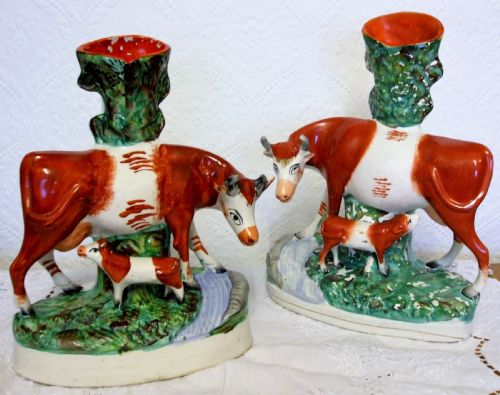
The versions most frequently met on this page include Victorian Staffordshire figures and Georgian folk art cow creamers, often modelled as single animals, pairs, or accompanied by calves and milkmaids. Examples range from simple flatback models designed to stand against a mantelpiece to intricate spill holders meant to hold taper candles.
Originating from English and Welsh potteries, these ceramics reflect the era's fascination with rural life. Collectors find both straightforward dairy vessels and elaborate sculptural groups, showcasing the diverse output of regional potteries during the Regency and Victorian periods.
Materials and Construction
Potters shaped these figures using local earthenware and refined pearlware clays, often employing press moulds to form the body of the animal. The wet clay was carefully worked to create hollow vessels or solid flatbacks before receiving initial bisque firing.
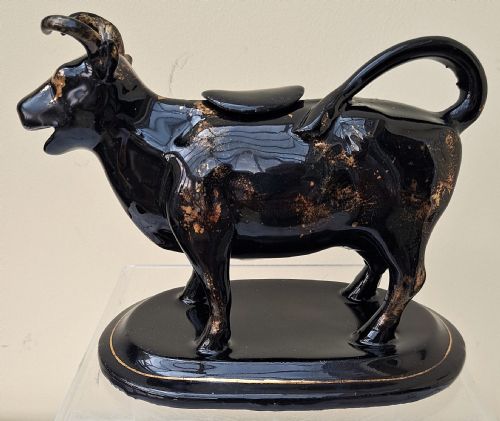
Surface decoration relied on hand-applied enamel colours and rich glazes, sometimes highlighted with gilt accents for decorative effect. Jackfield pottery variants utilised a distinctive glossy black glaze over earthenware bodies, creating a deep metallic sheen unique to the technique.
Staffordshire Ceramic Cow Retail Price Guide 2026
Typical asking prices for staffordshire ceramic cow among the pieces listed under this phrase on Sellingantiques today, from the lower quarter to the upper quarter. They describe what is for sale here now, not the wider market.
Listings feature earthenware and pearlware pieces spanning the nineteenth century, including Regency and Victorian periods alongside English and Welsh folk art styles.
Evaluating Quality
The sophistication of the glaze application also distinguishes finer pieces, with smooth, even coatings that enhance the underlying ceramic form. Additionally, the complexity of the subject matter - such as pairs featuring calves and milkmaids or intricate spill vase configurations - often indicates higher artistic ambition in the pottery.
The Staffordshire Ceramic Cow Glossary
- Earthenware
- Porous pottery fired at lower temperatures, commonly used for traditional Staffordshire figures and domestic vessels. It requires a glaze to become impermeable to liquids.
- Pearlware
- A refined type of earthenware developed in the late eighteenth century, featuring a subtle bluish glaze that pooled in recesses to mimic Chinese porcelain.
- Spill Vase
- A hollow decorative figurine designed to hold wooden spills or taper matches for lighting candles and fires. These objects combined practical household utility with whimsical display.
- Flatback
- A figure moulded with a flat, undecorated reverse side intended to stand directly against a wall or mantelpiece. This method saved clay and simplified production for larger mantel ornaments.
- Jackfield
- A style of glossy black-glazed earthenware originating from Shropshire and later adopted by other potteries. The dark metallic finish was particularly popular for utilitarian cream jugs.
Staffordshire Ceramic Cow: Frequently Asked Questions
What is a Staffordshire cow creamer?
A Staffordshire cow creamer is a ceramic milk jug modelled in the shape of a cow, often with a filling hole on the back and a mouth serving as the pouring spout.
These functional vessels were used at the tea table in the eighteenth and nineteenth centuries, combining playful design with everyday utility in country houses.
What is the difference between a figure and a spill vase?
A standard figure is a solid or hollow sculptural display piece meant purely for visual ornament on a shelf or mantel. A spill vase incorporates an integrated vertical cylinder designed to hold wooden taper matches.
Both forms share similar animal motifs and modelling techniques, but spill vases served the practical household purpose of containing fire-lighting sticks.
How do I display these ceramics safely?
These ceramic figures require stable shelving away from high-traffic areas or direct sunlight to protect their delicate painted enamels. Placing them securely on flat surfaces ensures their safety.
Pairs and groups look particularly striking when displayed together to recreate traditional nineteenth-century mantel arrangements.