


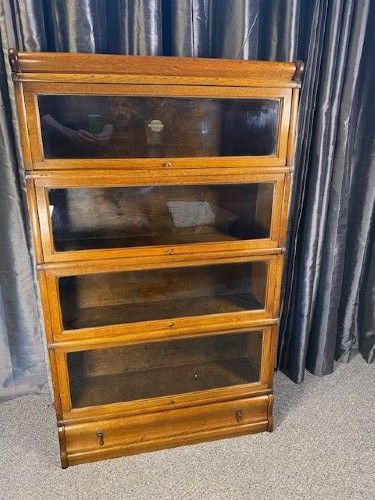
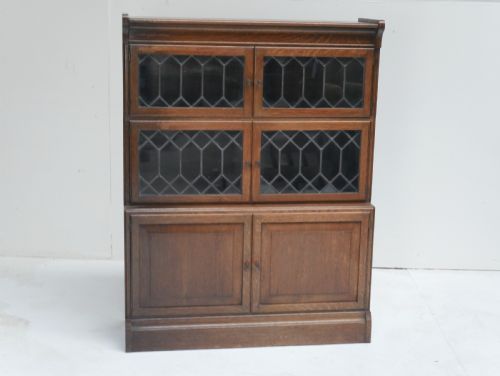

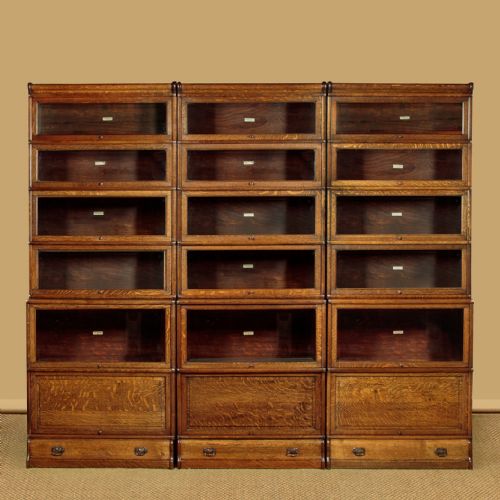


Stacking Glass Door Bookcase
These stacking glass door bookcase pieces offer modular utility and period charm, bringing adaptable shelving to any room.
Stacking Glass Door Bookcase
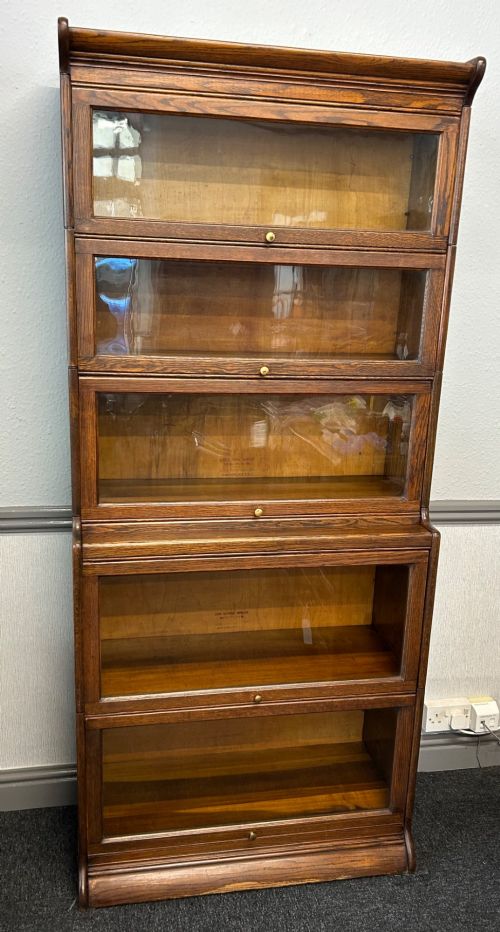
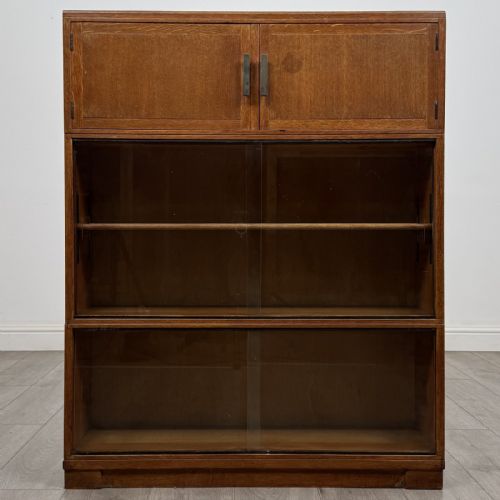
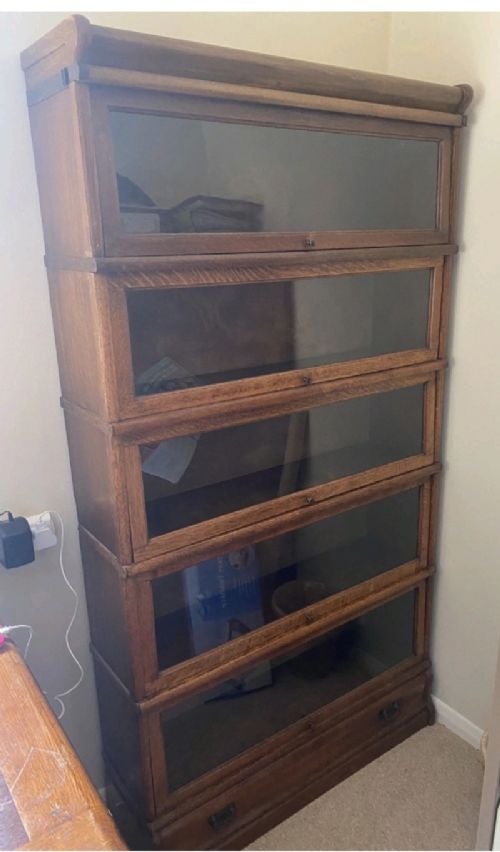
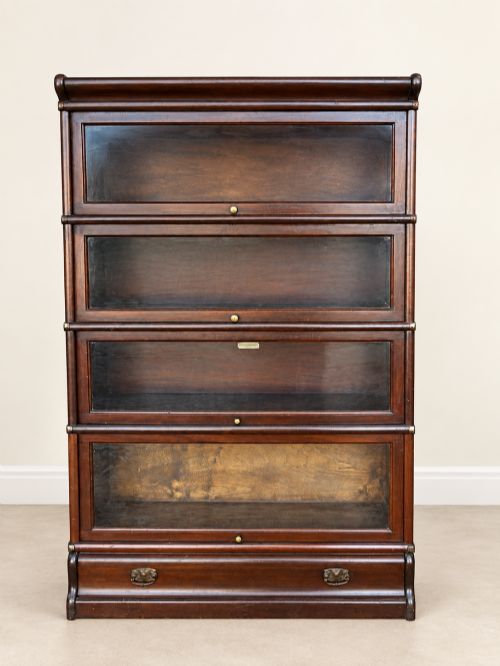
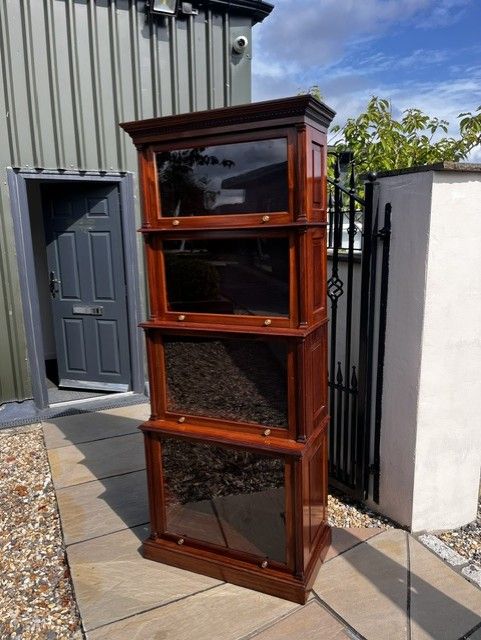
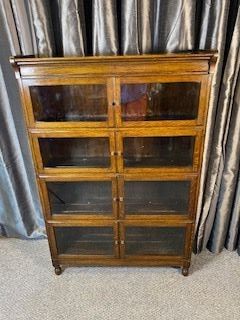
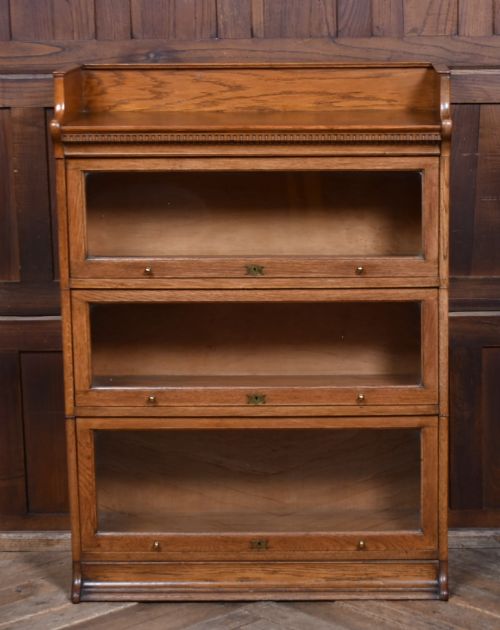
When you search for a stacking glass door bookcase, you are looking at modular sectional furniture designed to protect books while offering flexible display options. These pieces consist of individual stacked tiers with glazed fronts that lift and slide or open outwards.
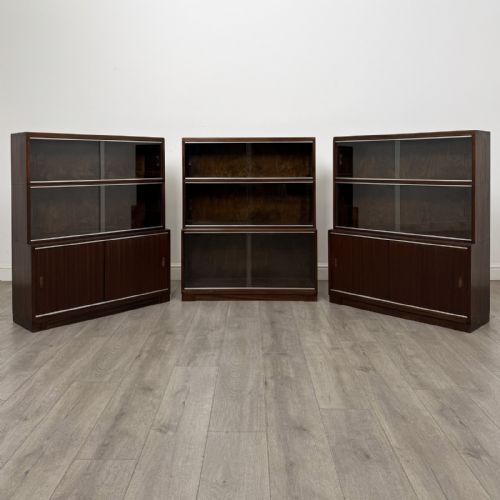
The versions you are most likely to meet on this page span the Edwardian period through to the mid-century, with many examples originating from the nineteen-hundreds and nineteen-twenties. Oak and mahogany dominate the selection, often taking the form of barrister or Globe Wernicke designs with multiple tiers.
Makers such as Globe Wernicke, Macey, Lebus, Minty, AMYL, and Gunn feature prominently among the sectional units listed. Buyers often find combinations ranging from three-section sets up to five-tier configurations, occasionally featuring a drawer at the base.
Construction Materials and Techniques
Makers utilised solid timbers and veneers, predominantly oak and mahogany, constructed in discrete modular sections that fit together vertically. This sectional method allowed offices and libraries to expand their shelving capacity simply by adding another tier.
Glass doors were fitted with brass hardware, operating via mechanisms that allowed the glazed panel to lift and slide inside the top of the tier. Some variations incorporated leaded glass panels, adding a distinct decorative touch to the Arts and Crafts or Edwardian styles.
Stacking Glass Door Bookcase Retail Price Guide 2026
Typical asking prices for stacking glass door bookcase among the pieces listed under this phrase on Sellingantiques today, from the lower quarter to the upper quarter. They describe what is for sale here now, not the wider market.
One set carries a London gallery label, proving even office furniture needs a proper city address.
Assessing Quality in Sectional Bookcases
Quality rests upon the precision of the modular joinery and the integrity of the stacking mechanism. Finer examples maintain smooth operation in the sliding door gear across every tier without binding or dropping.
The choice of timber and the execution of details such as base drawers, brass fittings, and leaded glass work elevate certain pieces above standard commercial utility items. Maker signatures or stamps from established firms also indicate higher manufacture standards.
Globe Wernicke·Macey·Lebus·Minty·AMYL·Gunn·Phoenix Gallery
The Stacking Glass Door Bookcase Glossary
- Sectional bookcase
- Furniture built from multiple independent horizontal tiers that stack vertically to form a single tall cabinet. This design allows the entire assembly to be dismantled for transport.
- Globe Wernicke
- A prominent proprietary system of modular barrister bookcases popularised at the turn of the twentieth century. The name is often used generically to describe any stacking glazed bookcase.
- Up and over doors
- Glazed cabinet doors that lift outwards and slide back into the interior ceiling of the shelf compartment. This mechanism keeps the door out of the way while accessing books.
- Barrister bookcase
- A portable stacking bookcase originally designed for travelling lawyers to transport books securely. The glazed tiers protect volumes from dust and moisture.
- Leaded glass
- Small panes of glass held together by lead cames to form geometric or decorative patterns. This technique appears on specific Edwardian and Arts and Crafts cabinet doors.
Stacking Glass Door Bookcase: Frequently Asked Questions
How do the glass doors open?
The glass doors on these sectional bookcases typically lift outwards and slide horizontally into the top of each individual tier on a metal pin or scissor mechanism.
This clever engineering keeps the glass safely tucked away inside the shelf compartment while you select or return a book.
Can the sections be separated?
Yes, the primary feature of a stacking bookcase is that each tier, along with the base and top cornice, remains completely independent.
They simply rest one upon another using interlocking joints, making moving and reconfiguring the cabinet straightforward.
What wood types are most common?
Oak and mahogany appear most frequently across these listings, spanning golden oak finishes to rich dark mahogany tones.
Variations such as limed oak also exist in mid-century pieces, reflecting shifting interior design tastes over the decades.
Are these cabinets suitable for modern homes?
Their vertical orientation and shallow depth make them exceptionally practical for studies, living rooms, and narrow hallways where floor space is limited.
The enclosed glass shelves also keep book collections free from dust while maintaining full visibility.