





Stacked Wooden Bookcase
A stacked wooden bookcase is a modular piece that organises a library while adapting to the room.
Stacked Wooden Bookcase
A stacked wooden bookcase consists of modular tiers that house volumes while offering flexible arrangement. When searching for a stacked wooden bookcase, collectors encounter formats produced across the early to mid-twentieth century.
The pieces appearing on this page span several decades from the nineteen hundreds to the nineteen fifties. Makers adopted distinct regional styles including Edwardian, Arts and Crafts, Art Deco, and Mid-Century Modern.
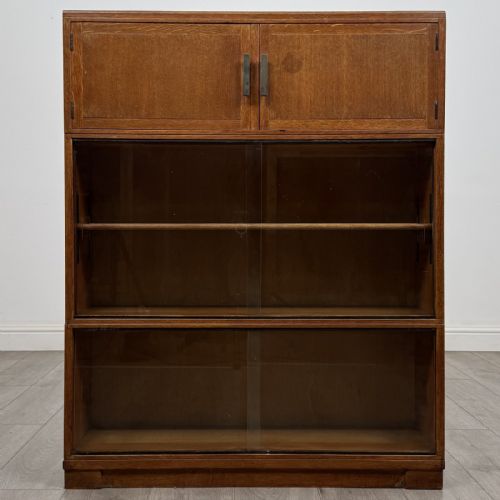
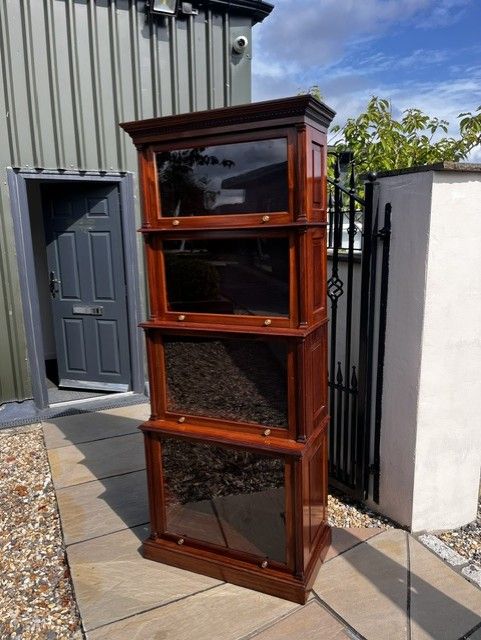
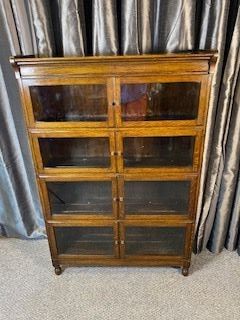
Forms range from tall narrow configurations to wider sectional cabinets with glass fronts. These items originate from British workshops and galleries such as Minty and the Phoenix Gallery.
How they were made
Construction relies heavily on solid mahogany and oak timbers selected for durability and grain pattern. Workshops utilised brass hardware for structural joints and operational mechanisms.
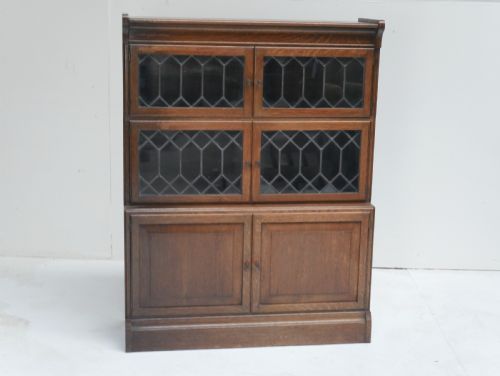
Glazing techniques include standard glass and leaded glass panels fitted into individual tier doors. Metal components provide internal reinforcement for the stacking mechanism.
Stacked Wooden Bookcase Retail Price Guide 2026
Typical asking prices for stacked wooden bookcase among the pieces listed under this phrase on Sellingantiques today, from the lower quarter to the upper quarter. They describe what is for sale here now, not the wider market.
Materials recorded across current items include solid mahogany, oak, brass, lead, and leaded glass.
What varies in quality
Quality rests upon the selection of timber grades, with solid mahogany examples displaying superior joinery compared to basic variants. The precision of the modular stacking mechanism determines how smoothly the tiers interact.
Makers such as Minty introduced refined proportions and cabinetwork that elevate certain editions above standard workshop output. Original glass panels and intact brass fittings preserve the integrity of the piece.
Minty·Phoenix Gallery
The Stacked Wooden Bookcase Glossary
- Modular
- Constructed in separate, stackable sections that fit together vertically. This design allows the bookcase to be easily disassembled and reassembled.
- Barrister
- A style of stacking bookcase featuring upward-lifting glass doors that slide into the cabinet above each shelf. It was originally designed for legal professionals to protect books during transport.
- Leaded glass
- Glass panes held together by narrow strips of lead into decorative geometric patterns. This technique is frequently seen in Edwardian and Arts and Crafts examples.
- Edwardian
- A stylistic period spanning the early twentieth century defined by lighter proportions and eclectic revivals. Pieces from this era often balance traditional craftsmanship with functional innovation.
- Art Deco
- A design movement from the nineteen thirties characterised by sleek lines and streamlined geometric forms. Cabinets from this period depart from ornate Victorian traditions.
Stacked Wooden Bookcase: Frequently Asked Questions
What is a stacked wooden bookcase?
A stacked wooden bookcase is a modular piece of furniture composed of individual tier sections placed one atop another. This design protects books behind glass doors while allowing the shelving unit to expand vertically.
Such cabinets appeared in various stylistic movements throughout the twentieth century, including Edwardian, Arts and Crafts, Art Deco, and Mid-Century Modern.
How do barrister bookcases work?
Barrister bookcases utilise separate shelving tiers fitted with glass doors that lift upwards and slide into the cabinet cavity above the books. This mechanism shields volumes from dust while enabling quick access.
The modular structure means the entire cabinet separates into individual boxes for moving.
What woods were used?
Makers predominantly utilised solid mahogany and oak for the primary carcass and shelving construction. These hardwoods provided the necessary structural strength to support heavy rows of books across multiple stacked tiers.
Complementary materials such as brass and leaded glass frequently appear on specific Edwardian and Art Deco editions.
How to date these bookcases?
Dating relies on stylistic markers, construction methods, and material choices associated with particular decades. Pieces span from nineteen hundred through the nineteen fifties, reflecting shifts from Edwardian and Arts and Crafts designs toward Art Deco and Mid-Century Modern.
Maker stamps or workshop labels, such as those from Minty, offer definitive chronological markers.
Where were they made?
These bookcases were produced by British workshops, furniture makers, and retailers during the twentieth century. Notable examples originated from firms in London and Oxford.
Galleries and manufacturers distributed these modular systems to professional studies and domestic libraries alike.