



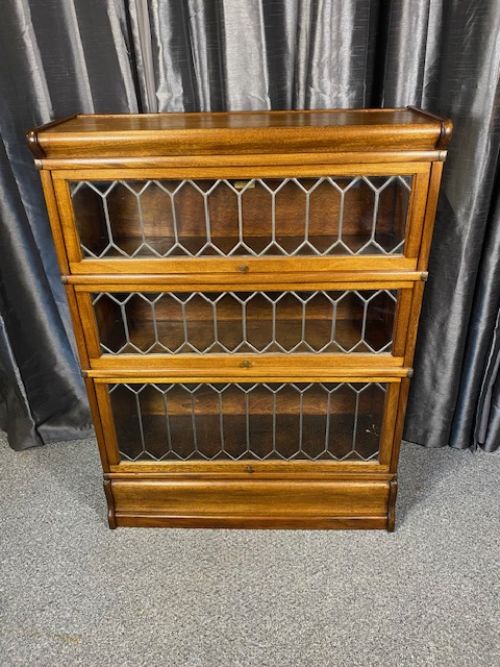

Stacked Lawyer Cabinet
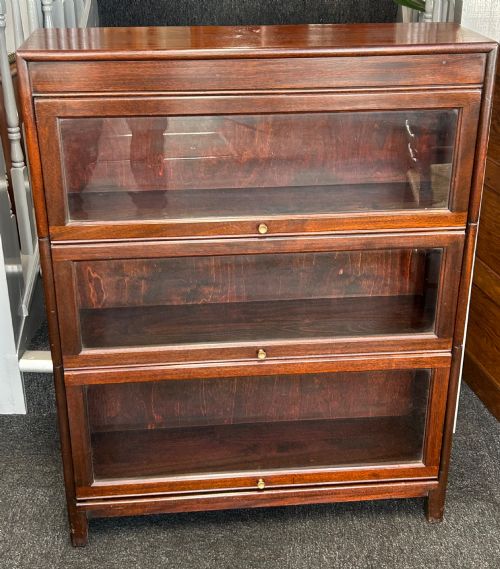
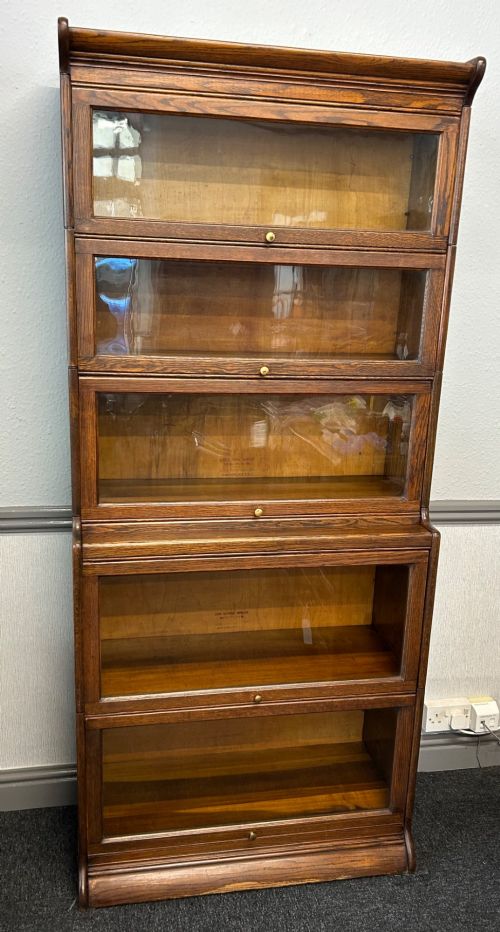
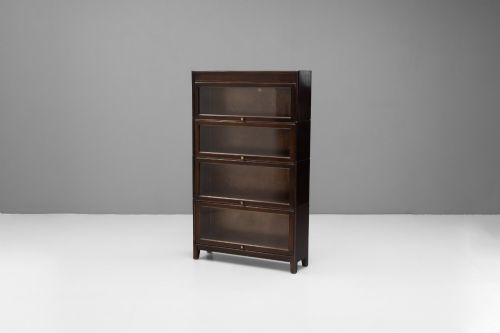
A stacked lawyer cabinet is a modular bookcase built from independent glazed tiers that lift and slide shut to protect valuable books.
Stacked Lawyer Cabinet
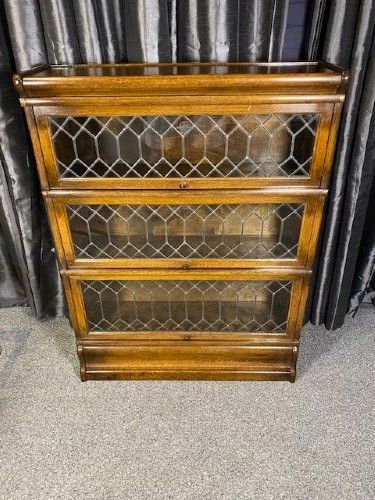
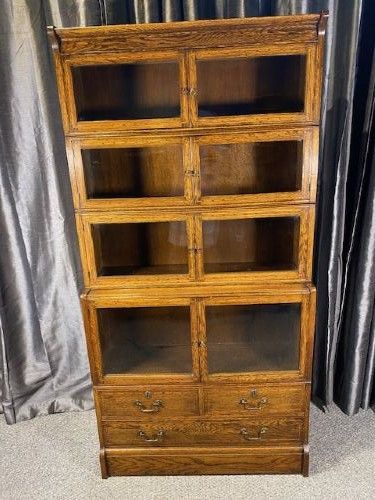
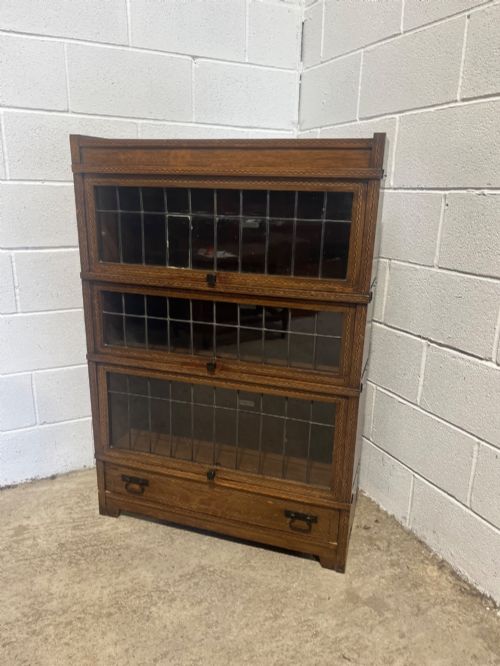
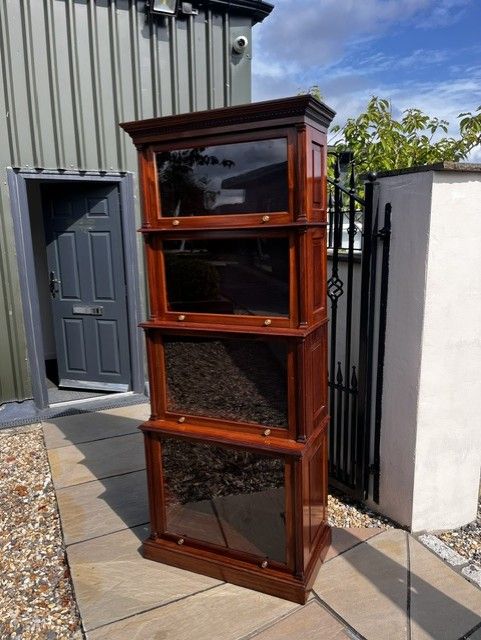
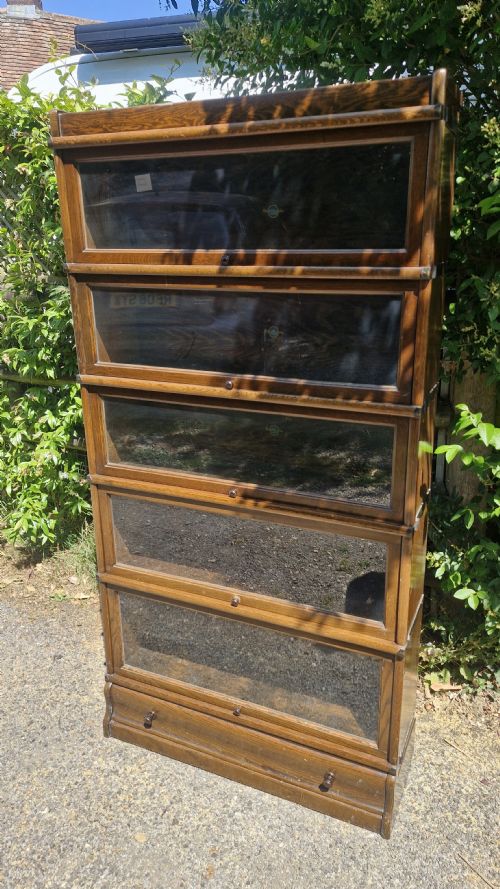
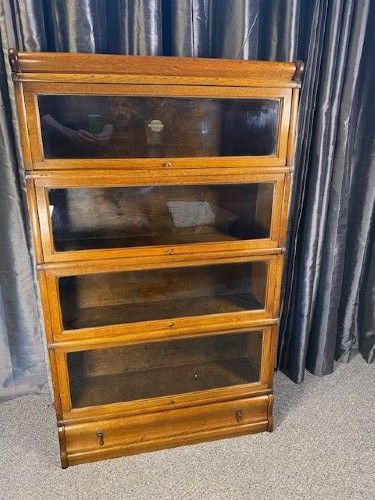
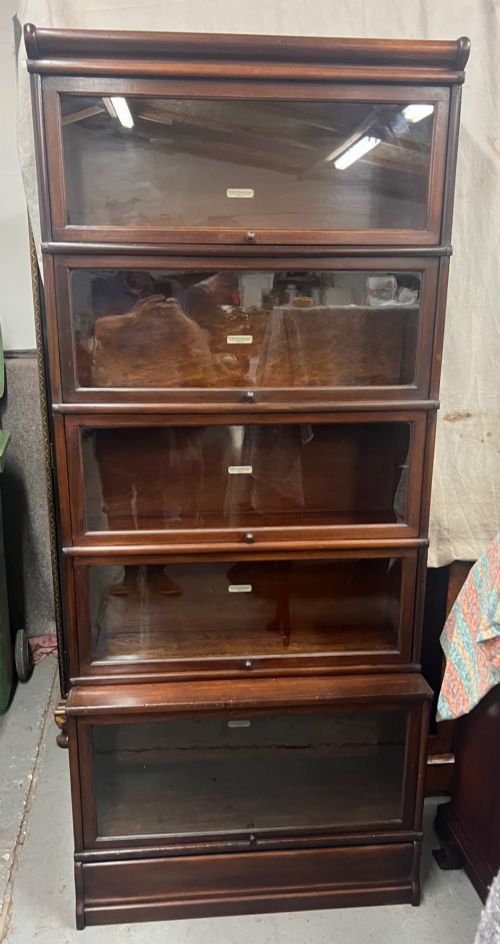
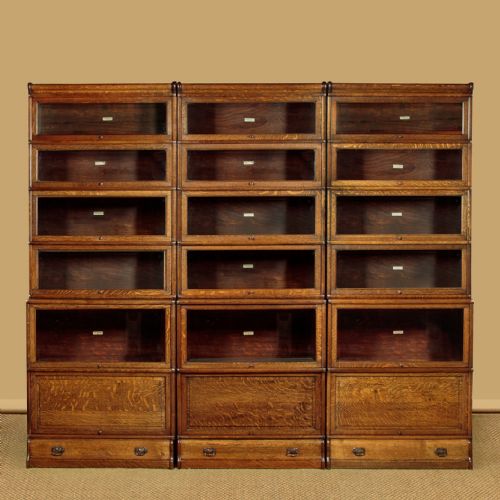
When you search for a stacked lawyer cabinet, you encounter modular bookcases designed to house professional libraries in modular sections. These sectional items appear primarily in oak and mahogany, spanning the Edwardian period through the nineteen thirties.
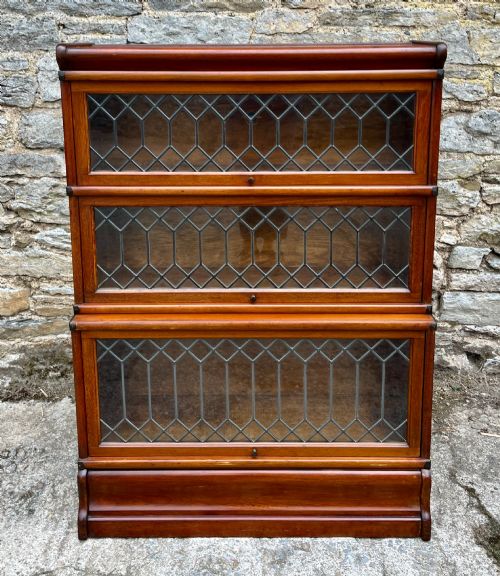
The prevailing form on this page uses glass-fronted tiers that stack vertically upon a base and beneath a cornice. Most examples follow commercial office designs from nineteen hundred to nineteen twenty, featuring upward-opening doors.
How they were made
Joiners built these cabinets using solid oak and mahogany, frequently pairing timber frames with clear or leaded glass panels. Metal mechanisms and brass hardware allow individual tiers to lift and slide smoothly into the cabinet recess.
Makers constructed each tier as a self-contained box with interlocking top and bottom joints so the units stack without permanent fixings. Some pieces incorporate decorative inlay or specific hardware branded by the manufacturer.
Stacked Lawyer Cabinet Retail Price Guide 2026
Typical asking prices for stacked lawyer cabinet among the pieces listed under this phrase on Sellingantiques today, from the lower quarter to the upper quarter. They describe what is for sale here now, not the wider market.
Early lawyers used these stacking tiers so they could pack up their entire library and move it quickly when court cases called.
What varies in quality
The calibre of a stacked lawyer cabinet depends heavily on the timber selection and the integrity of the mechanical door action. Solid mahogany and figured oak command greater appreciation than plain commercial veneers.
Quality also shows in the original brass fittings, the clarity of the glass, and whether individual makers' stamps remain intact on the woodwork.
Gunn Furniture·Macey·Globe Wernicke·Warwick
The Stacked Lawyer Cabinet Glossary
- Sectional bookcase
- A bookcase built from multiple independent tier units that stack together vertically. This modular construction allows the cabinet to be easily dismantled and moved.
- Up and over door
- A glazed door featuring a mechanical scissor arm or track that lifts upward and slides into the recess above the books. This mechanism protects the volumes while open.
- Cornice
- The moulded decorative projection that sits at the very top of the cabinet. It crowns the uppermost tier.
- Base
- The bottom plinth or footed platform upon which the stacked tiers rest. It keeps the lowest section elevated from the floor.
- Leaded glass
- Glass panes held together by narrow cames of lead in decorative geometric patterns. This technique appears on select Edwardian variants.
Stacked Lawyer Cabinet: Frequently Asked Questions
How do the doors work?
The doors use an internal metal track or scissor mechanism that guides the glazed panel upward. Once lifted, the door pushes smoothly into the recess above the shelf.
This clever design lets you keep the door open while reading without it swinging outward into the room. It also protects the contents from dust and environmental wear.
Are all sections removable?
Yes, each tier is an entirely separate wooden box that rests on the unit below it. They lock together vertically using simple pin or groove joints rather than permanent fixings.
This construction makes transport straightforward because you can separate the cornice, individual tiers, and base. It also allows owners to rearrange the order of the shelves.
How do I date these cabinets?
Dating relies on timber choices, hardware styles, and manufacturer marks stamped inside the wooden frames. Oak models typically point to the Edwardian era and nineteen tens, while mahogany versions often date toward nineteen twenty.
Stylistic details like leaded glass panels or inlaid banding also help place a piece within the early twentieth century. Maker plaques provide the most direct indicator of production dates.