




St Ives Watercolour
These st ives watercolour works capture coastal light and harbour life, offering collectors a direct link to Britain's most storied artist colony.
St Ives Watercolour
When you search for st ives watercolour, you are looking at works on paper that record the coastal scenery, harbours, and streets of this Cornish town. The pieces on this page span from the nineteenth century through the mid-twentieth century, capturing shifts in artistic perception along the coast.
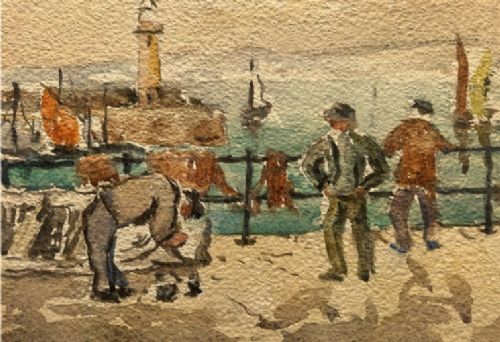
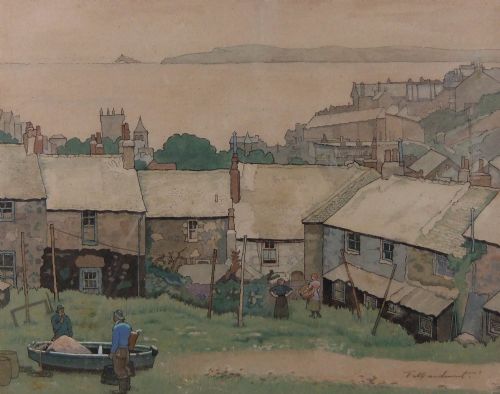
The most common examples you will meet here are marine watercolours and coastal views set in the harbour or fields. Artists like George F Pennington and Ernest F Hill frequently turn to these local subjects.
Works range in style from Victorian fine art and early twentieth century impressionism to mid-century modern abstraction. This diversity shows how the town attracted both traditional marine painters and experimental modernists over decades.
How they were made
These works are executed primarily in watercolour pigment on paper, sometimes incorporating ink, pastel, or bodycolour to build texture and tone. Painters applied these water-based mediums swiftly to capture shifting coastal light and weather.
Many of the framed works utilise glass for protection and gilt wood for the surrounding mouldings. The combination of paper support and traditional framing preserves the delicate pigment against light damage.
St Ives Watercolour Retail Price Guide 2026
Typical asking prices for st ives watercolour among the pieces listed under this phrase on Sellingantiques today, from the lower quarter to the upper quarter. They describe what is for sale here now, not the wider market.
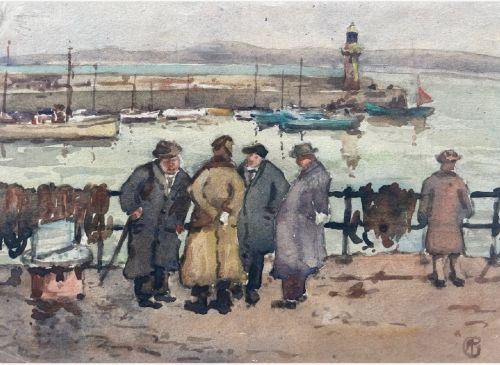
Men in heavy overcoats brave the Cornish chill in these harbour scenes, proving that even artists need a warm coat.
What varies in quality
The strength of a st ives watercolour rests in the handling of light, atmosphere, and maritime detail. Stronger examples demonstrate confident brushwork and a clear sense of place, whether depicting bustling harbours or quiet streets.
Condition of the paper and preservation of the pigments also separate pieces. Works that retain their original vibrancy without excessive fading or paper discoloration stand closer to the top of the range.
George F Pennington·William Banks Fortescue·Thomas Maidment·Ernest F Hill·Adrian Heath·David Woodlock·Fred Mayor·Cuthbert Crossley·Henry Silkstone Hopwood
The St Ives Watercolour Glossary
- Watercolour
- A paint consisting of pigment suspended in a water-based solution, applied primarily to paper supports.
- Gilt wood
- Wood framing treated with gold leaf or a gold-coloured metallic finish, commonly used to frame nineteenth and twentieth century art.
- St Ives School
- A group of artists associated with the Cornish town who embraced both traditional landscape and modernist abstraction.
- Impressionism
- An art style focused on accurate depiction of light in its changing qualities, seen in early twentieth century coastal works here.
St Ives Watercolour: Frequently Asked Questions
What subjects do st ives watercolour paintings usually show?
These works typically depict marine scenes, harbour views, local cottages, and coastal landscapes around Cornwall. Artists focused on the specific atmosphere of the fishing port and its surrounding fields.
Some pieces also venture into mid-century abstraction, reflecting the changing artistic community found in the town over the decades.
How do I care for a vintage watercolour painting?
Keep the artwork away from direct sunlight to prevent the watercolour pigments from fading over time. Maintaining a stable indoor humidity helps protect both the fragile paper and any traditional gilt wood framing.
Displaying the piece behind glass ensures dust and atmospheric pollutants do not settle directly onto the painted surface.
How can I tell the period of a watercolour?
The stylistic approach offers a primary clue, moving from Victorian fine art and early twentieth century impressionism toward mid-century modern abstraction by the nineteen-sixties. Framing materials and paper characteristics also provide hints regarding the age of the piece.
Signatures, dates left by artists such as George F Pennington, and subject matter help narrow down the decade of creation.
Where were these artists working?
The creators of these works were based in or visiting the Cornish coastal town, which grew into a renowned hub for British artists. Painters gathered to work outdoors, capturing the unique marine conditions and local community life.
Their output reflects both traditional marine documentation and the experimental modernism that defined the colony.