

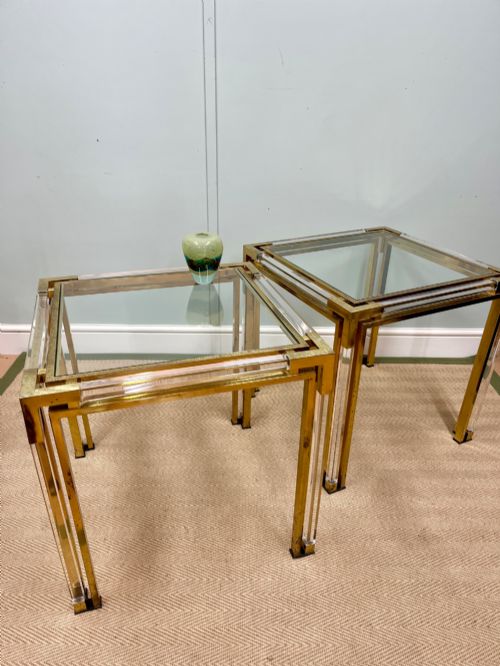


Square Glass Tables
Square glass tables bring crisp geometry and reflective surfaces to a room, spanning periods from George III mahogany display pieces to Art Deco chrome designs.
Square Glass Tables
When you search for square glass tables, you encounter an eclectic mix of forms ranging from Edwardian biscuit jars and mantel clocks to actual side tables, coffee tables, and display tables. These pieces utilise transparent materials to create a sense of light and space within an interior.
The versions most commonly met on this page combine glass with brass, chrome, or mahogany frames, reflecting aesthetic shifts from 1800s George III work through the 1920s and 1930s into the 1960s.
How square glass tables were made
Maker construction relies heavily on combining structural frames of brass, chrome, or mahogany with panels of cut glass, lead crystal, or opaline uranium glass. Metal elements provide rigidity while glass surfaces create the primary visual planes.
Techniques range from traditional cabinetmaking seen in George III mahogany display frames to industrial plating and metalwork typical of Art Deco chrome clock cases and side tables.
Square Glass Tables Retail Price Guide 2026
Typical asking prices for square glass tables among the pieces listed under this phrase on Sellingantiques today, from the lower quarter to the upper quarter. They describe what is for sale here now, not the wider market.
Some clocks incorporate bell-jar cases and uranium glass, glowing unexpectedly under ultraviolet light while keeping time across the decades.
What varies in quality
Quality rests upon the crispness of the framing materials, such as the weight and polish of brass or chrome against the clarity of the glass panels. Pieces utilising denser hardwoods like mahogany or specialised glass like lead crystal and opaline exhibit superior material substance.
The integration of design periods dictates the refinement of the object, where clean modernist lines or deliberate Edwardian cutting show greater design coherence than standard production pieces.
Smith Electric·Peter Ghyczy·P.M.Favre·Jaeger Le Coultre
The Square Glass Tables Glossary
- Cut glass
- Glass decorated by grinding facets or patterns into the surface using a wheel. This technique creates sharp light refraction across the object.
- Opaline glass
- A semi-translucent glass developed in various pastel or bright shades. It diffuses light softly through the body of the piece.
- Uranium glass
- Glass containing trace amounts of uranium oxide, which glows green under ultraviolet light. It appears frequently in twentieth-century decorative objects.
- Mahogany
- A durable tropical hardwood prized for its deep reddish-brown tone and fine grain. It forms the structural base for traditional display and table pieces.
Square Glass Tables: Frequently Asked Questions
What periods do these pieces cover?
The inventory spans from the George III period around 1800 through Edwardian and Art Deco eras up to the 1960s. This wide chronological range encompasses distinct aesthetic shifts.
You will find traditional wood and glass combinations alongside twentieth-century chrome, brass, and modernist table designs.
How do I clean antique glass surfaces?
Gentle cleaning with a soft cloth and mild soapy water preserves the integrity of older glass and metal mounts. Avoid harsh chemical cleaners that might damage aged finishes.
Take care around joined brass or chrome elements to prevent moisture accumulation in the joints.
Where should I place a display table?
These tables suit bright reception rooms or hallways where reflective glass surfaces can catch and distribute natural light. Their compact forms fit well beside seating areas.
Ensure the surrounding floor space complements the specific period style, whether that is modernist chrome or George III mahogany.
Are all these items tables?
The search covers various objects incorporating glass and square forms, including side tables, display cabinets, clocks, and lamps. Each utilises transparent elements to lighten its visual footprint.
Checking the individual object type ensures you select the specific functional form you need for your interior.