




Spool Turned Wood Chair
A spool turned wood chair brings tactile presence to a room through dense rows of rounded wooden turnings.
Spool Turned Wood Chair
A spool turned wood chair relies on cylindrical timber sections shaped on a lathe to resemble reels or bobbins, creating a rhythmic and decorative structural framework. These seating forms emerge primarily from the nineteenth century, spanning Victorian workshops, vernacular traditions, and continental revivals.
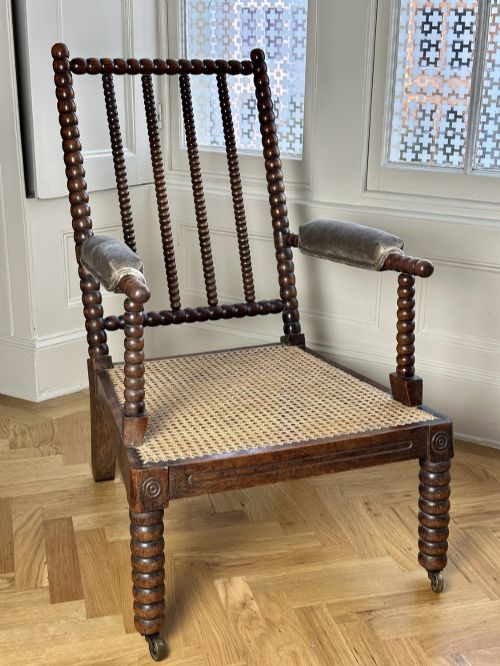
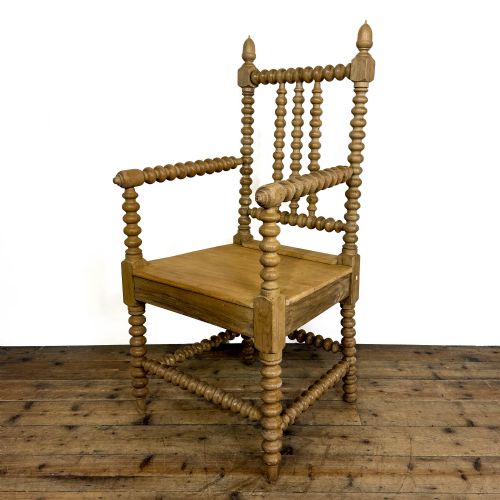
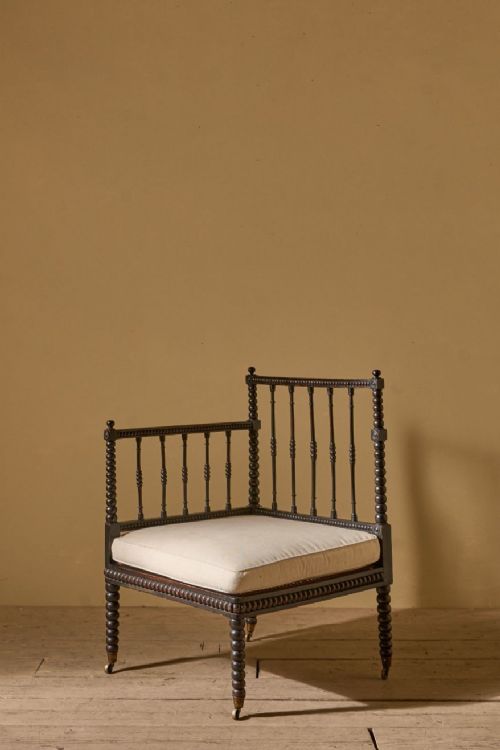
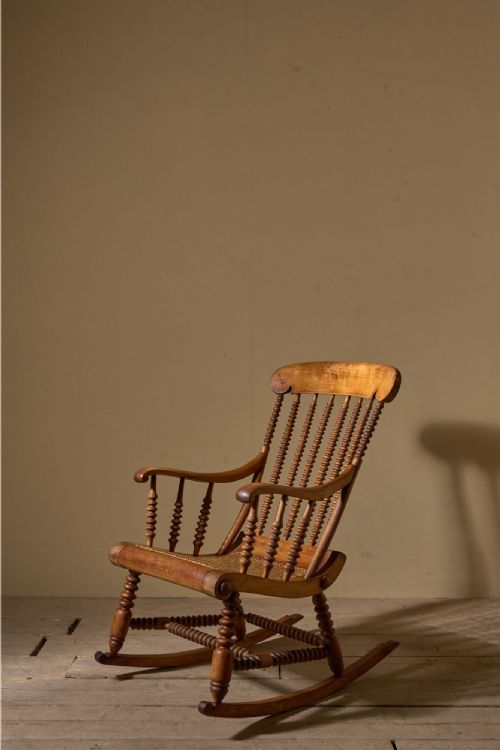
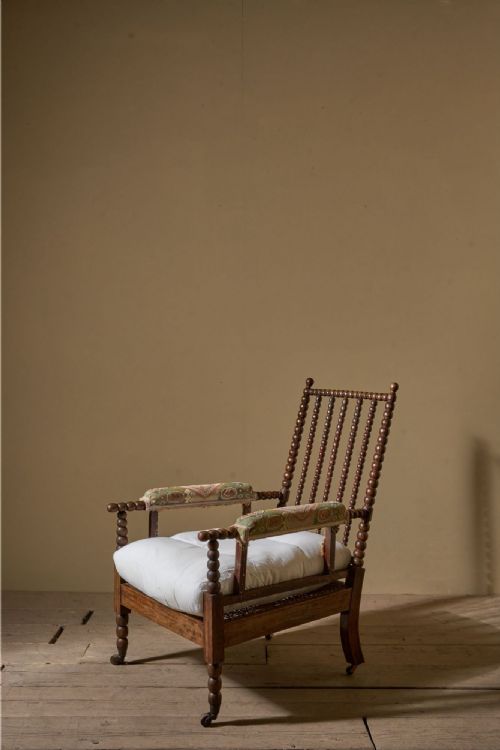
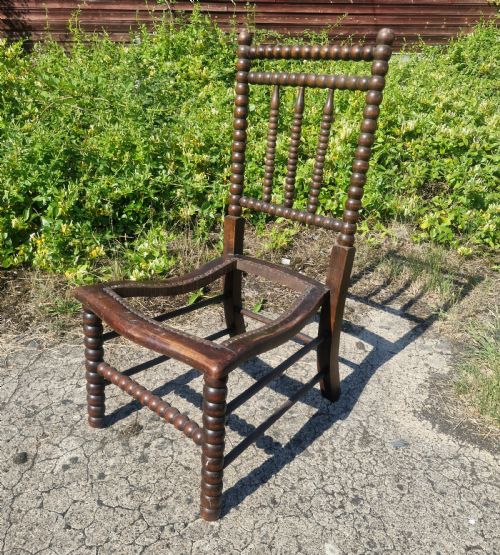
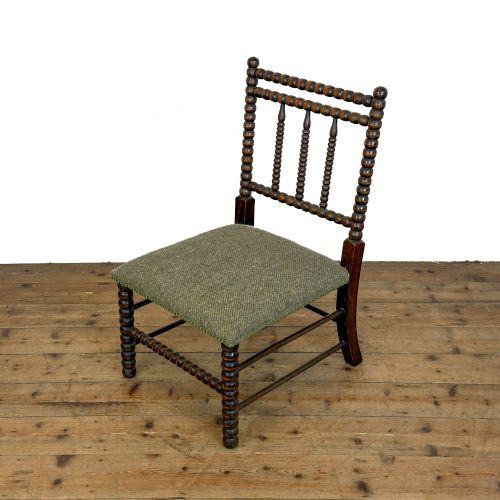
Buyers encounter diverse configurations on this page, ranging from low bedroom side chairs and corner seats to rocking chairs, armchairs, and daybeds. Woods such as oak, walnut, and hardwood form the primary skeletons, occasionally ebonised or finished to simulate exotic timbers.
Regional variations appear clearly across the selection, connecting pieces to Scottish vernacular building methods, Swedish country folk art, and Italian baroque revival idioms. The fundamental unifying element remains the repetitive turned profile that defines the legs, stretchers, and back supports.
How they were made
Craftsmen shaped solid hardwoods including oak and walnut on lathes, dividing the timber components into precise, repeating spherical and cylindrical segments. These turned spindles formed rigid structural elements for uprights, arms, and underframing.
Upholstery and woven seating elements integrated directly with the turned frames, utilising textiles, fabric, and cane inserts for backrests and drop-in seats. Frame joints relied on traditional pegged and mortise construction to maintain stability under the decorative turned members.
Spool Turned Wood Chair Retail Price Guide 2026
Typical asking prices for spool turned wood chair among the pieces listed under this phrase on Sellingantiques today, from the lower quarter to the upper quarter. They describe what is for sale here now, not the wider market.
Listings feature nineteen-century periods and revival styles, incorporating materials such as oak, walnut, cane, and brass across various chair forms.
What varies in quality
The precision and depth of the lathe work distinguish finer examples, where each individual spool maintains crisp definition and uniform spacing along the length of the timber. Softer or shallower turnings often indicate a more utilitarian production that lacks the visual rhythm of superior pieces.
Choice of materials alters the character of the seating, with dense hardwoods like walnut and ebonised finishes providing a sharper contrast than plain softwood or less defined secondary timbers. The integrity of the original joints and the survival of early cane or fabric panels further separate standard examples from exceptional survivals.
The Spool Turned Wood Chair Glossary
- Bobbin turning
- A form of woodturning characterised by a sequence of rounded, spool-like shapes resembling bobbins of thread placed end to end. This technique defines the primary decorative vocabulary of the seating on this page.
- Ebonised
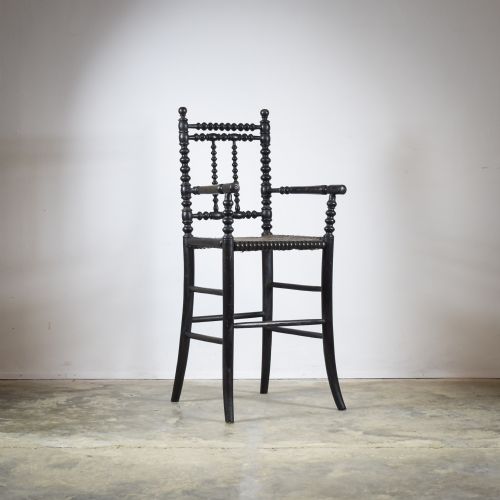
- Timber treated with a dark stain or chemical process to imitate ebony. This dark finish highlights the silhouettes of the turned wooden components.
- Vernacular
- Objects built by regional makers using local materials and traditional methods rather than adhering to high-style metropolitan workshop patterns. Scottish vernacular and Swedish country pieces exemplify this approach.
- Corner chair
- A seating form designed to fit into the corner of a room, featuring a diagonal orientation with a curved back rail supported by turned posts. These pieces often utilise bobbin framing on the legs and spindles.
Spool Turned Wood Chair: Frequently Asked Questions
What is a spool turned chair?
A spool turned chair is a seating piece built with wooden framing shaped into continuous rows of rounded bobbins or spools. These turned elements form the legs, arms, and back rails.
Most surviving examples date from the nineteenth century, produced across various European and British regional traditions during the Victorian period.
How do I date a bobbin chair?
Dating relies on examining the timber species, construction methods, and stylistic context such as Victorian vernacular or revival forms. Nineteenth-century pieces typically show hand-turned members and traditional joinery.
Secondary clues include the type of upholstery, auxiliary materials like cane or brass, and the degree of wear on the wooden feet.
Where were spool turned chairs used?
These chairs served multiple domestic functions, appearing as bedroom side chairs, fireside armchairs, rocking chairs, and larger daybeds. Their decorative turned frames suited both formal reception rooms and country interiors.
Smaller variants included child's chairs and low seat formats designed for specific domestic seating needs.
How do I style a bobbin chair?
A bobbin chair works effectively as an accent piece in contemporary or traditional interiors, where its repetitive wooden silhouette adds distinct textural contrast. Pairing the chair with neutral textiles allows the turned frame to remain the visual focus.
Placing armchairs or rocking chairs in studies or bedrooms highlights their sculptural qualities while maintaining practical seating utility.