



Spool Turned Oak Chairs
Spool turned oak chairs are tactile seating pieces defined by distinctive rounded turnings, combining sturdy timber frames with traditional craft.
Spool Turned Oak Chairs
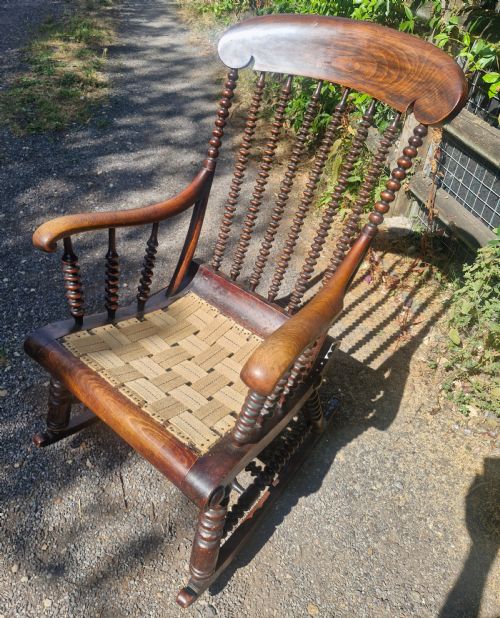
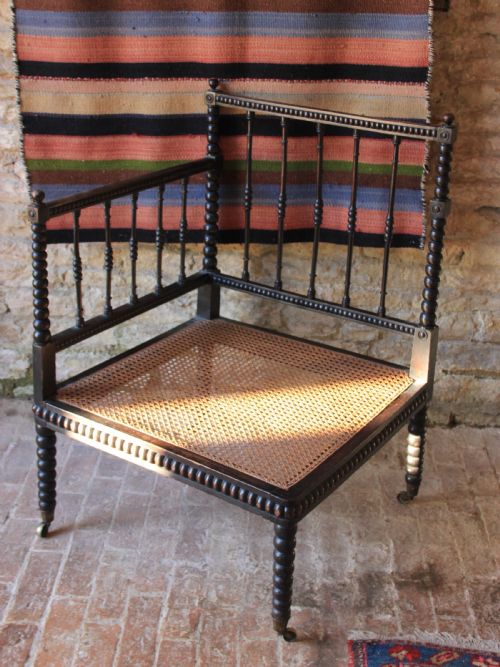
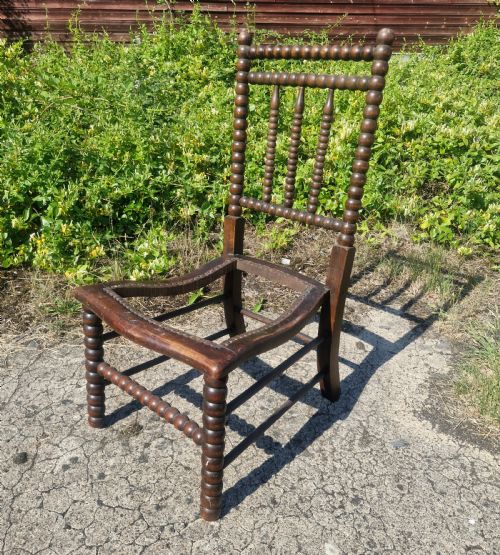
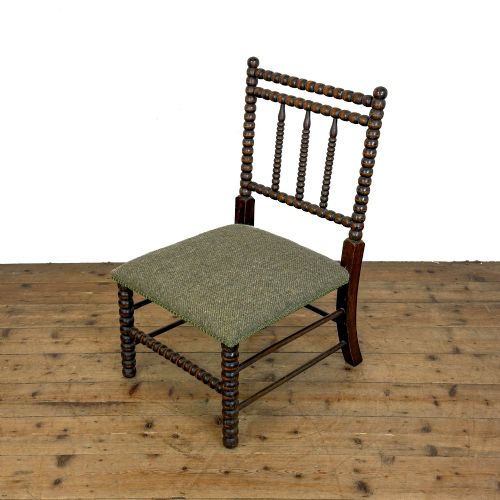
Spool turned oak chairs are seating pieces featuring repeated rounded wooden profiles shaped to resemble reels or bobbins along their framework. When you search for spool turned oak chairs, you encounter various forms ranging from side chairs and armchairs to corner seats, rocking chairs, and low bedroom chairs.
The examples on this page span the eighteenth and nineteenth centuries, taking in stylistic revivals such as Jacobean Revival alongside vernacular country traditions from England and Scotland. These pieces appear in configurations with solid timber, cane seats, or upholstered additions like velvet.
Nineteenth century interpretations make up a large portion of the available pieces, often drawing on earlier seventeenth century aesthetics while utilising the production methods of the Victorian era. Alongside these, eighteenth century pieces surface, offering earlier dates and distinct vernacular joinery.
How they were made
Makers constructed these chairs primarily using oak, often complemented by secondary timbers or ebonised wood finishes applied to achieve a uniform dark appearance. Lathe work created the characteristic bobbin or spool shapes along the uprights, stretchers, and rails.
Seats incorporated materials such as cane, woven webbing, or drop-in cushions covered in velvet, depending on the specific form and period of the chair. Joinery relied on traditional pegging and framing techniques suited to supporting the turned components under regular use.
Materials across the inventory include oak, brass, velvet, ebonised wood, and cane.
What varies in quality
Quality in these chairs rests upon the crispness and depth of the lathe turnings, where sharper profiles and uniform spacing denote careful workmanship. The choice of timber grain and the integrity of the structural joints also distinguish finer vernacular and revival examples from simpler utilitarian seating.
The retention of original seating materials, whether woven cane or early upholstery foundations, influences the character and integrity of each piece. Proportion and balance across the arms, legs, and back frames further separate standard production from more resolved historical examples.
The Spool Turned Oak Chairs Glossary
- Bobbin turning
- A form of woodturning characterised by a sequence of rounded swellings resembling spools or bobbins along the length of a spindle. This decorative technique appears extensively on seventeenth century furniture and later revival pieces.
- Vernacular
- Regional furniture made by local craftsmen following traditional patterns rather than high-style metropolitan designs. Scottish Vernacular and English Country examples show these localized construction traits.
- Cane
- Woven rattan strips used to form resilient, lightweight seats and backs on chairs. It offers flexibility and texture within the wooden framework.
- Ebonised wood
- Timber treated with stain, dye, or paint to imitate ebony. This dark finish was popular during the Victorian period for accentuating turned details.
- Jacobean Revival
- A nineteenth century design movement that reinterpreted seventeenth century English furniture styles. Pieces from this period often borrow heavy turning and rectangular proportions.
Spool Turned Oak Chairs: Frequently Asked Questions
What periods do these chairs come from?
The listings include pieces originating in the eighteenth century, alongside a greater number produced during the nineteenth century. Victorian interpretations and revivals form a significant portion of the available selection.
Dates span specific years such as mid eighteenth century examples through to late Victorian productions around the turn of the twentieth century.
How do armchairs differ from side chairs here?
Armchairs feature supporting armrests integrated into the turned framing, offering a more substantial seating option for living spaces or studies. Side chairs omit arms, providing a lighter profile suited for placement around tables or in bedrooms.
Both forms utilise the same spool turned woodwork vocabulary across their structural uprights and stretchers.
What seat types can I expect to find?
Seating surfaces vary according to the specific chair type and regional origin, including woven cane panels and solid timber boards. Some versions incorporate low seat heights designed for bedrooms or rocking functions.
Upholstered options featuring velvet and woven webbing also appear among the listed armchairs and rocking chairs.
Are rocking chairs common in this style?
Rocking chairs appear among both English and Scottish vernacular listings from the nineteenth century. These pieces combine the characteristic bobbin turned framework with curved rocking rails fitted to the base.
They provide a specialised seating form distinct from standard side and corner chairs.
What is a corner chair?
A corner chair is built with a diagonal orientation designed to fit neatly into room angles. The design typically incorporates a rounded backrest supported by multiple turned spindles above a square or shaped seat.
Examples from the nineteenth century utilise the same bobbin turned framing found on standard chairs.