





Spool Leg Furniture
Spool leg furniture brings together distinctive turned elements and sturdy timbers, offering immediate character to any room.
Spool Leg Furniture
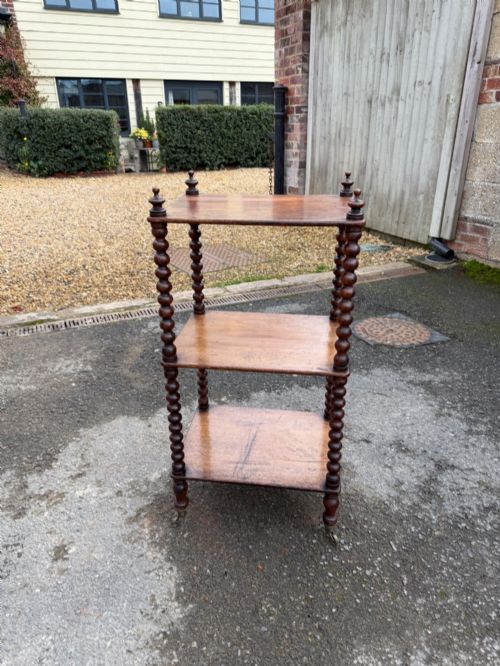
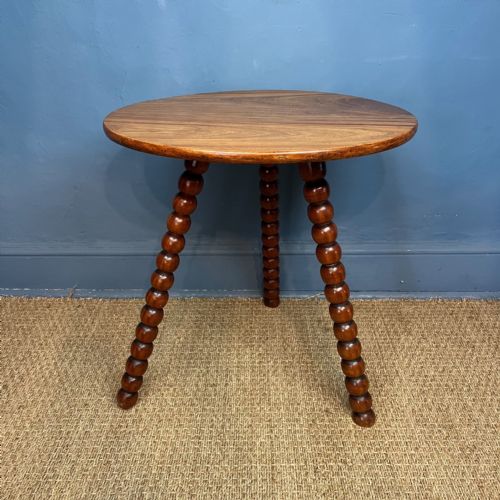
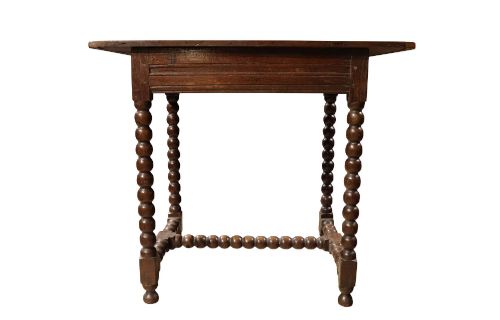
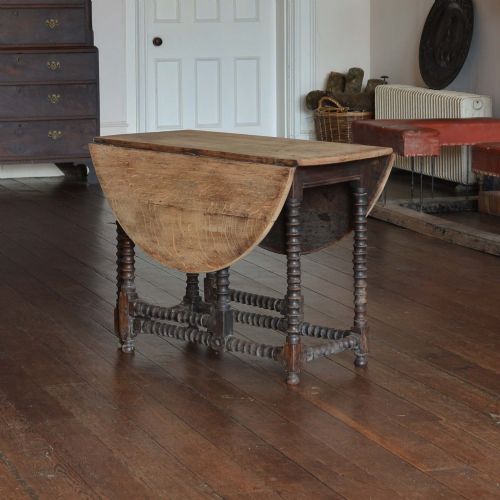
Spool leg furniture centres on pieces featuring cylindrical turnings resembling a string of spools or bobbins, appearing across the seventeenth and nineteenth centuries. These items range from side tables and occasional tables to gateleg drop-leaf tables and armchairs.
Buyers searching for spool leg furniture encounter both seventeenth-century examples and nineteenth-century revivals. The nineteenth-century pieces often utilise pine, walnut, or rosewood, whilst older items rely heavily on English oak.
Side tables and gateleg tables dominate the available forms, alongside occasional seating such as walnut and rosewood bobbin chairs. These pieces span styles from Jacobean Revival and rustic farmhouse to Victorian.
How spool leg furniture was made
Cabinetmakers shaped the characteristic turnings using a lathe, cutting repeating disc and cylinder shapes into solid timber legs and stretchers. Timbers such as oak, walnut, rosewood, yew wood, and pine provided the structural foundation for these turned elements.
Joinery methods varied according to the period, with seventeenth-century pieces employing pegged mortise and tenon construction alongside drop-leaf hinges. Later nineteenth-century examples incorporated cane seating, leather inserts, and simpler framing suited to pine and hardwood.
Spool Leg Furniture Retail Price Guide 2026
Typical asking prices for spool leg furniture among the pieces listed under this phrase on Sellingantiques today, from the lower quarter to the upper quarter. They describe what is for sale here now, not the wider market.
Form variations include side tables, occasional tables, gateleg tables, armchairs, and side chairs across multiple revival styles.
What varies in quality
Quality rests upon the precision of the timber turning and the integrity of the original wood. Crisp, well-defined bobbin profiles on seventeenth-century oak or nineteenth-century rosewood distinguish finer examples from softer, less detailed work.
The choice of material heavily influences the character of the piece, with dense hardwoods like walnut and rosewood holding sharper turned details than softer pine or basic hardwood. Original construction integrity and surface condition determine how well the piece retains its structural balance.
The Spool Leg Furniture Glossary
- Bobbin turned
- Timber shaped on a lathe to create a series of rounded bosses resembling spools of thread. This turning style defines the legs and stretchers of the furniture.
- Gateleg table
- A table with hinged drop leaves supported by legs that swing outward like a gate. This form allows the surface area to expand or contract.
- Cricket table
- A small, three-legged occasional table typically constructed from pine or oak. The three-legged design ensures stability on uneven floors.
- Jacobean Revival
- A nineteenth-century design movement resurrecting seventeenth-century motifs. Pieces in this style utilise heavy turning and dark oak.
- Drop-leaf
- A tabletop design featuring hinged flaps that fold down when not in use. This mechanism saves space in domestic settings.
Spool Leg Furniture: Frequently Asked Questions
What is spool leg furniture?
Spool leg furniture designates tables and chairs featuring turned wooden legs shaped like bobbins or spools. These turned components appear on seventeenth-century oak pieces and nineteenth-century revivals alike.
Craftsmen produced these distinctive turnings on a lathe, applying them to side tables, gateleg tables, and armchairs. The result is a repeating cylindrical pattern that provides both support and visual texture.
How do I date spool leg furniture?
Dating spool leg furniture involves examining the timber species, construction methods, and overall form. Seventeenth-century items typically utilise English oak with traditional joinery, whilst nineteenth-century pieces often employ walnut, rosewood, or pine.
Revival pieces from the Victorian era frequently imitate earlier Jacobean styles. Inspecting the underside, hinge types, and wear patterns helps clarify the age of the piece.
Where should I place a bobbin table?
A bobbin table functions well as an occasional surface in a hallway, living room, or study. Their compact dimensions make them suitable for spaces requiring a distinct decorative accent.
Gateleg versions offer flexible surface space for dining or display when extended. Smaller side tables fit comfortably beside armchairs or against walls.
What woods were used for spool furniture?
Cabinetmakers utilised a variety of timbers depending on the production period. Early examples relied primarily on English oak, whereas nineteenth-century pieces incorporated walnut, rosewood, yew wood, and pine.
The choice of wood affects both the colour and the sharpness of the turned details. Hardwoods like rosewood and walnut accepted fine lathe work particularly well.