



Split Section Chest
A split section chest offers clever modular design and sturdy portability, making it a practical and historic storage solution for any interior.
Split Section Chest
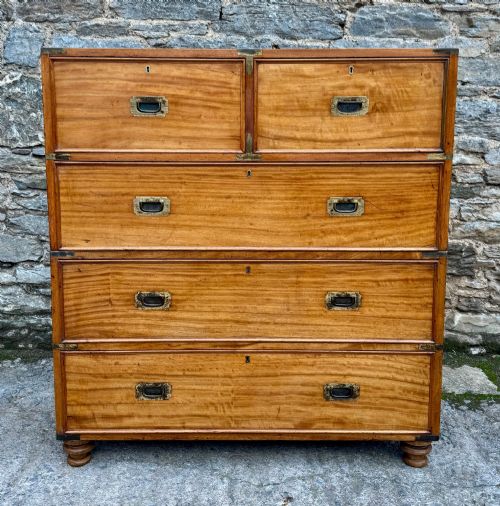
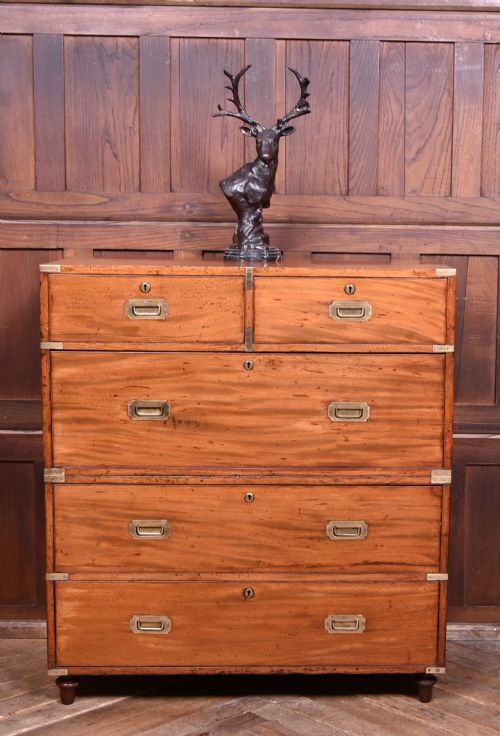
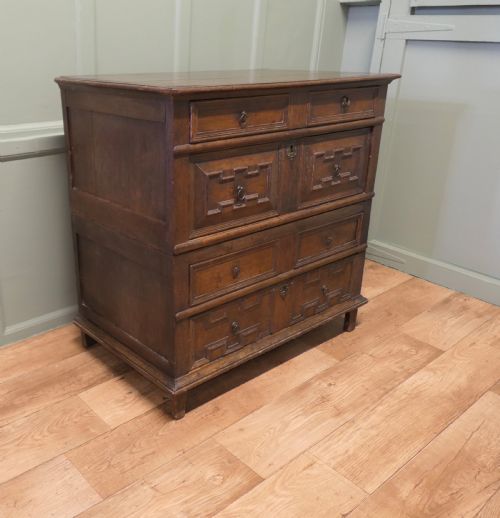
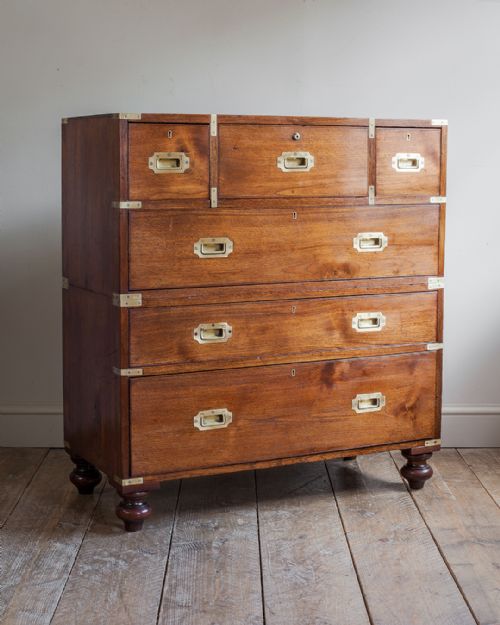
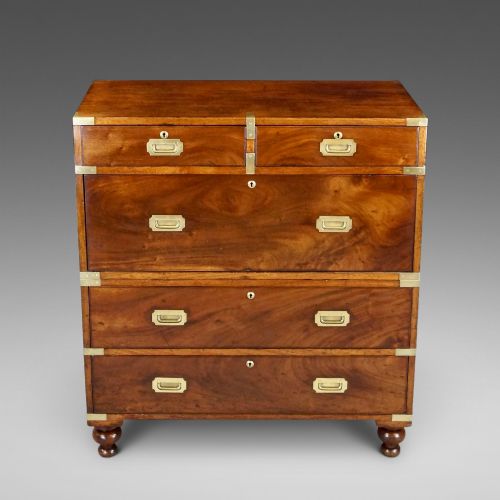
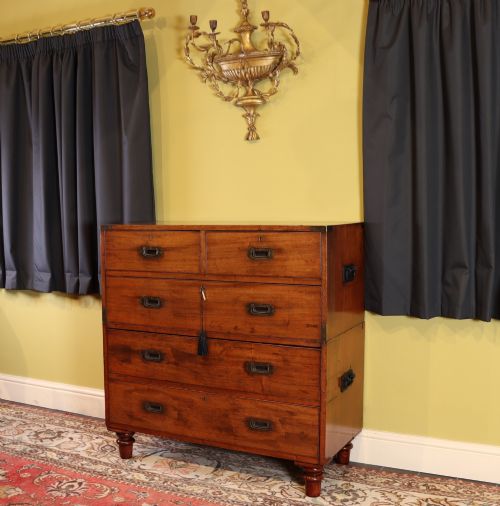
A split section chest consists of distinct modular boxes designed to stack securely, allowing for easier transport during travel. When people search for a split section chest, they encounter sturdy wooden chests configured in two or more stackable segments.
The pieces appearing on this page span the Georgian and Victorian eras, taking the form of campaign chests of drawers, tallboy chests, and secretaire cabinets. These items originate from British military, colonial, and export trade contexts, utilising dense timbers suited for long journeys.
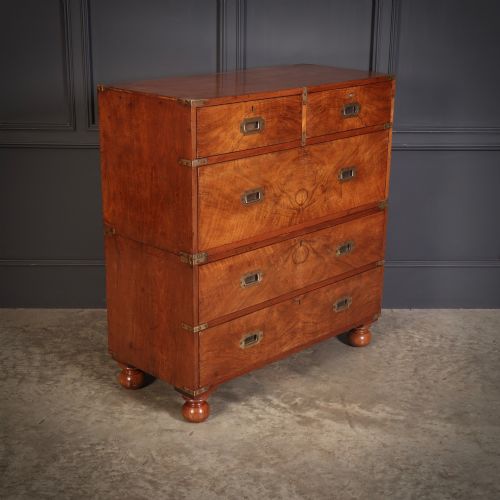
Most examples divide horizontally into two separate sections that lock together with brass side brackets or pins. This clever partitioning made heavy furniture manageable for officers on the move.
Materials and construction
Cabinetmakers constructed these chests from robust timbers such as mahogany, teak, camphor wood, walnut, padouk, and cedar to withstand varying climates and rough handling. These woods provide natural durability and a rich grain that ages gracefully.
Corner reinforcement and flush-fitting brass handles protect the edges from impacts while maintaining a clean, boxy profile. Dovetail joinery secures the drawers, ensuring structural integrity across the split sections.
Split Section Chest Retail Price Guide 2026
Typical asking prices for split section chest among the pieces listed under this phrase on Sellingantiques today, from the lower quarter to the upper quarter. They describe what is for sale here now, not the wider market.
Opening a camphor wood campaign chest often releases a distinct, lingering aroma that has protected woollens from moths for over a century.
Quality differences
Finely made examples feature crisp brass banding, smoothly operating recessed drawer pulls, and integrated secretaire drawers with fitted internal compartments. The choice of timber also dictates quality, with highly figured walnut and richly patinated mahogany sitting at the upper end.
Simpler workshop output shows heavier timber scantlings and plainer hardware without maker stamps. Original structural fittings and well-preserved maker's marks elevate the status of a piece.
S. W. Silver & Co. London & Liverpool·Army & Navy
The Split Section Chest Glossary
- Secretaire
- A cabinet or chest containing a pull-out writing drawer with a fitted interior of small drawers and pigeonholes. This provides a compact desk space within the upper section of a split chest.
- Brass bound
- Furniture edged or reinforced with brass straps and corners to protect the wood from damage during transit. This is a defining characteristic of military style pieces.
- Two-part chest
- A piece of furniture built as two distinct modular sections that stack vertically to form a single tall chest. The parts lock together securely for stability.
- Camphor wood
- An aromatic hardwood native to Asia, frequently used for campaign chests during the nineteenth century. Its strong scent helped deter insects from stored clothing.
Split Section Chest: Frequently Asked Questions
Why do these chests separate into two parts?
The two-part design allowed British officers and travellers to pack heavy belongings into manageable modular segments for transport on ships, trains, and pack animals. Each half could be lifted and loaded independently without straining handlers or damaging doorways.
This modular construction also made assembly straightforward upon reaching a new destination, as the sections simply stacked and locked together using brass pins or side brackets.
Were these chests used only by the military?
While originally commissioned by British army officers for active service abroad, many chests were also utilised by colonial administrators, diplomats, and civilian travellers. The practical modular format appealed to anyone requiring durable furniture that could endure long journeys.
Export trade workshops in regions such as China and India also produced these chests for international markets, expanding their use beyond strict military deployment.
How should I care for a camphor wood chest?
Camphor wood benefits from gentle dusting with a soft cloth and occasional treatment with appropriate wood waxes to keep the natural grain nourished. Avoid placing the chest in direct sunlight or near heat sources, which can cause the timber to dry out or split.
The natural aromatic oils in the wood require little intervention, but keeping the interior clean preserves both the scent and the condition of the drawers.