
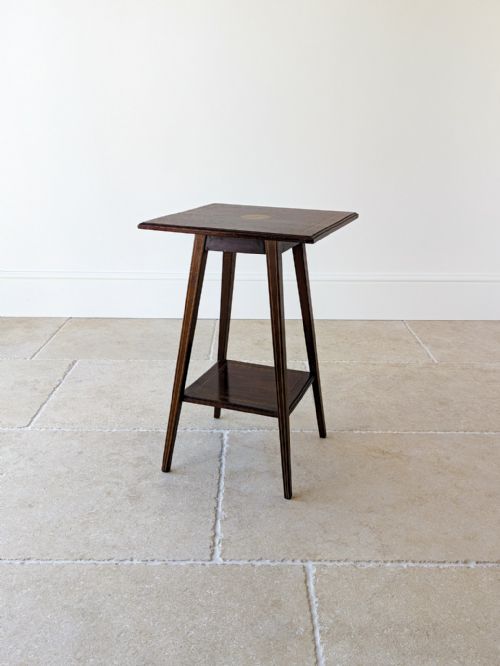
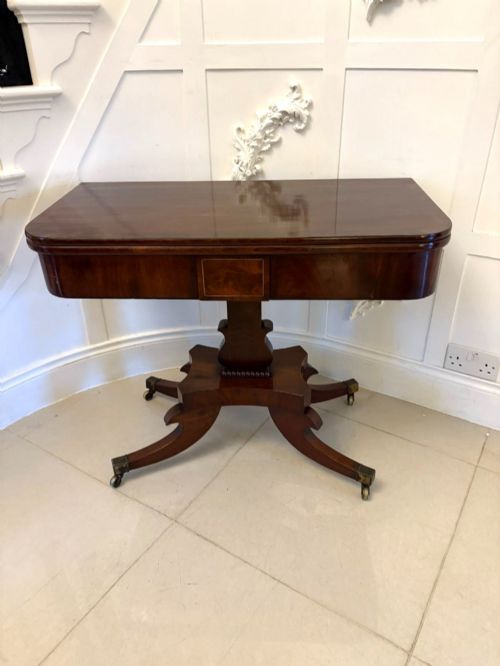
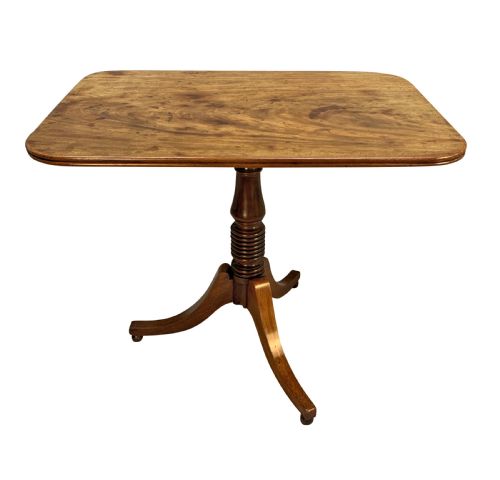
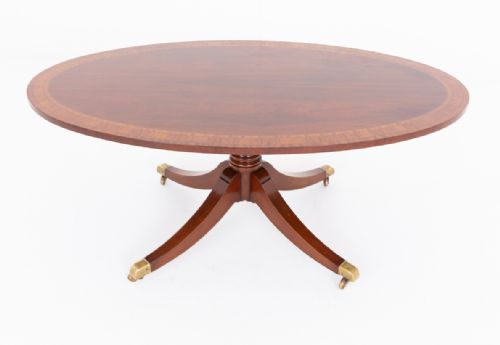
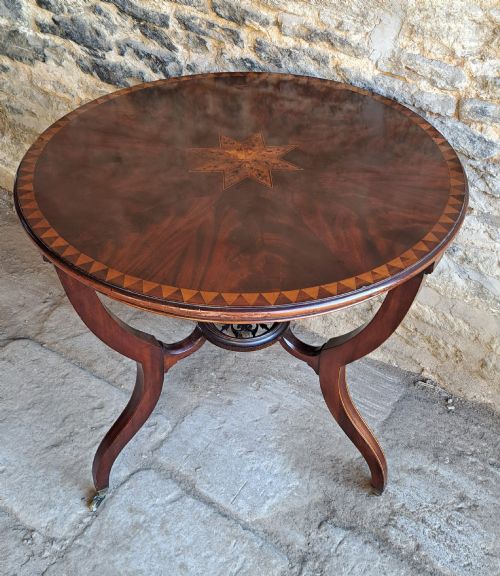


Splayed Leg Tea Table
These pieces known as a splayed leg tea table combine functional folding surfaces with distinct angled supports, offering a practical antique for modern rooms.
Splayed Leg Tea Table
The selection ranges from early Georgian examples dating back to the mid-eighteenth century up to Edwardian and revival pieces from the early twentieth century. Most pieces maintain traditional configurations including fold-over leaves, tilt tops, and pedestal bases alongside occasional designs.
How they were made
Cabinet makers utilised dense hardwoods including Cuban mahogany, figured mahogany, and rosewood to construct the structural frames and top surfaces. These timbers were often selected for their deep grain patterns and stability during daily use.
Decorative elements relied on intricate inlay work using satinwood, ebony, and boxwood, alongside contrasting veneers. Metal components such as brass inlay and fittings were incorporated to accent the woodwork on specific Regency examples.
The listings span the Georgian, Regency, and Edwardian periods, utilising mahogany, rosewood, oak, and burr yew.
What varies in quality
The refinement of the timber selection largely determines the status of a piece, with figured mahogany and burr yew commanding higher attention than plain secondary woods. Cabinet making proficiency shows in the seamless execution of fold-over mechanisms and tilt-top pivots.
Decorative detail such as delicate satinwood, ebony, and boxwood inlay distinguishes more elaborate examples from simpler utilitarian tables. The precision of the joinery and the preservation of original brass mounts further separate standard production from superior craftsmanship.
The Splayed Leg Tea Table Glossary
- Pembroke table
- A small table with hinged flaps on either side that can be raised or lowered.
- Tilt-top table
- A table featuring a mechanism that allows the top surface to pivot into a vertical position when not in use.
- Card table
- A folding table specifically designed for playing games, typically featuring a baize-lined interior surface.
- Inlay
- A decorative technique where contrasting materials like satinwood or ebony are inserted into recessed portions of the primary wood surface.
Splayed Leg Tea Table: Frequently Asked Questions
What is a splayed leg tea table used for?
These tables served primarily for afternoon tea service or social card games in period homes, utilising folding leaves to save space when not in use.
Today, they function well as decorative accent furniture or compact side tables in modern living spaces.
How do I identify a Regency tea table?
Regency pieces often feature dark hardwoods like rosewood or mahogany, frequently accented with brass inlay or mounted on central pedestal bases.
They typically date from the early nineteenth century and reflect classical design influences.
What woods were used for these tables?
Cabinet makers predominantly utilised mahogany, including Cuban and figured varieties, alongside rosewood and oak for the primary structures.
Satinwood, ebony, and boxwood appear frequently as contrasting veneers and decorative inlay details.
How do I date an Edwardian tea table?
Edwardian examples usually date from around 1900 to 1920 and often display revival styles such as Sheraton motifs or simpler occasional table forms.
They make use of mahogany veneers and lighter construction methods compared to earlier Georgian and Regency counterparts.