


Splayed Leg Low Table
A splayed leg low table brings low-slung utility and period timber into a room, offering sturdy surface space without blocking the light.
Splayed Leg Low Table
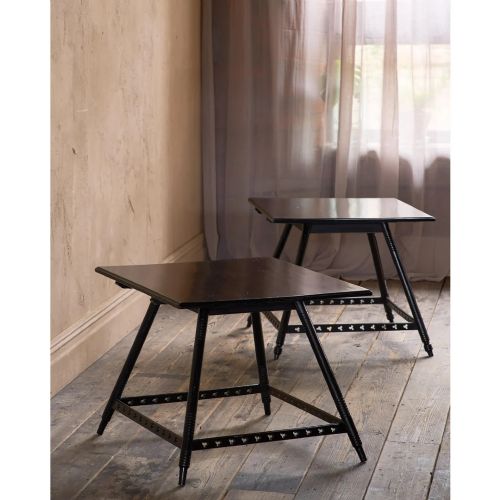
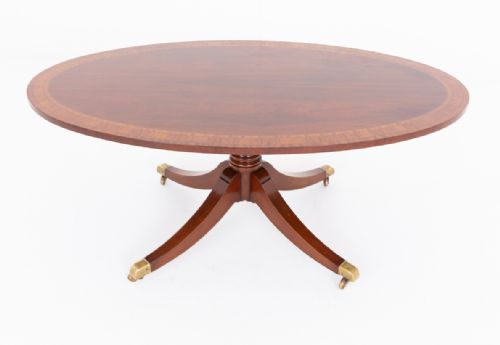
A splayed leg low table encompasses low-slung surfaces and benches designed for compact spaces, drawing from Georgian, Regency, and Aesthetic Movement forms. These items appear across various styles, including rustic country benches and refined coffee tables.
The selection on this page relies heavily on nineteenth-century examples alongside items dated to nineteen-twenty. Buyers encounter forms ranging from oval coffee tables to traditional pig benches in oak and pine.
Mahogany remains the dominant wood found across these listings, appearing alongside oak, ebonised wood, and burr walnut. Many pieces reflect formal Regency design or later revivals, while others retain a simpler country workshop aesthetic.
Materials and construction
Cabinetmakers utilised solid hardwoods like oak and mahogany, often pairing figured flame veneers or satinwood inlay with sturdy structural frames. Ebonised finishes and scrubbed burr walnut appear alongside plain pine in both formal and rustic contexts.
Construction methods vary from the pegged joints of eighteenth-century country benches to the turned supports and brass details seen on Regency examples. Timber selection dictates whether a surface receives a polished mahogany sheen or a scrubbed natural finish.
Several heavy workbenches originally built for farmyard tasks now serve coffee mugs in the middle of sitting rooms.
Distinguishing quality
Quality rests in the selection of the timber and the crispness of the joinery, distinguishing finely figured flame mahogany or burr walnut from plain utilitarian stock. Finer pieces display deliberate attention to inlay and proportion rather than purely rustic utility.
The structural integrity of the splayed legs and the condition of the timber surface dictate the tier of a piece. Original patination and honest wear separate untouched period examples from later revivals.
The Splayed Leg Low Table Glossary
- Splayed leg
- A support angled outward from the vertical centre for stability and visual balance. This stance defines the silhouette of the form.
- Flame mahogany
- Timber veneer sliced to reveal a distinctive flickering grain pattern resembling flames. Cabinetmakers selected this cut for prominent table tops.
- Ebonised wood
- Timber treated with a dark stain or finish to imitate ebony. This technique gained popularity during the nineteenth century.
- Pig bench
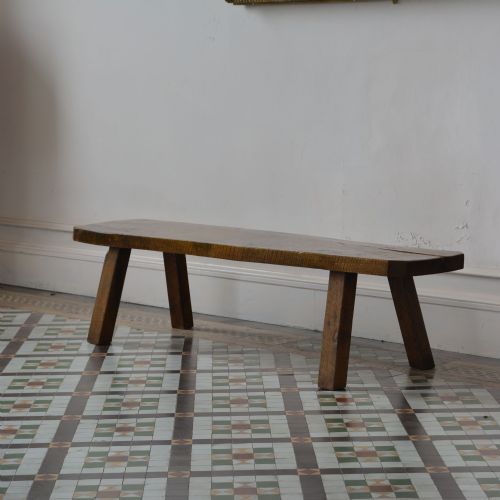
- A low wooden bench originally utilised for agricultural tasks, now repurposed as a coffee table. These items typically feature thick oak or pine tops.
- Satinwood inlay
- Contrasting pale hardwood inserted into a darker surface to create decorative borders. This detail elevates the formal appearance of Regency tables.
Splayed Leg Low Table: Frequently Asked Questions
What is a splayed leg low table?
A splayed leg low table is a low-slung surface or bench featuring legs angled outward for stability. These pieces span various historical periods and timber types.
They function well in modern interiors as coffee tables while retaining distinct period character through materials like oak and mahogany.
How do I date an antique low table?
Dating relies upon examining the timber species, construction methods, and stylistic markers such as inlay or leg turnings. Eighteenth-century pieces often display simpler joinery compared to formal Regency designs.
Secondary woods and tool marks underneath the top also provide reliable indicators of age.
What is the difference between Regency and Regency Revival?
Original Regency pieces date from the early nineteenth century and reflect the prevailing neoclassical tastes of that era. Regency Revival items date from later periods, often the late nineteenth or early twentieth century.
Both categories utilise similar mahogany veneers and splayed supports, but differ in their manufacturing date.