



Splayed Leg Bow Chest
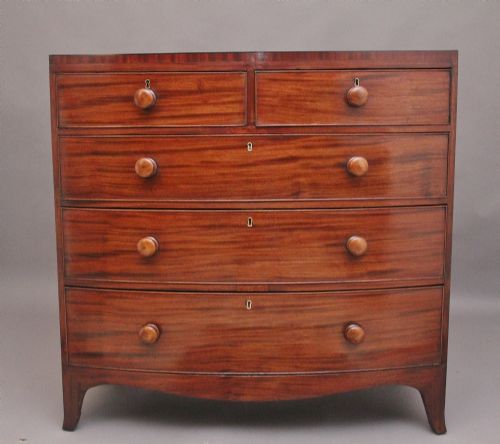
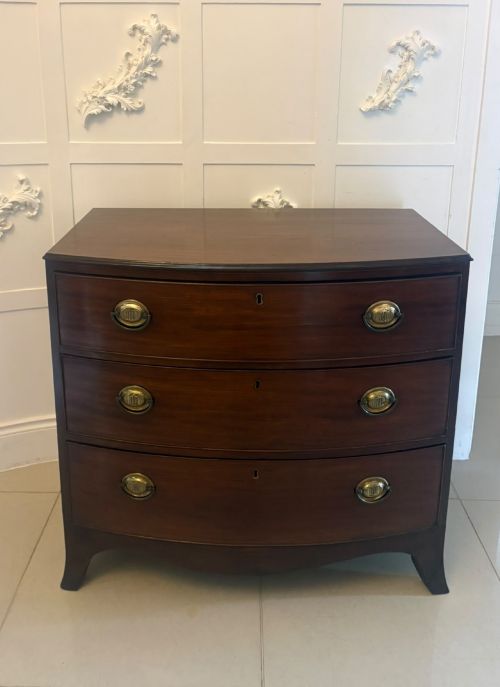
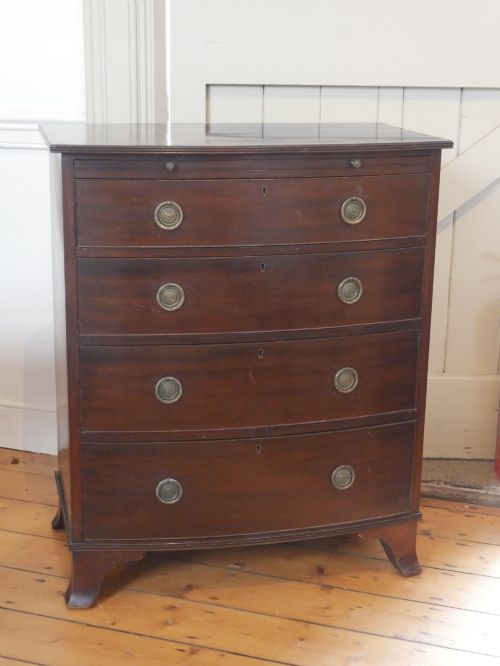
These splayed leg bow chest items are bow front chests of drawers built in mahogany, offering curved storage across Georgian and Regency periods.
Splayed Leg Bow Chest
When you search for a splayed leg bow chest, you are looking at eighteenth and nineteenth century chests of drawers featuring curved bow fronts. The pieces on this page span the Georgian, Regency, and later periods up to nineteen twenty, originating from makers working in mahogany.
Most examples you will meet take the form of standard chests of drawers with curved fronts, constructed primarily during the Georgian and Regency eras. The selection includes Scottish variants and large proportion pieces alongside standard drawer configurations.
Materials and construction
The primary material across these listings is solid and veneered mahogany, often enriched with satinwood and boxwood inlay for decorative contrast. Cabinetmakers constructed the carcase and drawer linings using secondary timbers such as oak, applying brass handles and escutcheons to complete the drawer fronts.
Makers shaped the distinctive curved front of each chest to create the signature bow profile seen in George III and Regency examples. Surface finishes were developed to achieve a rich patina over the mahogany timbers.
Splayed Leg Bow Chest Retail Price Guide 2026
Typical asking prices for splayed leg bow chest among the pieces listed under this phrase on Sellingantiques today, from the lower quarter to the upper quarter. They describe what is for sale here now, not the wider market.
Every single chest on this page has a curved front, leaving zero room for straight lines.
Quality variations
The distinction between ordinary and superior examples lies in the selection of figured mahogany veneers and the crispness of the satinwood and boxwood inlay work. Finer pieces demonstrate careful attention to the grain alignment across the curved drawer fronts.
Proportion and secondary timber choice also separate standard production from exceptional cabinet work. Pieces retaining a deep, warm patina and original brass hardware stand apart from those with later alterations.
The Splayed Leg Bow Chest Glossary
- Bow front
- A convex curved front facade characteristic of chests designed to soften room corners.
- Patina
- The surface sheen and mellowing developed by mahogany timber over centuries of exposure and handling.
- Satinwood
- A pale, lustrous exotic timber utilised for contrasting stringing and geometric inlay details.
- Boxwood
- A dense, pale wood employed for fine stringing lines in Georgian cabinet work.
- Secondary timber
- The internal wood, such as oak, used for drawer linings and carcase backs where primary mahogany was unnecessary.
Splayed Leg Bow Chest: Frequently Asked Questions
What is a bow front chest?
A bow front chest is a drawer unit featuring a convex curved front that projects outward. This form gained popularity during the Georgian and Regency periods to provide a softer profile than flat-fronted furniture.
Cabinetmakers utilised this curved design to showcase figured mahogany veneers across the drawer fronts while maintaining practical bedside or bedroom storage.
How do I date a mahogany chest?
Dating relies upon examining the construction methods, timber selection, and overall stylistic details such as drawer arrangement and inlay. Pieces from the Georgian and Regency eras display specific handling of mahogany and secondary woods like oak.
Comparing the hardware fixings, edge mouldings, and foot styles helps establish whether a piece originates from the eighteenth century or later periods.
What woods were used in these chests?
The predominant wood found in these listings is mahogany, chosen for its strength and rich red-brown colour. Cabinetmakers frequently combined it with decorative banding in satinwood and boxwood.
Internal elements and drawer linings commonly make use of oak as a secondary timber to provide structural stability.
Where were these chests made?
These pieces originate from British workshops active during the Georgian and Regency eras, with specific regional variations including Scottish examples. Cabinetmakers across these regions produced bow front chests using traditional joinery.
The materials and construction techniques reflect the prevailing British furniture design standards of their respective periods.