




Spindle Leg Side Tables
Spindle leg side tables are slender, turned-wood occasional pieces that bring instant textural interest and compact utility to any room.
Spindle Leg Side Tables
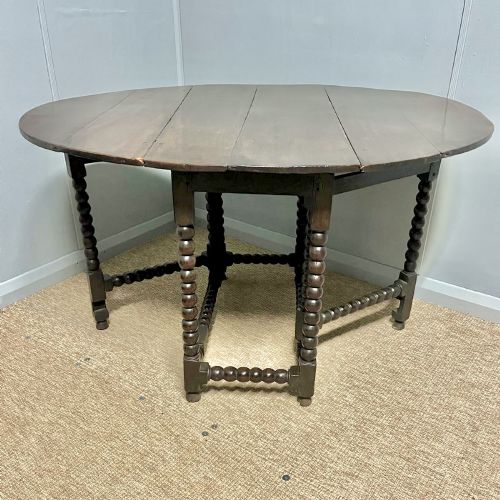
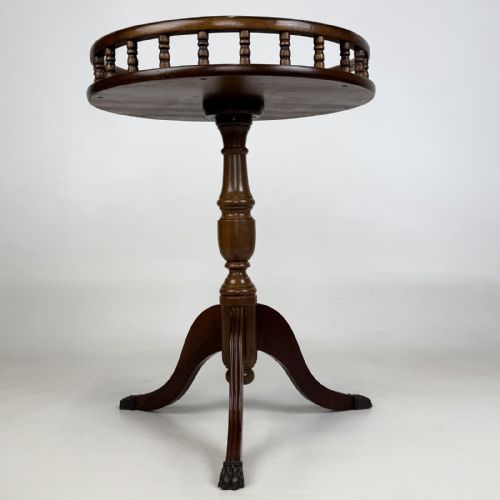
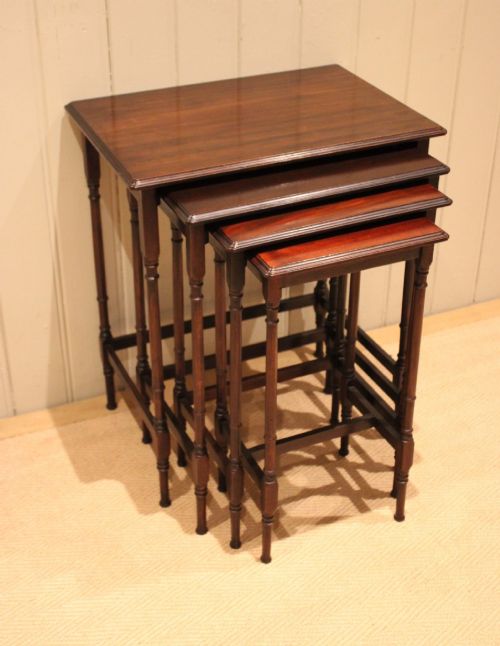
Spindle leg side tables appear across the eighteenth, nineteenth, and early twentieth centuries in forms such as occasional tables, nests, and two-tier étagères. These practical pieces serve beside seating or in halls, offering surface space without visual bulk.
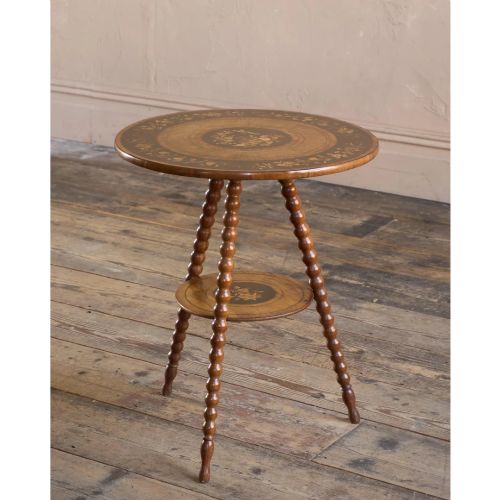
Victorian and Edwardian iterations frequently utilise bobbin or turned supports, alongside Aesthetic Movement designs in ebonised wood or oak. Examples range from simple square tables to nests of four and multi-tiered consoles.
Earlier Georgian and eighteenth-century pieces lean towards oak and mahogany, demonstrating how turnery evolved from structural necessity into refined decorative ornament over successive centuries.
Materials and construction methods
Cabinetmakers constructed these tables using timbers such as mahogany, walnut, oak, and ebonised wood, often enhanced with veneer, inlay, brass, or ceramic details. Wood was shaped on a lathe to create the distinctive bobbin and spindle legs that define the style.
Joinery techniques varied from traditional pegging in earlier oak pieces to precise framing in later Victorian and Edwardian nests and two-tier occasional tables. Surfaces sometimes received lacquer or marquetry to elevate the visual appeal of the timber.
Spindle Leg Side Tables Retail Price Guide 2026
Typical asking prices for spindle leg side tables among the pieces listed under this phrase on Sellingantiques today, from the lower quarter to the upper quarter. They describe what is for sale here now, not the wider market.
Some tables double as games surfaces, proving that past generations took their parlour entertainment very seriously indeed.
Distinguishing quality in construction
Quality rests upon the crispness of the wood turnery and the integrity of the underlying timber selection. Superior examples display balanced proportions, tight joints, and well-figured veneers or solid grain without unnecessary timber replacement.
The sophistication of the design, whether a complex nest of four or an Aesthetic Movement ebonised console, separates standard utility items from finer decorative works. Original surface patination and restrained ornamentation further elevate a piece.
The Spindle Leg Side Tables Glossary
- Bobbin leg
- A turned furniture leg shaped to resemble a series of wooden bobbins or reels stacked end to end. This form became particularly popular during the seventeenth century and saw revivals in the Victorian era.
- Etagere
- A piece of furniture consisting of a set of open shelves for displaying small objects. These tiered tables often feature slender turned supports.
- Quartetto
- A set of four small tables designed to slide one beneath another. They are typically produced as nests for parlour use.
- Marquetry
- Decorative woodwork in which delicate pieces of veneer are fitted into a design on a structural panel. This technique adorns tabletops and surfaces with complex patterns.
- Ebonised
- Wood finished to resemble ebony through staining or painting. The technique gained prominence during the nineteenth century, especially within Aesthetic Movement design.
Spindle Leg Side Tables: Frequently Asked Questions
What are spindle leg side tables?
Spindle leg side tables are compact occasional tables featuring turned wooden legs, produced across the eighteenth and nineteenth centuries.
They appear in forms ranging from single-tier lamp tables to nested sets and multi-shelf étagères.
How were spindle leg tables used?
These pieces served multiple domestic functions as lamp tables, hall surfaces, card tables, and parlour stands.
Their modest footprints allowed them to fit easily beside seating or in narrow hallways without overcrowding the room.
How do I date a spindle leg table?
Dating relies on timber choice, construction joints, and stylistic markers such as ebonising or marquetry.
Earlier eighteenth-century examples usually feature solid oak or mahogany, while Victorian and Edwardian pieces often utilise walnut, bobbin turnings, or tiered configurations.
Are nested spindle leg tables durable?
Nested tables offer exceptional versatility and strength when constructed with sound timber and tight joints.
Careful handling of the individual tiers ensures the frames and turned legs remain stable through regular daily use.