

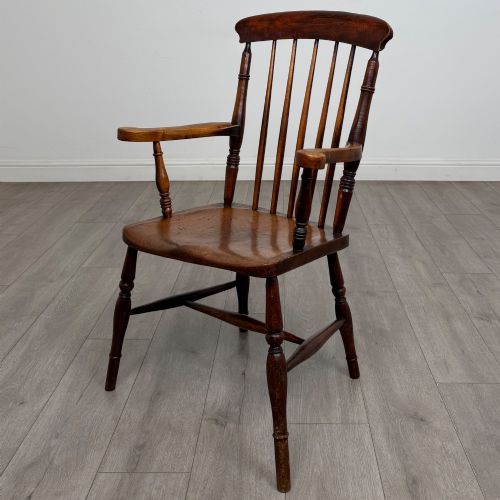
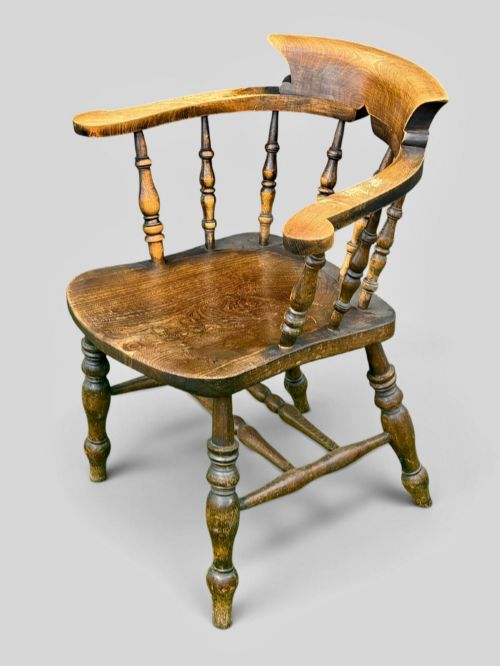
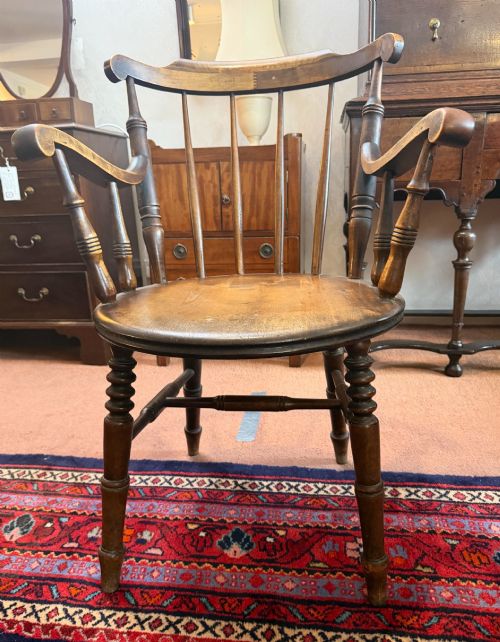
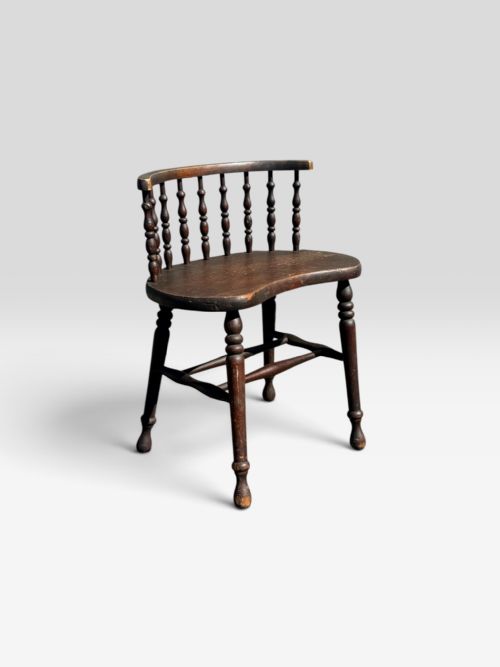

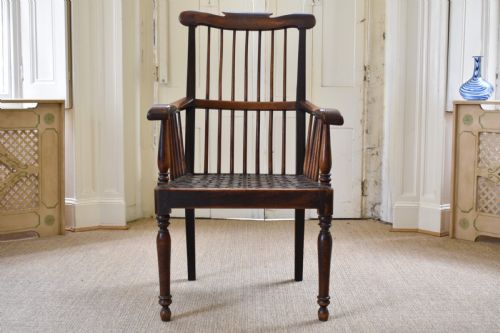

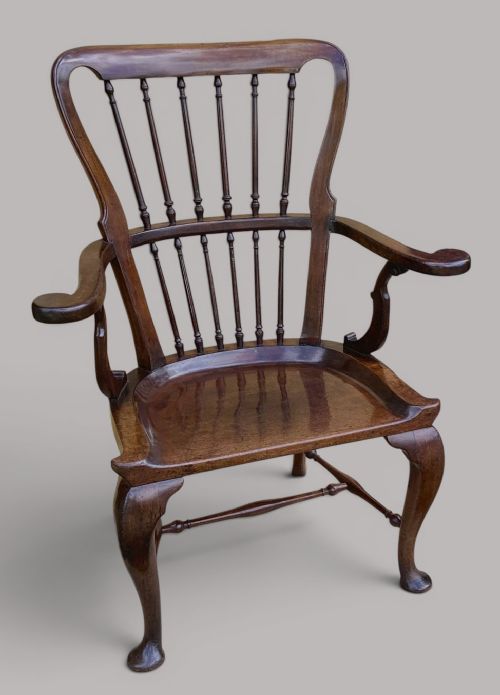
Spindle Leg Armchair
A spindle leg armchair offers solid vernacular comfort, bringing tactile turned wood and sturdy country seating into the home.
Spindle Leg Armchair
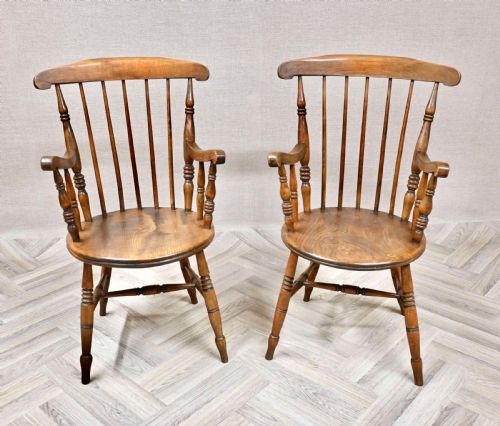
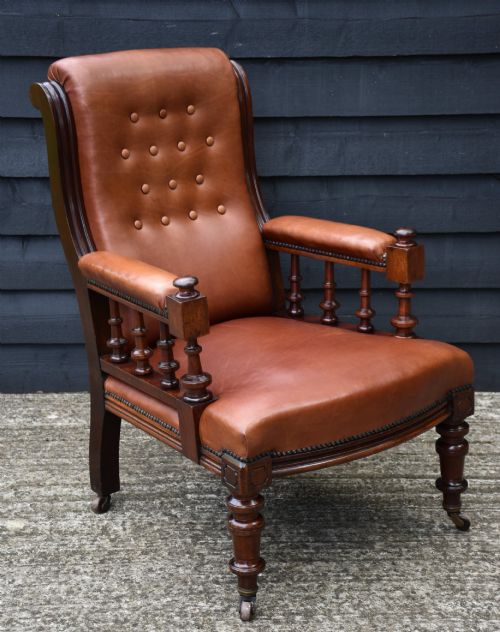
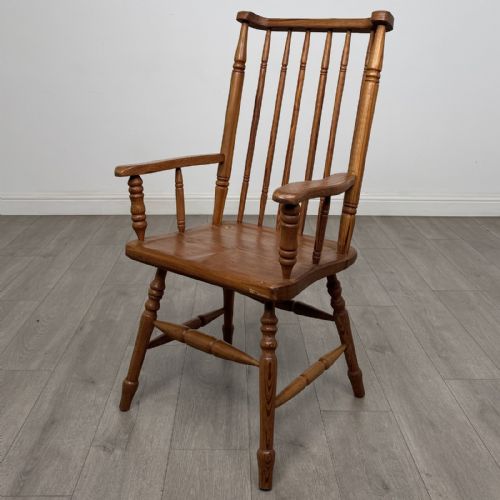
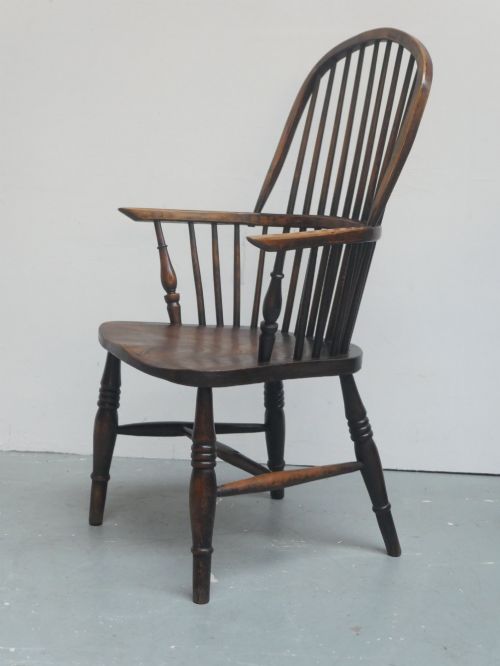
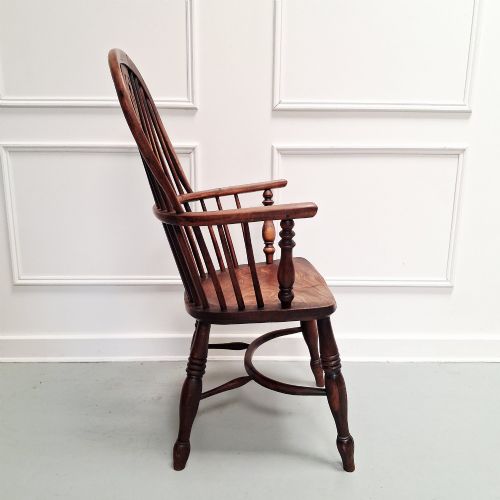
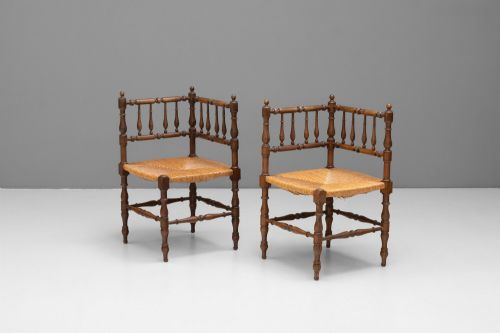
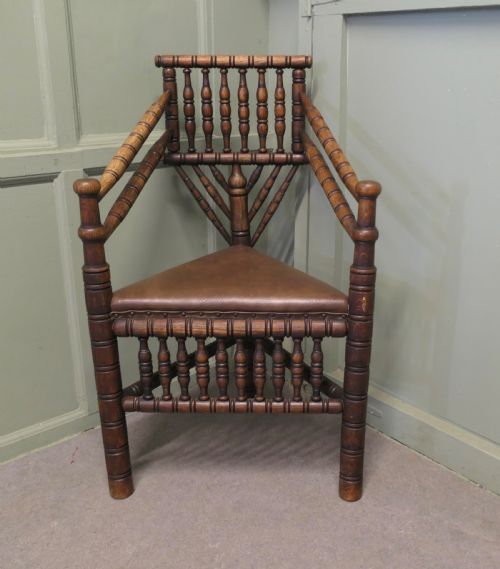
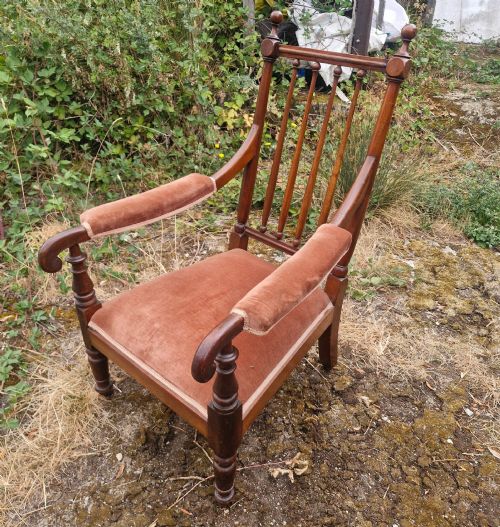
A spindle leg armchair encompasses a robust range of traditional seating, drawing primarily from English country vernacular and Victorian styles. The selection frequently presents Windsor armchairs, smoker's bows, and turners chairs alongside desk, corner, and rocking variants.
Makers shaped these utilitarian seats across the eighteenth, nineteenth, and early twentieth centuries, with Victorian examples appearing most often. Construction ranges from George II mahogany forms to Edwardian elm and ash farmhouse designs built for everyday domestic use.
Materials and construction
Craftsmen built these chairs using a combination of native timbers, pairing elm seats with ash, beech, or fruitwood frames. Solid wood construction relies on turned spindles, stick backs, and steam-bent components to create resilient seating.
Joints depend on traditional pegging and wedging, occasionally accompanied by rush, leather, velvet, or caned seat inserts. Turned stretchers, such as the crinoline stretcher, reinforce the undercarriage to withstand heavy daily wear.
Spindle Leg Armchair Retail Price Guide 2026
Typical asking prices for spindle leg armchair among the pieces listed under this phrase on Sellingantiques today, from the lower quarter to the upper quarter. They describe what is for sale here now, not the wider market.
The furniture spans multiple centuries, reaching from the Georgian era through the Victorian period into the Edwardian age.
Judging quality and character
Quality rests in the harmony of the timber selection and the crispness of the turned components. Chairs combining contrasting woods like laburnum and elm, or retaining original stamped maker marks, demonstrate superior provenance.
Structural integrity and untouched surface patination separate standard kitchen chairs from finer vernacular pieces. The grace of the curved backrest and the balance of the spindle arrangement dictate the visual success of each chair.
J SPENCER
The Spindle Leg Armchair Glossary
- Windsor chair
- A chair built with a solid wooden seat into which the legs and back spindles are inserted directly. This form relies on a heavy plank base for stability.
- Smoker's bow
- A low-backed Windsor derivative with a continuous curved armrail supported by turned spindles. These were commonly used in parlours and offices.
- Crinoline stretcher
- A curved under-stretcher connecting the legs of a chair, resembling the shape of a Victorian crinoline petticoat. It adds lateral strength to the frame.
- Turned
- Shaped on a lathe to create decorative linear patterns and rounded profiles along legs, arms, and back spindles. This method defines the appearance of spindle legs.
- Vernacular
- Everyday objects made by regional craftsmen following local traditions rather than high-style metropolitan fashions. These pieces prioritise utility and local materials.
Spindle Leg Armchair: Frequently Asked Questions
What is a spindle leg armchair?
A spindle leg armchair is a traditional wooden seat featuring turned vertical spindles supporting the back or arms. These chairs emerge from country and vernacular woodworking traditions.
Most examples utilise solid timber seats combined with stick-back or hoop-back frames designed for functional durability. They range from simple farmhouse seating to refined parlour chairs.
How do I date a Windsor armchair?
Dating relies on examining the timber species, construction methods, and tool marks visible beneath the seat. Earlier pieces often incorporate distinct fruitwood or elm combinations.
Stylistic shifts in the shape of the bow, the thickness of the arm supports, and the presence of stretchers help narrow down the period of manufacture.
Were these chairs used for dining?
Country armchairs served various roles around the farmhouse, including fireside use, desk work, and kitchen dining. Their sturdy construction suited active domestic environments.
Lower-backed variants functioned well as smoking or writing seats, while larger hoop-back versions provided comfortable seating by the hearth.
How should I care for elm and ash timber?
Maintain these wooden surfaces by keeping them away from direct heat sources and sudden temperature shifts. Natural oils help preserve the grain and prevent the wood from drying.
Apply a traditional wax polish occasionally and buff gently with a soft cloth to maintain the historic surface finish without causing damage.