

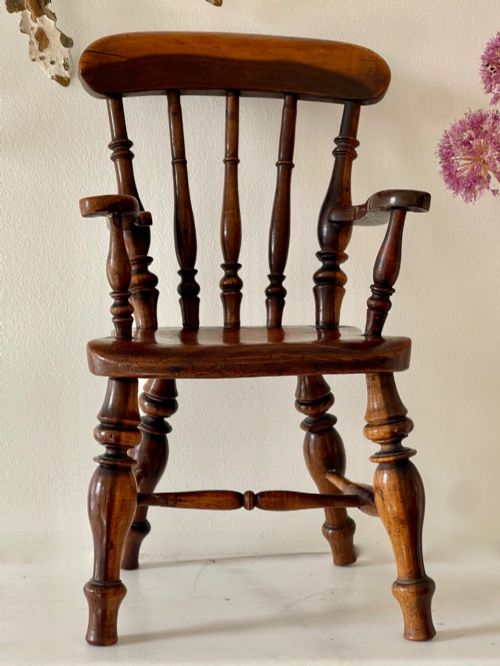
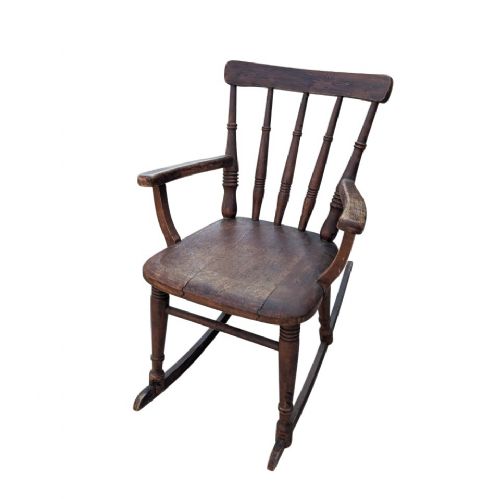


Spindle Back Miniature Chair
A spindle back miniature chair brings authentic vernacular charm into a room, offering the scaled-down perfection of full-sized country seating.
Spindle Back Miniature Chair
A spindle back miniature chair is a scaled-down seat designed historically for children, dolls, or display, capturing the practical seating forms of full-scale vernacular furniture. These pieces range from folk art pine chairs to ash windsors and ebonised aesthetic models.
The versions most commonly met on this page date from the nineteenth century, including Victorian country examples and earlier Georgian forms. They appear in various formats such as armchairs, rocking chairs, and small child chairs.
How they were made
These chairs rely on traditional timber construction, utilising woods such as elm, pine, beech, ash, and fruitwood. Makers selected these native hardwoods and softwoods for their strength and workability when turning slender spindles and bending backs.
Joinery methods combine turned components with socketed seats and steam-bent elements, particularly visible in windsor and rocking chair variants. Ebonised finishes and occasional fabric elements appear on later nineteenth-century pieces.
Spindle Back Miniature Chair Retail Price Guide 2026
Typical asking prices for spindle back miniature chair among the pieces listed under this phrase on Sellingantiques today, from the lower quarter to the upper quarter. They describe what is for sale here now, not the wider market.
Some chairs were simply scaled-down so a favourite bear could sit properly by the nursery fire.
What varies in quality
Quality in a spindle back miniature chair lies in the fidelity of its proportions and the skill of the turning. Finer pieces display crisp spindle work and harmonious timber selection, such as yew and elm combinations.
Simpler vernacular examples show honest regional workmanship, where the integrity of the original construction and the character of the aged timber dictate the overall desirability of the object.
The Spindle Back Miniature Chair Glossary
- Spindle back
- A chair back filled with narrow, turned vertical wooden rods. These slender members provide light yet sturdy support.
- Windsor chair
- A chair built with a solid wooden seat into which the legs and back spindles are directly inserted. This method creates a robust framework.
- Vernacular furniture
- Domestic objects made by local craftspeople using regional traditions rather than high-style metropolitan designs. These pieces emphasise utility and local materials.
- Ebonised
- Timber treated with a dark stain or finish to imitate ebony. This technique gained popularity during the Victorian and Aesthetic periods.
- Folk art
- Utilitarian items created outside formal academic traditions by self-taught or local makers. They possess a direct, unpretentious aesthetic.
Spindle Back Miniature Chair: Frequently Asked Questions
What were spindle back miniature chairs used for?
These small chairs served practical roles as seating for young children or toddlers in domestic settings. Some were also made as doll or teddy chairs, or utilised by makers as salesman samples.
Over time, many transitioned into decorative display items collected for their charming proportions and traditional craftsmanship.
How do I identify a Georgian child chair?
Georgian pieces often feature timber combinations such as yew and elm, displaying the characteristic construction methods of eighteenth-century windsor seat makers. Their turning styles and overall patination reflect the earlier period.
Comparison with nineteenth-century examples reveals differences in tool marks, timber ageing, and regional vernacular design traits.
Are these chairs suitable for daily use?
While originally built for actual seating, antique miniature and child chairs are generally treated as decorative or display items today. Their historic structures require gentle handling rather than heavy everyday use.
Placing them in stable environments away from direct heat sources helps preserve the aged timbers and traditional joinery.
What is the difference between a child chair and a doll chair?
Child chairs were constructed with sufficient structural strength and scale to seat a young child or toddler safely. Miniature doll chairs are typically smaller and built with lighter loads in mind.
Both categories share the turned spindle backs and vernacular construction techniques typical of country workshops.