






Spelter Figure Table Lamps
These spelter figure table lamps bring dramatic figural sculpture and period illumination into a room, capturing decades of decorative metalwork.
Spelter Figure Table Lamps
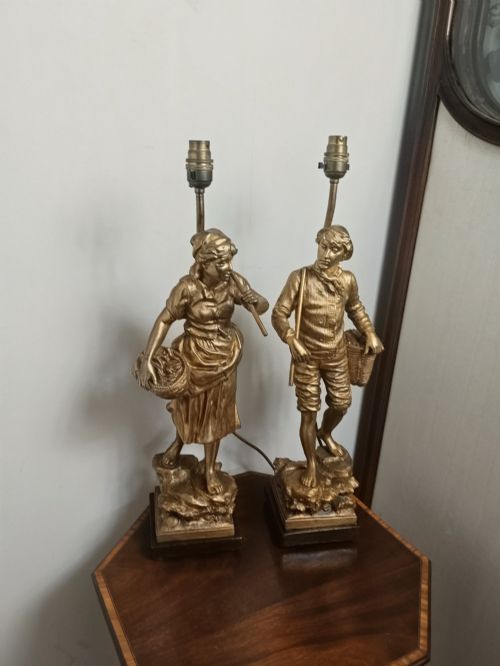
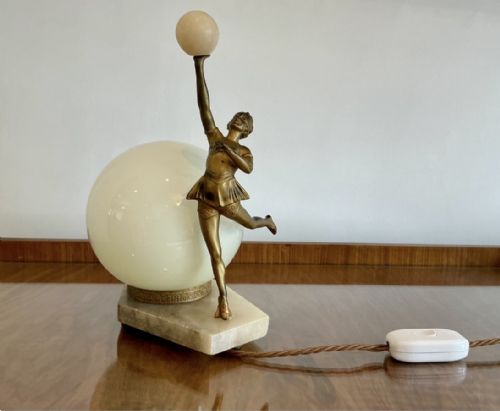
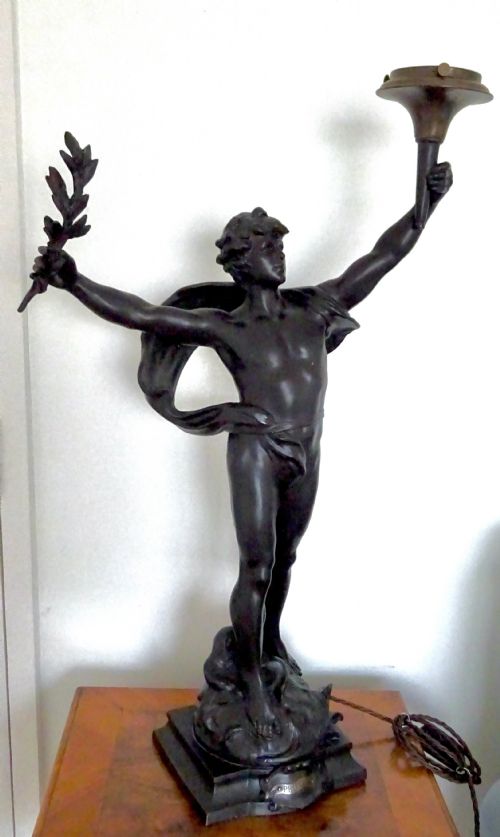
When you search for spelter figure table lamps, you encounter figural lighting mounted on bases of marble, paired with glass or fabric shades, reflecting styles from Victorian and Edwardian decades up to Art Deco and Art Nouveau aesthetics. These decorative objects combine sculptural metal figures with functional illumination, taking the form of ladies, musketeers, pierrots, and allegorical subjects.
The selections on this page span from the late nineteenth century into the nineteen-thirties, showing French Belle Epoque origins alongside later American and European iterations. You meet both single figures holding torchere shades and pairs of gilt lamps designed for balanced placement on a sideboard or mantelpiece.
How they were made
These lamps utilise spelter as the primary sculptural medium, cast in moulds to depict human forms and clothing with fine detail. Makers applied various finishes to the metal surface, including silvering, gilding, painting, and patination to imitate bronze.
The figures are typically mounted onto heavy marble or metal bases to provide stability for the lamp fittings and shades. Brass and metal components secure the electrical or night light fittings, whilst glass and fabric elements complete the shade assemblies.
Spelter Figure Table Lamps Retail Price Guide 2026
Typical asking prices for spelter figure table lamps among the pieces listed under this phrase on Sellingantiques today, from the lower quarter to the upper quarter. They describe what is for sale here now, not the wider market.
Pierrot plays his accordion beneath a night light, proving that even a spelter figure needs a musical interlude.
What varies in quality
The distinction between standard production and superior work lies in the crispness of the metal casting and the subtlety of the applied surface finish, whether patinated, gilded, or silvered. Signed pieces by known sculptors demonstrate superior modelling in the facial expressions and drapery of the figures compared to anonymous workshop output.
Integration of materials also dictates overall merit, particularly the weight and quality of the marble base and the harmony of the shade with the figural subject. The preservation of the original surface treatments without heavy overpainting determines the visual integrity of each lamp.
E Rousseau·L & F Moreau·P.Sega·Auguste Moreau
The Spelter Figure Table Lamps Glossary
- Spelter
- An alloy based on zinc, often used as a less costly alternative to bronze for decorative figures and lamps. It takes patination and metallic finishes readily.
- Patinated metal
- Metal treated with chemicals or heat to produce a specific surface colour or aged appearance. This finish enhances the definition of the cast details.
- Torchere shade
- A shade designed to hold an upward-facing light source, frequently held aloft in the hands of a figural sculpture. It directs illumination toward the ceiling.
- Art Deco
- A design style of the nineteen-twenties and nineteen-thirties characterised by streamlined forms and stylised geometry. It succeeded the flowing lines of Art Nouveau.
Spelter Figure Table Lamps: Frequently Asked Questions
How do I care for a spelter lamp?
Dust the figure gently with a soft, dry cloth and avoid using chemical cleaners that can strip the patination or metallic finish. Keep the lamp away from excessive moisture to protect the metal and the underlying marble base.
Check the wiring periodically and use low-heat bulbs to prevent thermal stress on older components and shades.
Are these lamps period or reproduction?
The pieces listed date from the late nineteenth century through to the nineteen-thirties, encompassing Victorian, Edwardian, Art Nouveau, and Art Deco periods. Their construction methods, patination, and material combinations reflect the manufacturing techniques of those decades.
Examining the casting detail and the wear on the base helps confirm the age of each lamp.
What is spelter made of?
Spelter is a zinc-based alloy that was widely utilised in the nineteenth and twentieth centuries for decorative sculptures and lighting. It is softer and lighter than bronze.
Makers frequently coated the alloy with bronze powder, paint, or electroplated finishes to achieve a more luxurious appearance.
Can I replace the shade safely?
Shades can be replaced provided the fitter size matches the lamp hardware and the scale complements the figure. Choose styles that respect the period of the lamp, such as glass torchere shades for early pieces or geometric fabric shades for Art Deco examples.
Ensure the electrical fittings are checked by a qualified person when making alterations.