





Spelter Figural Lighting
Spelter figural lighting brings sculptural human forms into functional domestic illumination, mostly through French table lamps and candelabra from the late nineteenth and early twentieth centuries.
Spelter Figural Lighting
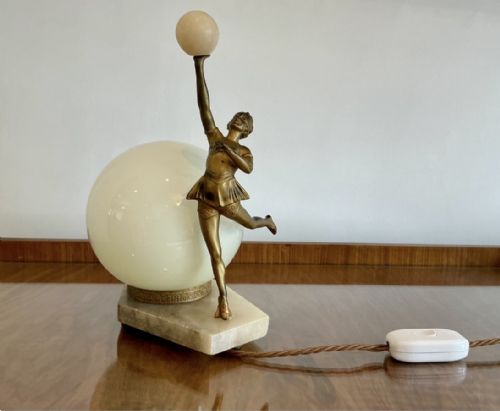
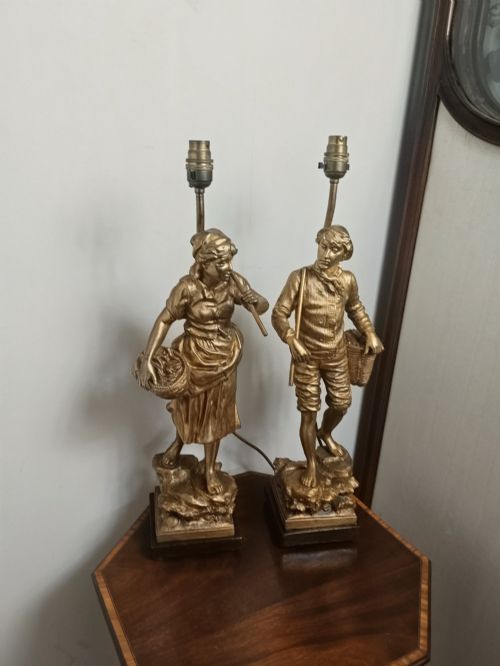
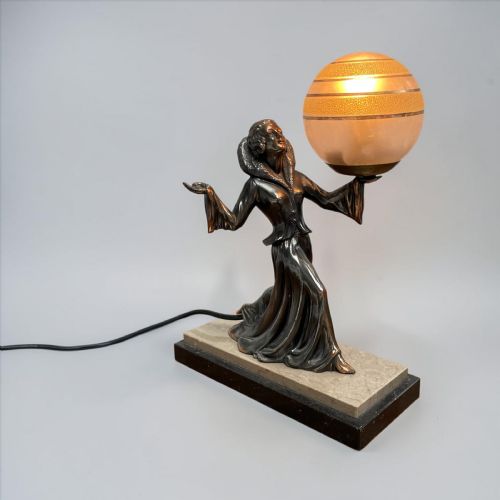
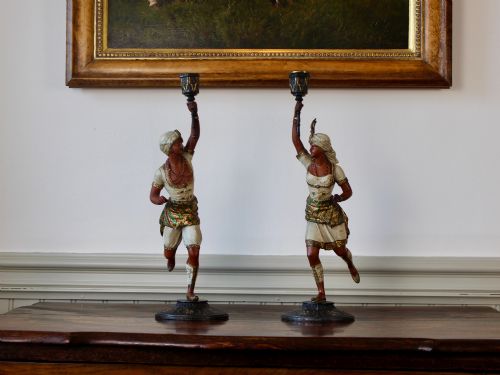
Spelter figural lighting comprises decorative lamps, candlesticks, candelabra, and table mirrors combining cast metal figures with bases of marble, onyx, or metal. The selection on this page leans heavily toward table lamps and mood lighting.
Most examples date from the Art Deco and Art Nouveau periods, alongside late nineteenth-century French and Renaissance Revival designs. Figures range from standing ladies and Hollywood girls to soldiers and classical subjects.
Makers such as L & F Moreau, Auguste Moreau, P. Sega, and E Rousseau appear across the inventory. These pieces function simultaneously as sculpture and as sources of ambient illumination.
How they were made
These items rely on the casting of spelter, a zinc-based alloy that permitted intricate detail at a lower cost than bronze. Workshops finished these metal casts through cold painting, gilding, silvering, or patination to emulate more expensive materials.
Stonework bases utilised dense natural minerals including marble and onyx to anchor the weight of the metal figures. Glass components, such as torchere shades, completed the electrical or candle-holding apparatus.
Spelter Figural Lighting Retail Price Guide 2026
Typical asking prices for spelter figural lighting among the pieces listed under this phrase on Sellingantiques today, from the lower quarter to the upper quarter. They describe what is for sale here now, not the wider market.
Materials frequently combine spelter figures with marble or onyx bases, complemented by glass shades and cold-painted finishes.
What varies in quality
Quality rests primarily in the crispness of the figure's casting and the sophistication of the surface finish, whether cold-painted pigments or patinated metal. Finer pieces demonstrate superior anatomical definition and drapery detail.
The choice of base materials also distinguishes the range, with solid marble and onyx foundations offering greater substance than simpler metal alternatives. Signed works by established French sculptors carry distinct artistic provenance.
L & F Moreau·Auguste Moreau·P. Sega·E Rousseau
The Spelter Figural Lighting Glossary
- Spelter
- A zinc-based alloy commonly used in nineteenth and twentieth-century decorative sculpture. It served as a cost-effective substitute for bronze.
- Cold painted
- A technique where pigment is applied to a metal object without subsequent firing. This surface treatment is delicate and vulnerable to flaking over time.
- Torchere shade
- An upward-pointing glass shade designed to diffuse light from a lamp. It sits atop the figural stem or casting.
- Patinated metal
- Metal treated with chemicals or heat to produce an aged surface colour. This process enhances the visual depth of the sculptural casting.
- Art Deco
- A design style dominant in the 1920s and 1930s characterised by streamlined geometric forms and stylised figures. It strongly influences the lamps on this page.
Spelter Figural Lighting: Frequently Asked Questions
Are these lamps safe to use?
Many vintage pieces retain older wiring that requires professional inspection.
An electrician should test or rewire the lamp to meet modern safety standards before regular domestic use.
How do I date an Art Deco lamp?
Examine the stylistic cues of the figure and the integration of glass and metal.
Pieces from this era typically date from the 1920s or 1930s, displaying characteristic geometric bases and streamlined female forms.
What is the difference between spelter and bronze?
Spelter is a softer, zinc-based alloy that feels lighter and is more easily scratched than bronze.
Bronze contains copper and tin, offering greater durability and a heavier physical weight.