





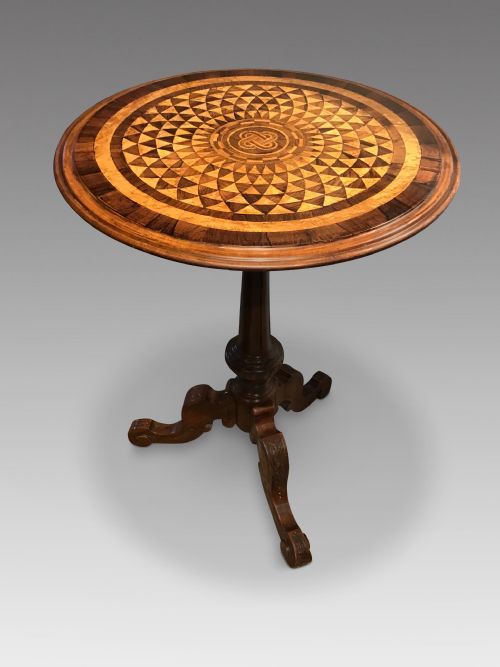
Specimen Wood Tilt Table
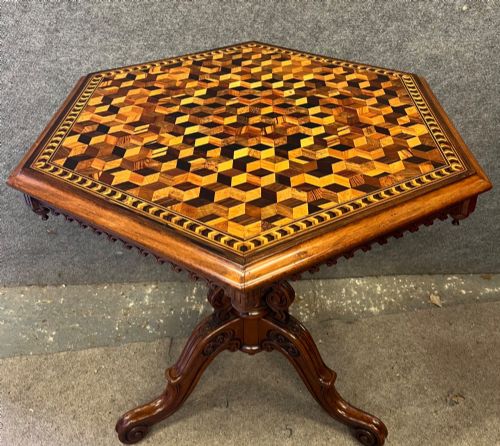
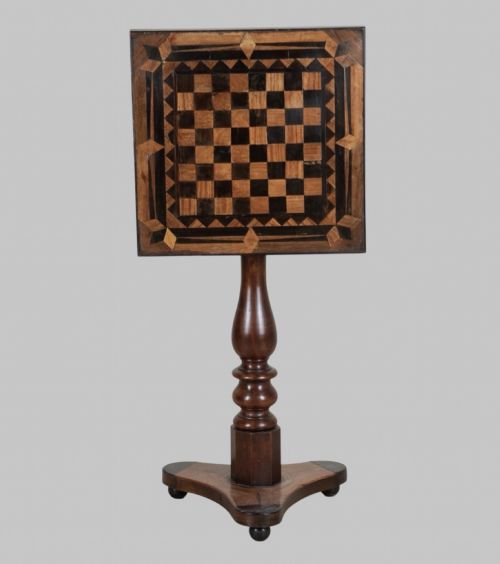
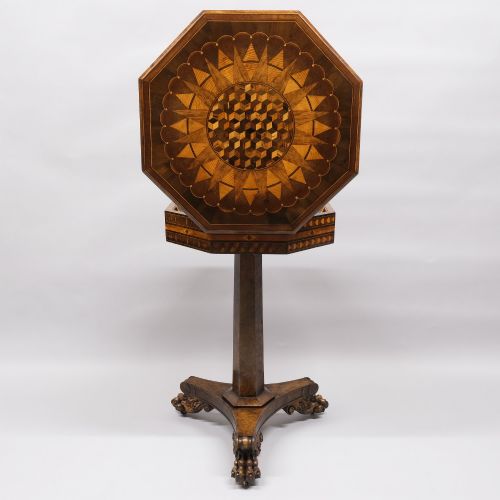
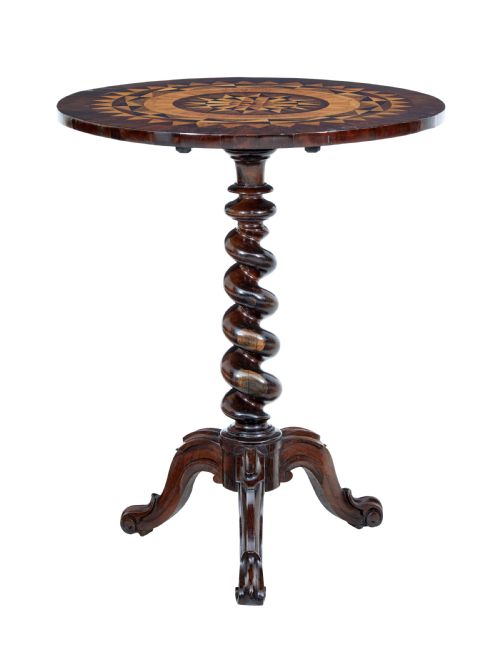
These specimen wood tilt table examples combine geometric marquetry surfaces with practical pivoting tops, offering collectors both functional tables and striking displays of timber variety.
Specimen Wood Tilt Table
A specimen wood tilt table is a piece of furniture designed with a pivoting top that displays intricate arrangements of diverse timbers, serving both as a functional surface and a decorative centrepiece.
Buyers browsing this selection will most frequently encounter nineteenth-century pieces, including Victorian, Regency, and Georgian iterations, alongside colonial examples from locations such as Jamaica and Ceylon.
The forms vary across centre tables, occasional tables, side tables, games tables, and work tables, each utilising the tilt mechanism to save space when not in use.
How they were made
Cabinet makers utilised dense primary timbers such as mahogany, walnut, rosewood, and ebony for the structural frames and pedestals, providing a stable foundation for the tops.
The decorative surfaces incorporate specimen wood veneers and parquetry, employing boxwood and various exotic timbers cut and fitted precisely to create sunburst motifs and geometric patterns.
Metal components such as brass appear in the hardware, while specialised joinery secures the multi-wood veneers to prevent warping across the tilting tabletops.
Specimen Wood Tilt Table Retail Price Guide 2026
Typical asking prices for specimen wood tilt table among the pieces listed under this phrase on Sellingantiques today, from the lower quarter to the upper quarter. They describe what is for sale here now, not the wider market.
Listings feature nineteenth-century, Georgian, Regency, and Victorian periods, utilising walnut, mahogany, rosewood, boxwood, and brass.
What varies in quality
Quality rests primarily in the precision of the parquetry work and the variety of timbers selected for the top, where tightly fitted geometric patterns and sunburst designs demonstrate superior craftsmanship.
The sophistication of the pedestal base and the smoothness of the tilt mechanism distinguish finer examples from standard production pieces, reflecting the skill invested by the cabinet maker.
The choice of primary timber also influences the standing of a piece, with dense rosewood, walnut, and ebony frames generally indicating higher tier construction.
Ralph Turnbull
The Specimen Wood Tilt Table Glossary
- Specimen wood
- Wood chosen for its specific colour, grain, or rarity rather than general structural utility. These pieces are collected to display a multitude of distinct botanical samples on a single surface.
- Tilt-top
- A table top mounted on a hinge mechanism that allows the surface to pivot into a vertical position. This design enables the furniture to be stored flat against a wall when not in use.
- Parquetry
- Geometric mosaic woodwork used for decorative flooring or furniture surfaces. Artisans arrange small blocks of timber to form repeating patterns.
- Sunburst top
- A decorative arrangement of wood veneers radiating outwards from a central point. The grain contrasts create the visual effect of shining light.
- Pedestal table
- A table supported by a single central pillar resting on a footed base. This configuration allows maximum legroom around the perimeter of the top.
Specimen Wood Tilt Table: Frequently Asked Questions
What is a specimen wood tilt table?
A specimen wood tilt table is a small table featuring a pivoting top decorated with geometric arrangements of many different timber species. These pieces were designed to showcase the variety and colour of exotic and domestic woods.
The tilting mechanism allowed the surface to be turned upright when not in use, making the table easy to move and store against a room's perimeter.
How do I date a specimen wood table?
Dating relies on examining the secondary woods, pedestal style, and overall construction methods characteristic of periods like the Georgian, Regency, and Victorian eras. Stylistic clues such as pedestal turning and the complexity of the parquetry provide further chronological context.
Colonial pieces often incorporate regional timbers specific to nineteenth-century workshops in locations like Ceylon or Jamaica.
Where were these tables placed historically?
These tables served multiple functions in nineteenth-century interiors, acting as occasional, side, or centre tables in drawing rooms and libraries. Their decorative tops made them suitable for displaying small objects or serving tea.
Because the tops could tilt, they also functioned as games tables or work tables in domestic spaces where floor area was at a premium.
How do I care for a multi-wood veneer top?
Maintenance requires keeping the timber away from direct sunlight and extreme temperature fluctuations to prevent the delicate veneer adhesives from drying out. Regular dusting with a soft, dry cloth preserves the polished finish.
Avoid using silicone-based polishes, as they can penetrate aged finishes and damage the delicate joints between different wood species.