


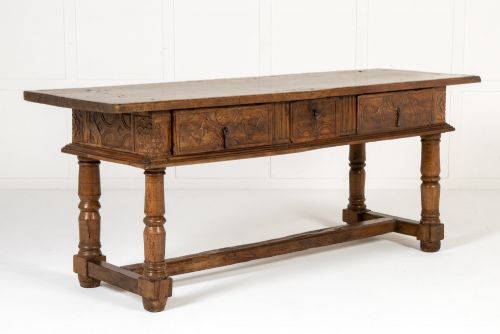


Spanish Walnut Furniture
Spanish walnut furniture brings serious weight and rich grain into a room, offering centuries of historic craftsmanship.
Spanish Walnut Furniture
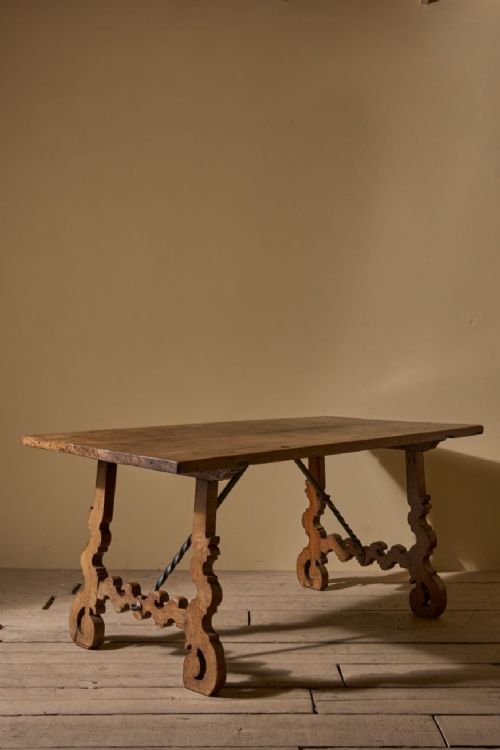
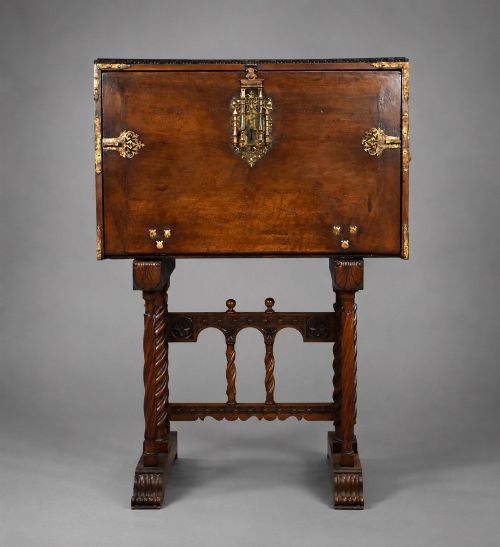
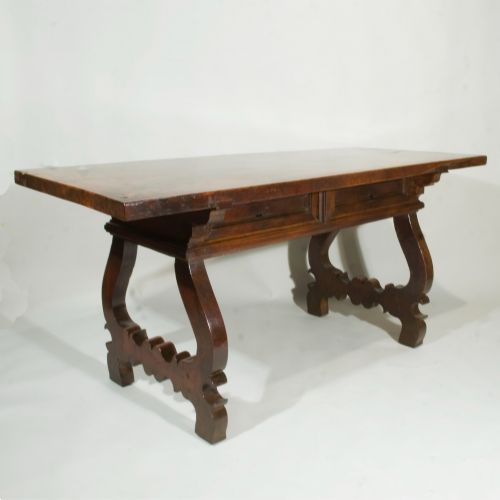
Spanish walnut furniture encompasses sturdy tables, intricate writing cabinets, and utilitarian boxes spanning from the seventeenth century through to the early twentieth century. These pieces carry deep historical presence, shaped by periods including the Spanish Baroque, Renaissance, and Colonial eras.
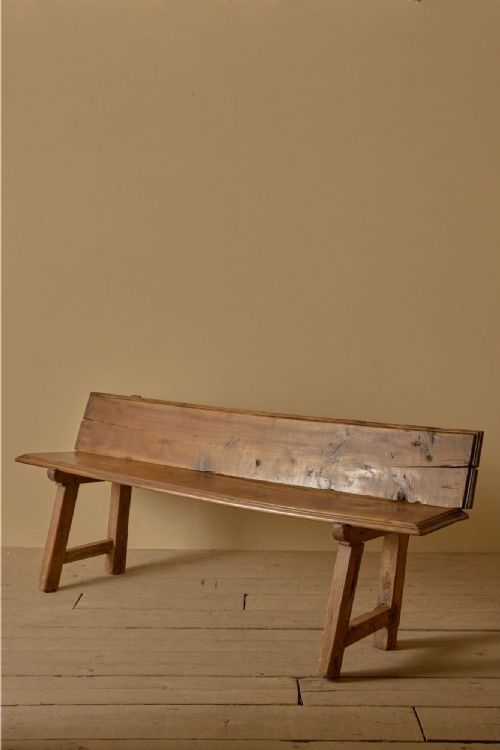
Tables and bargaining cabinets dominate the current selection, alongside hall benches and side tables. Buyers encounter heavy timber constructions frequently paired with functional wrought iron or brass hardware.
The regional styles stretch from seventeenth-century forms to nineteenth-century interpretations and early twentieth-century revivals. Each object reflects the utilitarian and decorative domestic needs of its original Spanish interior.
What varies in quality
Quality rests significantly in the integrity of the timber and the depth of the original patina accumulated across centuries. Pieces retaining their early surface character demonstrate superior preservation compared to heavily restored examples.
The sophistication of the construction and the quality of associated ironwork or inlay work distinguish finer cabinet work from simpler vernacular pieces. Heavier solid timber construction and period-appropriate hardware elevate the standing of tables and writing cabinets.
Spanish Walnut Furniture Retail Price Guide 2026
Typical asking prices for spanish walnut furniture among the pieces listed under this phrase on Sellingantiques today, from the lower quarter to the upper quarter. They describe what is for sale here now, not the wider market.
The Spanish Walnut Furniture Glossary
- Bargueño
- A portable writing cabinet featuring a drop front and numerous small interior drawers. This iconic Spanish form often rests upon a separate decorated stand.
- Brasero
- A traditional vessel designed to hold hot coals for indoor heating. These metal bowls frequently sit within decorative wooden or iron stands.
- Patina
- The surface sheen and colour acquired by walnut timber through decades of handling and ageing. A desirable surface shows natural warmth without artificial enhancement.
- Fruitwood
- Lighter secondary timber utilised alongside walnut in regional furniture construction. It provides tonal variation in multi-wood tables and cabinets.
- Wrought iron
- Hand-forged metal utilised for structural bracing, decorative hinges, and carrying handles. Blacksmith work contributes substantially to the authenticity of early pieces.
Spanish Walnut Furniture: Frequently Asked Questions
How do I identify a genuine seventeenth-century table?
Examine the construction methods, timber density, and surface wear patterns across the top and underframe. Seventeenth-century examples display traditional joinery and deep patination unique to early walnut surfaces.
Check for hand-forged iron stretcher supports and appropriate tool marks that distinguish period work from later revivals. True early pieces carry the structural weight and timber shrinkage consistent with centuries of age.
What is a bargueño cabinet used for?
A bargueño served as a portable desk and secure storage chest for valuable documents and correspondence. The drop-front lid opened to reveal an arrangement of small drawers.
These cabinets sat on matching tables or stands so owners could transport their important paperwork between rooms or residences. The elaborate interior compartments reflect the high status of their original owners.
How should I clean walnut furniture?
Maintain the timber using a minimal application of traditional beeswax to nourish the dry grain. Avoid modern chemical polishes that strip away the historical patina.
Keep pieces away from direct heat sources and strong sunlight to prevent timber splitting and fading. Gentle dusting with a soft dry cloth preserves the surface finish safely.
Can I use an antique brasero in a modern room?
A brasero functions effectively as a decorative floor vessel or plant holder within contemporary interiors. These metal and wooden hearth pieces bring striking historic texture into a space.
Ensure the metal interior remains clean and stable if utilised for decorative display. They anchor room corners with distinctive seventeenth- and nineteenth-century Spanish character.