



Spanish School Painting
These spanish school painting works span centuries of religious devotion, quiet still-lifes, and striking portraiture.
Spanish School Painting
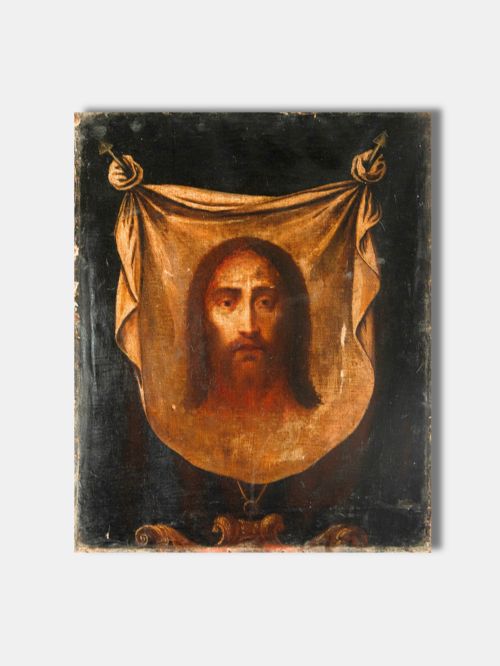
When you search for a spanish school painting, you encounter canvases capturing the profound gravity of Spanish Baroque portraiture, religious iconography, and domestic still-life scenes. The evidence shows these works stretch from the sixteenth century through the nineteenth century, alongside twentieth-century studies.
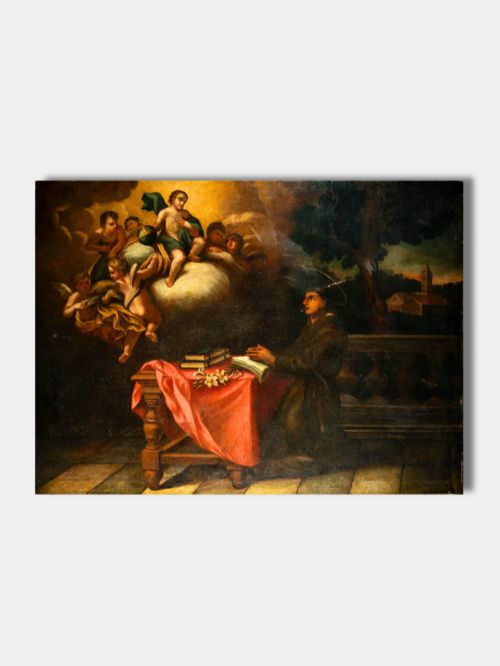
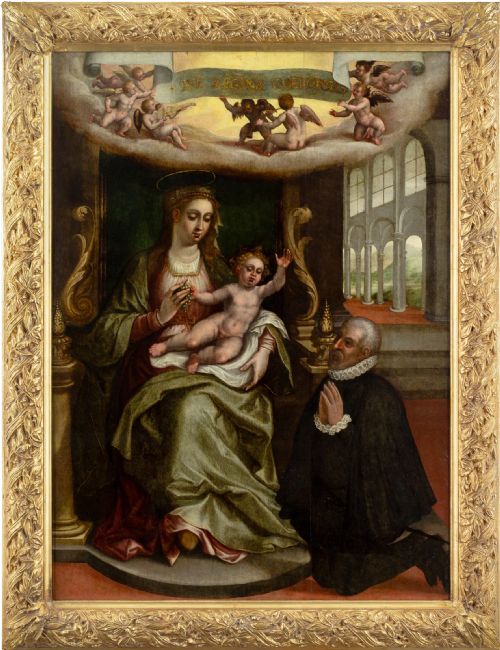
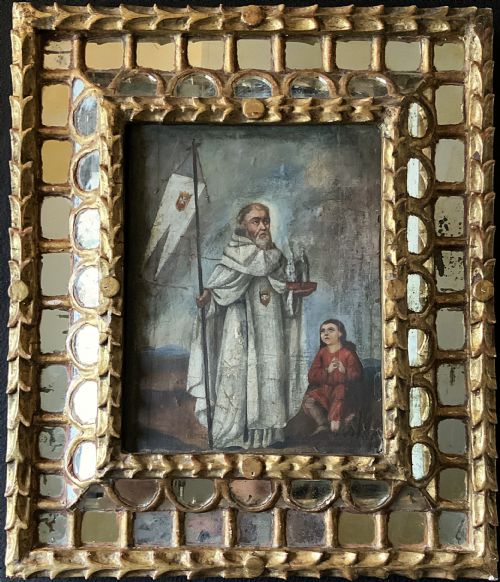
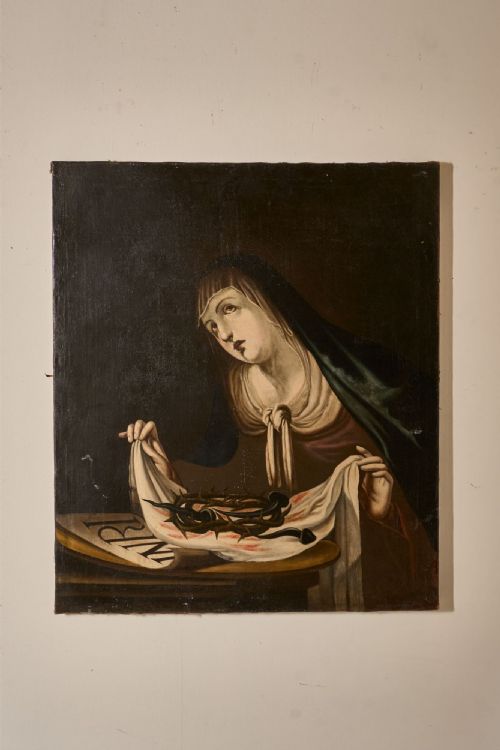
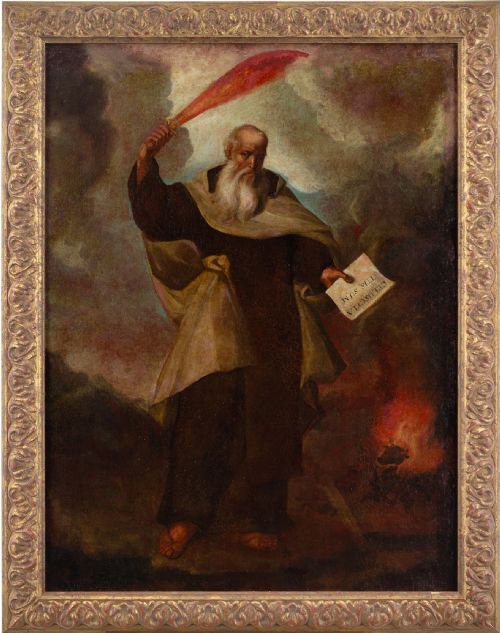
The most common examples you meet on this page are seventeenth-century oils depicting saints, biblical figures, and clerical portraits. These pieces often arrive housed in period giltwood frames that complete the composition.
What varies in quality
The distinction between average examples and the finest works lies in the handling of light, anatomical precision, and the expressive depth of the figures. Masterful brushwork in facial expressions and fabric folds elevates a portrait far above a standard provincial workshop piece.
Condition also plays a significant role in distinguishing these works, specifically the stability of the canvas and the preservation of the original pigment layers. Pieces retaining their early stretchers and untouched surfaces command greater scholarly interest.
One seventeenth-century still-life crams eggs, walnuts, lamb, apples, playing cards, dice, a lemon, snails, an onion, and bread onto a single larder canvas.
Miguel Barroso·Henri Cadiou
The Spanish School Painting Glossary
- Spanish Baroque
- A stylistic period spanning the seventeenth century characterised by dramatic contrasts of light and shadow, known as tenebrism, and intense emotional subjects. This approach heightens the theatricality of religious narratives and portraits.
- Giltwood
- Wood carved and coated with a thin layer of gold leaf, commonly used for historical picture frames. These frames often show patination consistent with their age.
- Retablo
- A devotional painting or altarpiece panel depicting religious figures, frequently found in Spanish and Spanish Colonial traditions. They serve as objects of personal or communal worship.
- Still-life
- An artwork depicting inanimate subject matter, such as food, larder items, or everyday objects arranged in a composition. In these listings, they range from simple studies to complex arrangements.
Spanish School Painting: Frequently Asked Questions
What subjects do these paintings show?
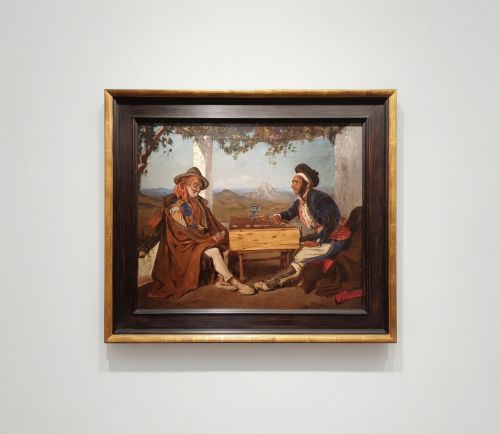
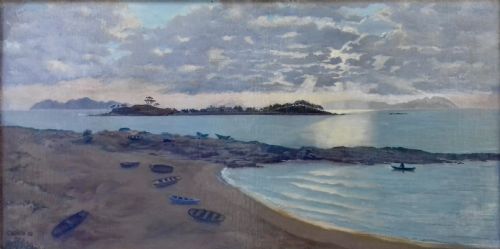
The available works predominantly feature religious figures, saints, biblical scenes, and clerical portraits from the sixteenth to the nineteenth centuries. You also encounter genre scenes such as card players, marine landscapes, and detailed still-lifes.
These subjects reflect the cultural and religious priorities of historical Spanish workshops. Domestic still-lifes and street scenes offer a contrasting glimpse into everyday life alongside the devotional art.
How can I tell the age of a canvas?
Dating relies on stylistic markers, costume details, the preparation of the canvas, and the construction of the underlying wooden stretcher frames. Seventeenth-century works often display Baroque lighting and specific ecclesiastical dress.
Material evidence such as handmade nails, canvas texture, and historic framing provide additional clues for verification. Comparing the handling of paint to documented workshop pieces helps narrow the decade.
Are these paintings supplied with frames?
Many listings include period surrounds such as carved giltwood frames that complement the age and origin of the artwork. These frames are frequently contemporary to the canvas.
Checking individual descriptions clarifies whether a giltwood frame is original to the piece. Such frames contribute significantly to the visual weight and historical context of the painting.
What is Spanish Colonial school art?
This category encompasses works produced in Spanish territories overseas, blending European painting techniques with indigenous cultural influences and iconography. Examples include devotional depictions of saints and retablos.
These paintings share technical lineage with mainland Spanish art while displaying distinct regional subject matter. They represent a specific cultural exchange within the broader tradition.