


Spanish Baroque Wooden Table
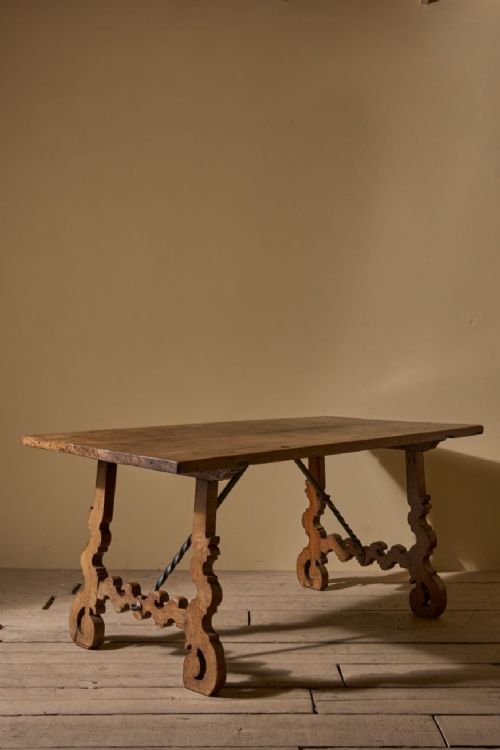
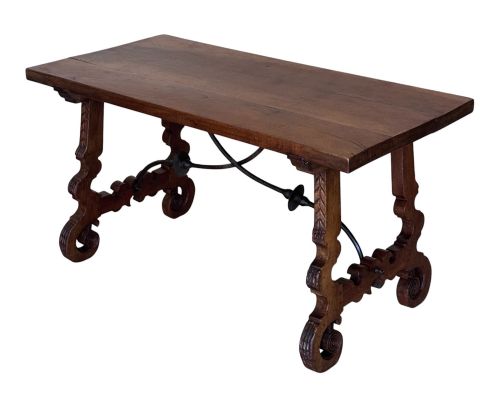
These heavy, honest spanish baroque wooden table examples bring seventeenth-century proportion and warm timber grain directly into modern rooms.
Spanish Baroque Wooden Table
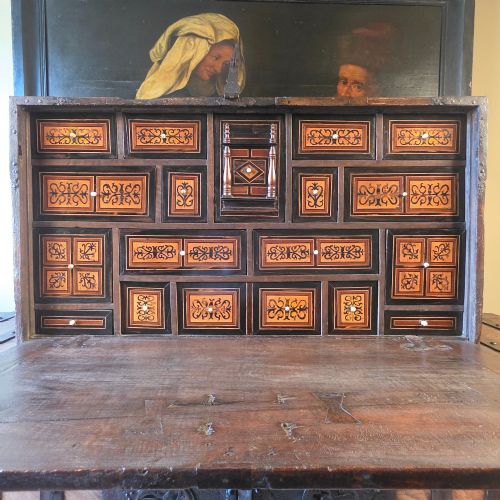
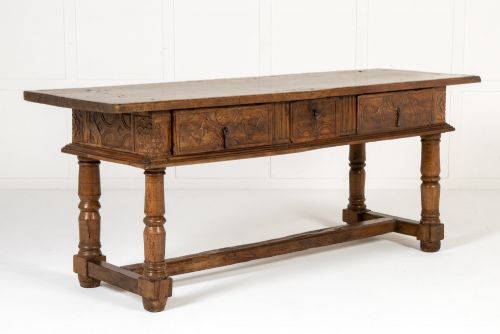
When you search for a spanish baroque wooden table, you encounter robust forms spanning the seventeenth, eighteenth, and nineteenth centuries. Walnut dominates these pieces, frequently appearing alongside fruitwood, oak, and wrought iron hardware.
The selections on this page range from grand dining tables and console tables to centre tables and smaller side tables. Many originate directly from the Spanish Baroque tradition, while others reflect later Spanish Colonial and Spanish Revival interpretations.
Earlier seventeenth-century examples display deep patination and solid construction, whereas later nineteenth-century iterations often channel the same architectural restraint with altered proportions. Every version relies on honest construction rather than excessive ornamentation.
Materials and Construction
Makers relied primarily on solid walnut and fruitwood, selecting dense timber to withstand heavy daily use. Planks were joined with straightforward timber framing and supported by wrought iron stretchers.
Metalwork played a structural and decorative role, with iron and brass components securing the wooden elements. Surface finishes developed through decades of wax polishing, producing the deep original patina visible on older examples.
Assessing Quality and Character
Quality rests in the integrity of the timber and the honesty of the construction. Pieces retaining their original surface patination and uncompromised structural joints stand apart from heavily restored alternatives.
The balance of the proportions dictates the visual success of the piece. Strong grain patterns in the walnut and restrained ironwork indicate superior regional craftsmanship.
The Spanish Baroque Wooden Table Glossary
- Walnut
- A dense, dark hardwood prized for its rich grain and stability. It forms the primary material for the majority of these tables.
- Patina
- The deep, lustrous surface sheen developed over centuries through handling and wax polishing. This quality marks untouched older timber.
- Console Table
- A wall-mounted or flat-backed table designed to stand against a partition. These pieces often feature elongated proportions suitable for hallways or reception rooms.
- Trestle Table
- A form consisting of horizontal beams supported by vertical feet or trestles. This design provides sturdy support without obstructing legroom.
- Fruitwood
- A dense timber harvested from fruit-bearing trees, used alongside walnut for cabinetwork and tabletops. It offers a contrasting warm tone.
Spanish Baroque Wooden Table: Frequently Asked Questions
Are these tables suitable for everyday dining?
Many of these wooden tables provide robust surfaces suited for daily use. Their solid timber construction handles regular placement of dining items quite well.
Buyers should consider the specific height and knee clearance of older formats. Seventeenth and eighteenth-century proportions occasionally differ from modern seating standards.
How do I care for antique walnut wood?
Maintain the timber by applying natural beeswax occasionally to nourish the grain. Avoid placing these pieces near direct heat sources or strong sunlight.
Keep surfaces dry and dust them gently with a soft cloth. Excessive moisture can damage the historic polish and timber underneath.
What defines the Spanish Baroque style?
This design tradition emphasises structural strength, sober geometry, and minimal surface carving. It relies on the natural beauty of walnut and ironwork for visual impact.
Ornamentation remains restrained compared to continental counterparts. The focus stays firmly on proportion, mass, and architectural presence.
How do I distinguish seventeenth and nineteenth-century pieces?
Seventeenth-century examples display deeper patination, hand-tooled joinery marks, and heavier timber thickness. Their construction reflects the working methods of period joiners.
Nineteenth-century revivals often utilise similar walnut stock but exhibit cleaner tool marks and slightly lighter overall weight. Comparing the hardware and timber wear helps clarify the age.