

South Persian Woven Bag
A south persian woven bag brings the intricate tribal artistry of nomadic confederacies directly into your interior.
South Persian Woven Bag
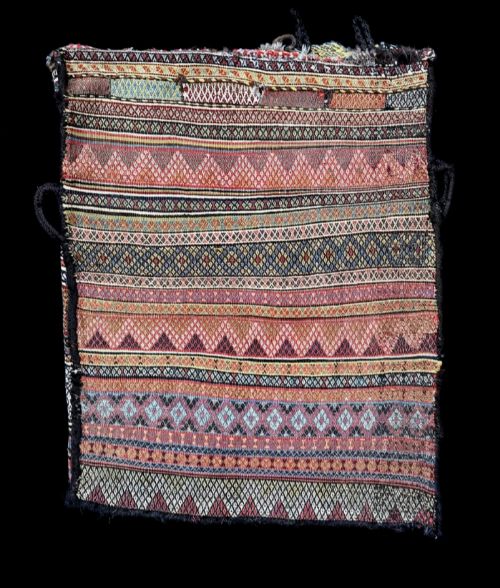
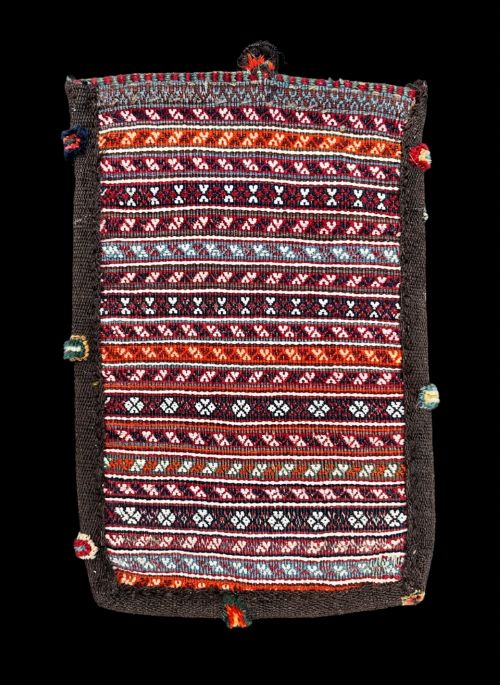
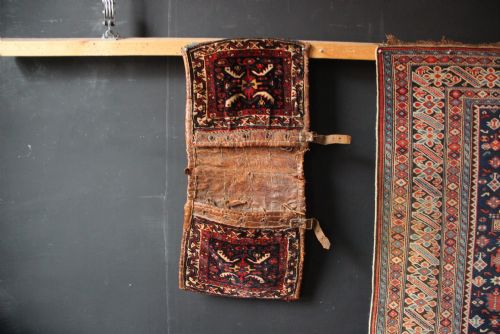
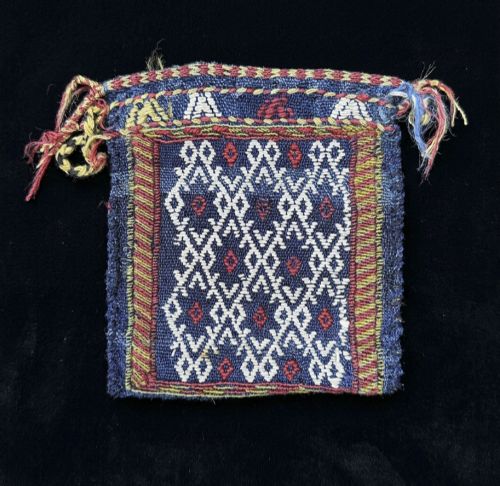
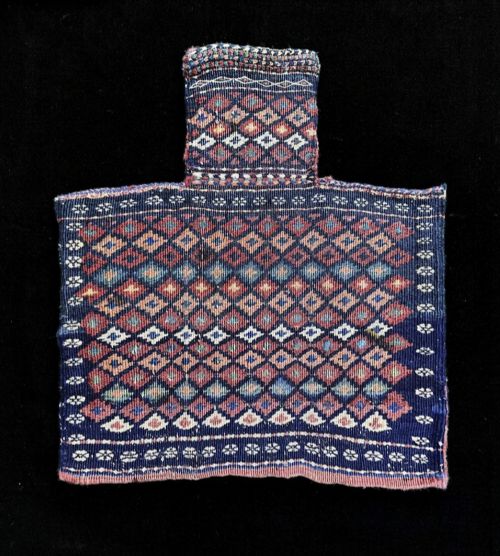
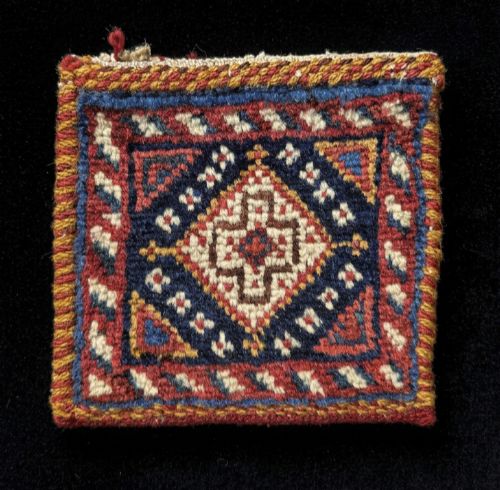
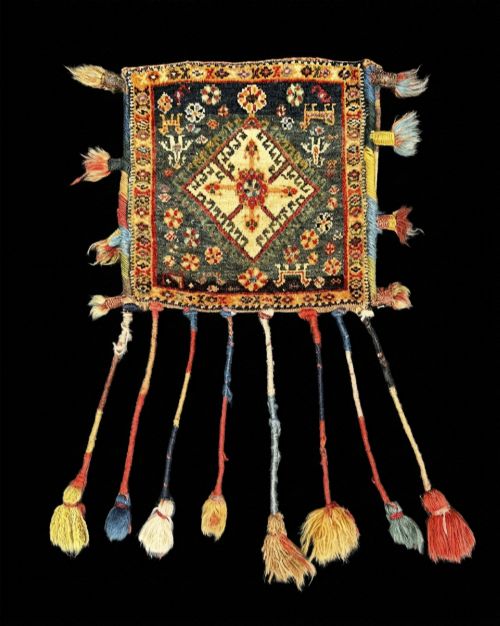
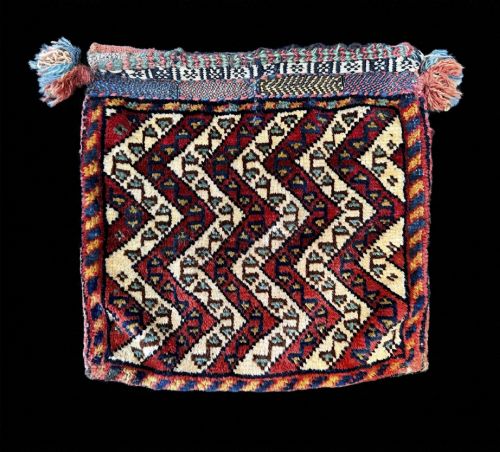
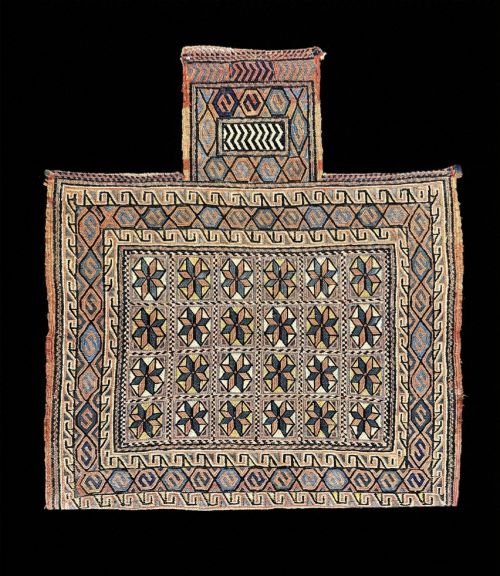
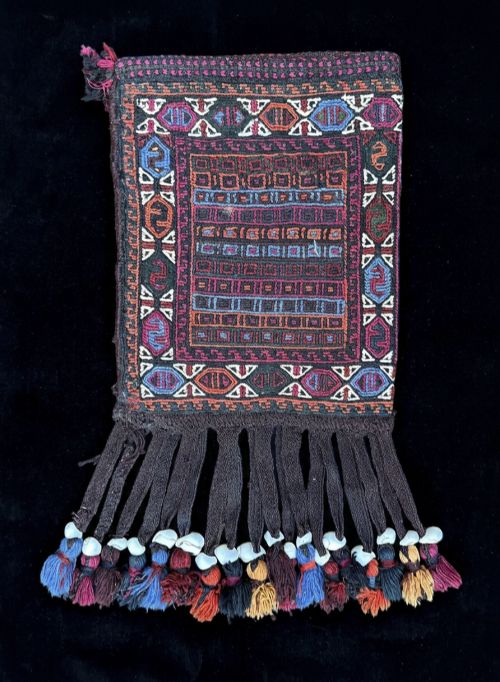
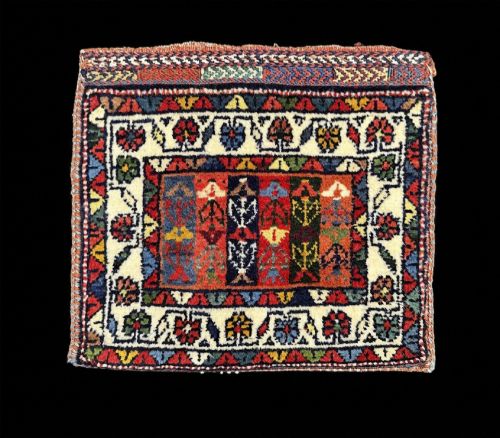
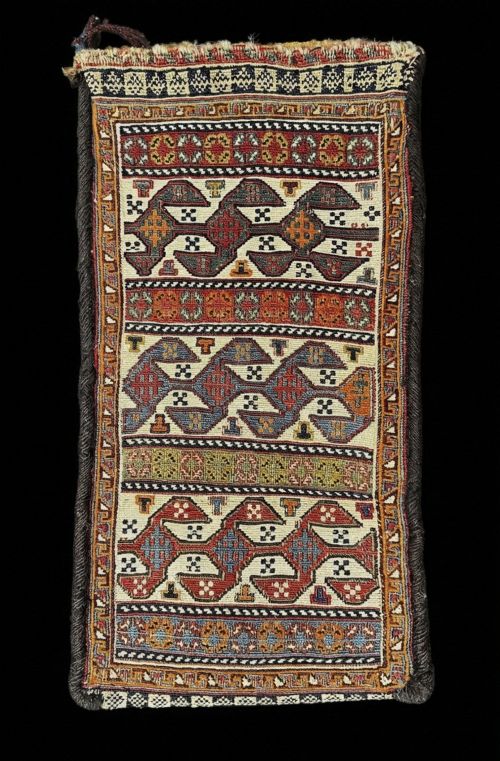
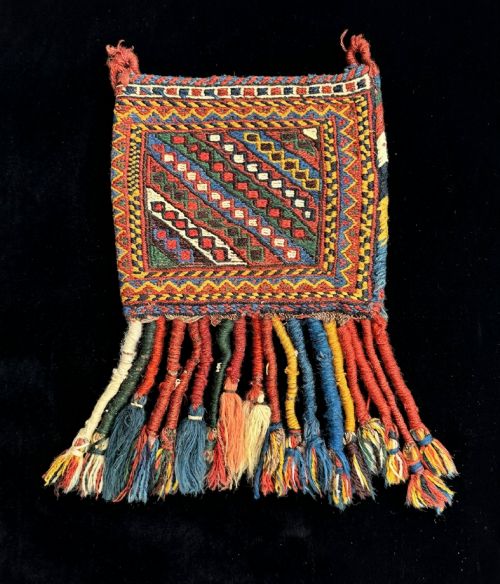
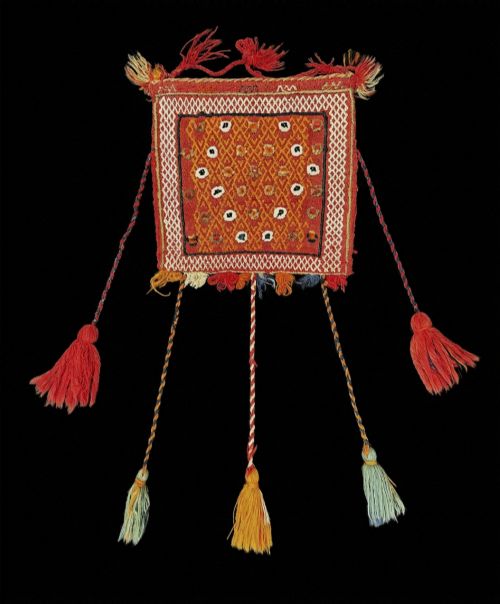
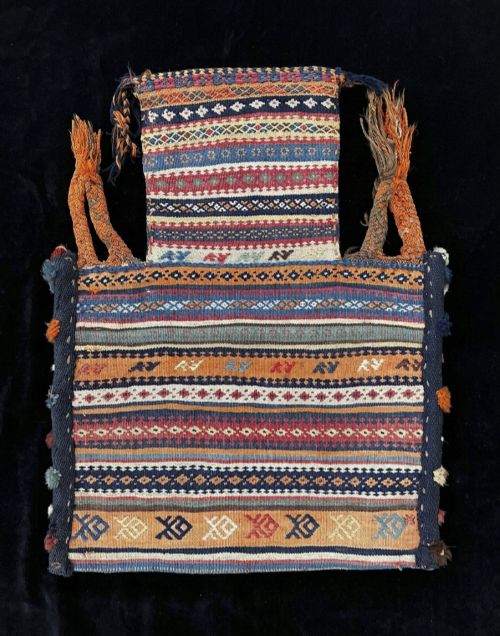
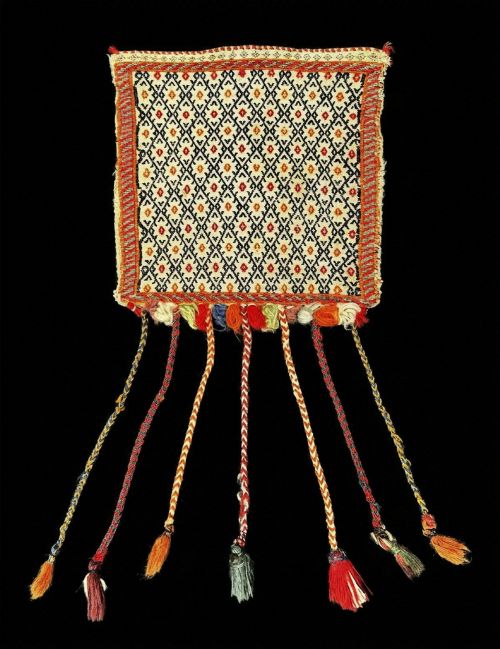
When you search for a south persian woven bag, you encounter functional tribal textiles originating from nomadic groups such as the Qashqa'i, Afshar, and Khamseh. These pieces include vanity bags, tobacco and pipe pouches, salt bags, and complete or half saddlebags produced across the Fars and Kerman provinces. The selection you meet on this page spans from the mid nineteenth century through the early twentieth century, reflecting distinct regional weaving traditions.
Makers utilised specific formats tailored to nomadic life, ranging from small personal chantehs to large double-faced saddlebags designed for transport by pack animals. Many examples survive simply as bag faces where the rear structure has worn away over decades of use. Each piece records the specific sub-tribe or tayefeh responsible for its creation, connecting the object directly to specific geographic areas in southern Persia.
Materials and construction
The foundation of a south persian woven bag rests upon hand-spun wool for the pile and structure, frequently supported by cotton warps and wefts in later examples. Weavers deployed natural dyes to achieve rich colour palettes that deepen in character over time. Certain utilitarian pieces incorporate decorative elements such as cowrie shells along the borders.
Nomadic artisans employed durable techniques suited to portable looms, combining pile knotting with flatwoven backings where complete saddlebags survive. The careful selection of lustrous, luminous wool ensures high durability alongside tactile warmth. Skilled manipulation of natural dyestuffs produced varied hues across different tribal workshops.
South Persian Woven Bag Retail Price Guide 2026
Typical asking prices for south persian woven bag among the pieces listed under this phrase on Sellingantiques today, from the lower quarter to the upper quarter. They describe what is for sale here now, not the wider market.
The site listings feature items produced across periods spanning from the eighteen-sixties to the nineteen-thirty, utilising hand-spun wool and natural dyes.
Assessing quality and execution
Quality in a south persian woven bag depends upon knot density and the precision of the geometric or boteh motifs executed by the weaver. Finer examples display meticulous handling of detail within restricted dimensions, maintaining crisp lines across complex tribal patterns. The vibrancy and saturation of the natural dyes further elevate the visual impact of superior specimens.
The condition of the wool pile and the integrity of the remaining structure dictate desirability among collectors. Pieces retaining their original backs or displaying particularly luminous, well-preserved wool command greater appreciation for their survival. Variations in technical execution separate standard utilitarian items from masterworks of nomadic textile art.
The South Persian Woven Bag Glossary
- Chanteh
- A small tribal personal bag or vanity pouch used by nomads for carrying small possessions. These woven items often display intricate miniature rug designs.
- Khorjin
- The Persian term for a traditional saddlebag used for transport on animals. They are frequently encountered today as single bag faces after being separated from their backs.
- Boteh
- A stylized floral motif resembling a almond or bent cedar leaf found across many tribal weaving traditions. It remains a central design element in numerous regional bag faces.
- Tayefeh
- A specific sub-tribe or clan within a larger nomadic confederacy such as the Qashqa'i. Identifying the tayefeh helps localise the origin of an individual weaving.
- Natural Dyes
- Colourants derived from plants, insects, and minerals used before the introduction of synthetic alternatives. They yield complex, shifting tones that age gracefully.
South Persian Woven Bag: Frequently Asked Questions
What is a south persian woven bag?
These items are functional nomadic textiles produced by tribes in regions like Fars and Kerman.
They served daily storage purposes during migration, functioning as saddlebags, salt pouches, or personal vanity cases.
How were these bags used?
Nomads utilised them strapped to pack animals or kept them inside tents for personal storage.
Specific forms held tobacco, pipes, salt, or personal items during seasonal journeys across the mountains.
How do I identify a Qashqa'i piece?
Qashqa'i works often originate from the Fars province and are attributed to specific sub-tribes like the Darrehshuri or Kashkuli.
They frequently employ distinctive motifs and colour combinations characteristic of the confederacy's weaving traditions.
Why do some listings show only bag faces?
Many complete saddlebags suffered wear on their plain flatwoven backs while the decorative pile faces remained intact.
Owners or collectors eventually separated the durable front panels to preserve them as independent textile art.
How should I care for a tribal bag?
Keep them away from direct sunlight to protect the natural dyes from fading over time.
Gentle vacuuming without a rotating brush helps remove dust without disturbing the hand-spun wool pile.