



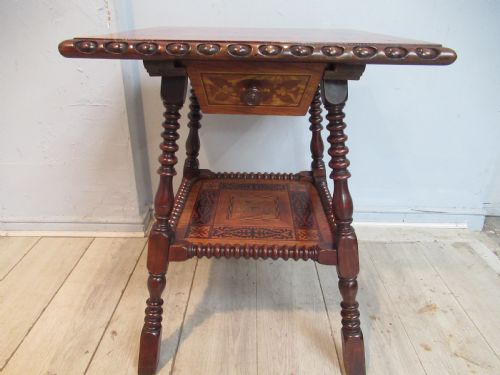


Sorrento Marquetry Tables
Sorrento marquetry tables bring intricate Italian woodwork into your home, offering beautifully detailed surfaces that transform ordinary rooms.
Sorrento Marquetry Tables
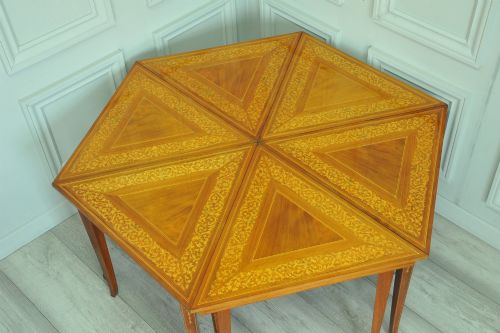
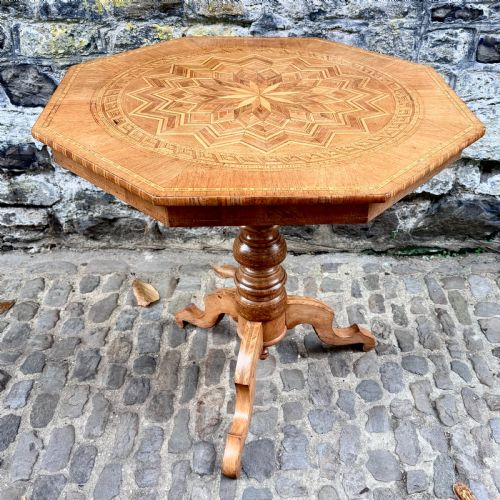
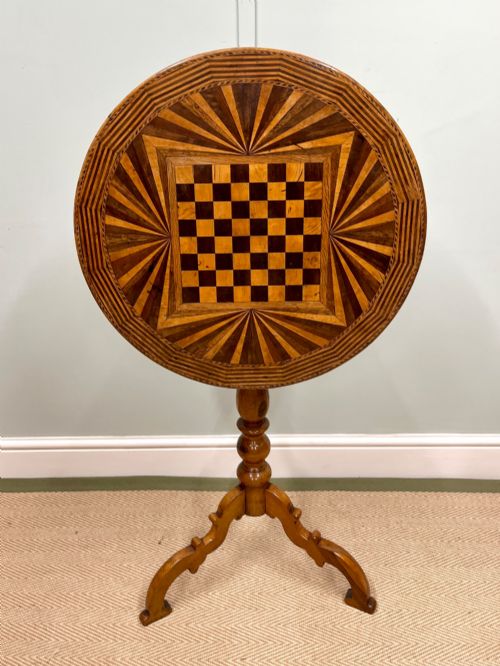
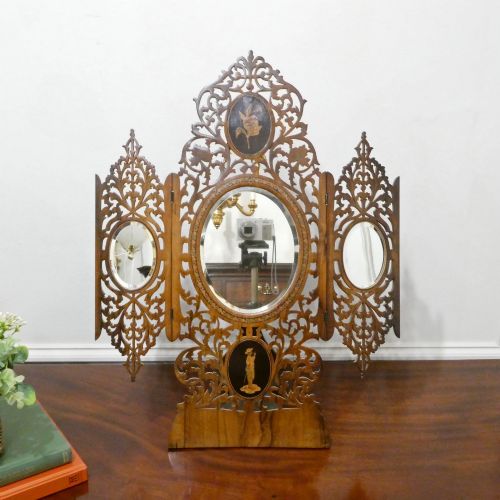
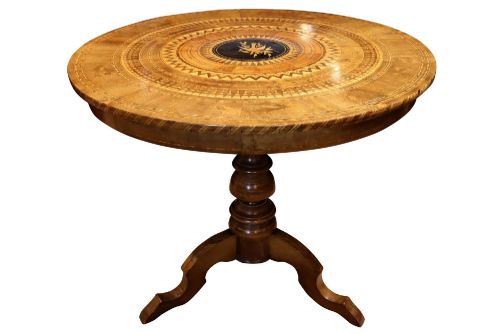
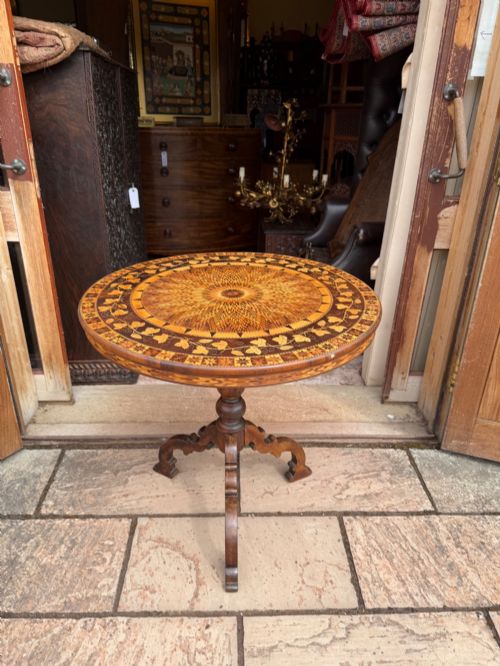
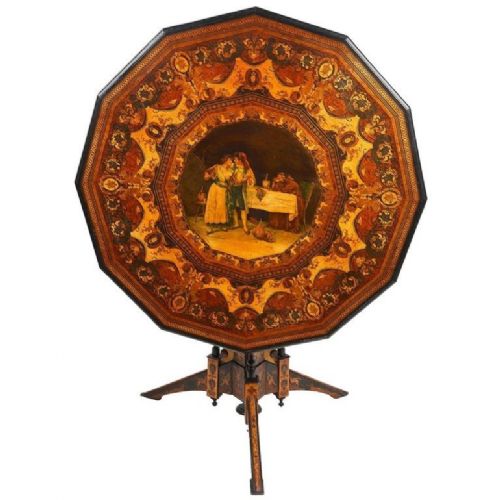
Sorrento marquetry tables are charming Italian furnishings created predominantly during the nineteenth century, featuring complex wood inlay work depicting architectural scenes, floral motifs, and geometric patterns. When searching for sorrento marquetry tables, buyers will frequently encounter occasional tables, side tables, games tables, and coffee tables originating from Italy.
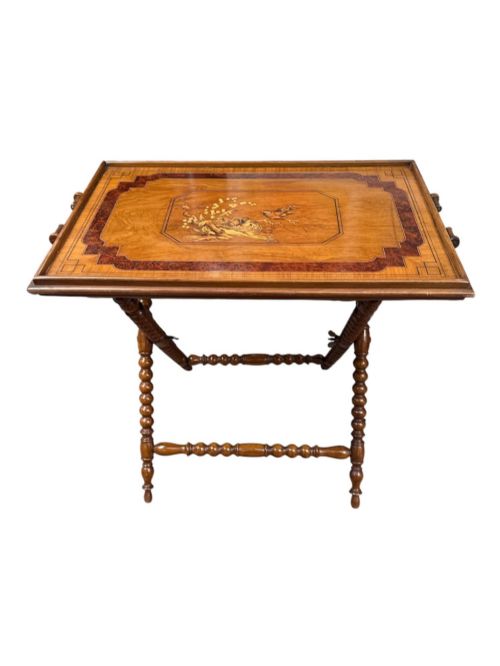
The pieces available on this page span from the Victorian and Edwardian eras up to mid-century modern examples from nineteen sixty. Forms range from pedestal tables and tilt-top tables to nesting sets and butler's trays, reflecting diverse functions suited to period and vintage interiors.
Originating largely from the coastal town of Sorrento, these tables combine functional furniture forms with elaborate pictorial decoration. Buyers find both compact occasional pieces and larger games tables designed for parlour entertainment.
Judging the work
Quality rests upon the precision of the veneer cutting and the complexity of the pictorial imagery depicted on the top. Finer examples display a greater variety of natural wood tones and tighter joints within the geometric parquetry borders.
The structural integrity of the base, whether a turned pedestal or folding support, alongside the condition of the delicate surface veneers, defines the overall standing of the piece.
Sorrento Marquetry Tables Retail Price Guide 2026
Typical asking prices for sorrento marquetry tables among the pieces listed under this phrase on Sellingantiques today, from the lower quarter to the upper quarter. They describe what is for sale here now, not the wider market.
Some mid-century nesting sets hide musical boxes inside, transforming a quiet table into an unexpected performance.
Almerico Gargiulo
The Sorrento Marquetry Tables Glossary
- Marquetry
- A decorative technique where small pieces of wood veneer are assembled to form pictures or patterns on a solid timber base. This method allows artisans to create detailed pictorial scenes using natural wood colours.
- Parquetry
- A geometric mosaic of wood veneers used to create repeating patterns such as cubes or stripes. It frequently borders the central pictorial marquetry on table tops.
- Olive wood
- A dense, heavily figured timber native to the Mediterranean, prized for its contrasting dark brown grain lines. It appears frequently in Sorrento pieces.
- Tilt top table
- A table featuring a mechanism that allows the surface to be rotated and stored vertically against a wall when not in use. These often feature elaborate marquetry displays on the top surface.
- Nesting tables
- A set of graduated tables designed to fit neatly underneath one another to save space. Mid-century Sorrento examples sometimes incorporate musical movements within these sets.
Sorrento Marquetry Tables: Frequently Asked Questions
What is a Sorrento table?
A Sorrento table is an item of Italian furniture decorated with intricate wood veneer inlays, often showing floral designs, buildings, or geometric patterns. These tables originated in the coastal town of Sorrento during the nineteenth century and gained popularity across Europe.
Craftsmen used various native timbers to create contrasting pictures on the table tops. They serve as both functional furniture and decorative works of art.
How do I care for my table?
Keep your inlaid table away from direct sunlight and extreme temperature changes to prevent the delicate wood veneers from drying out or lifting. Dust gently with a dry cloth and avoid using harsh chemical polishes.
Using coasters and mats will protect the polished surface from moisture and heat damage. Waxing occasionally helps preserve the natural lustre of the timber.
Are these tables sturdy enough for daily use?
While these tables were built for functional home use, their intricate marquetry surfaces require a degree of care. Occasional and side tables function well for holding lamps or decorative items rather than heavy loads.
Games tables and larger occasional pieces offer stable platforms for entertaining. Treating them with gentle consideration ensures the delicate veneered surfaces survive intact.
How do I tell nineteenth century pieces apart from later ones?
Nineteenth-century pieces generally utilise solid walnut structures with hand-cut veneers and traditional joinery methods. The types of wood used and the style of the pictorial inlay often reflect Victorian or Grand Tour aesthetics.
Later mid-century examples from nineteen sixty often feature different production methods, sometimes incorporating musical boxes or lighter construction. Examining the underside and the nature of the timber helps determine the age.