


Solitaire Drop Pendant
A solitaire drop pendant suspends a single gemstone from a delicate chain, offering timeless elegance across periods from Victorian to modern contemporary.
Solitaire Drop Pendant
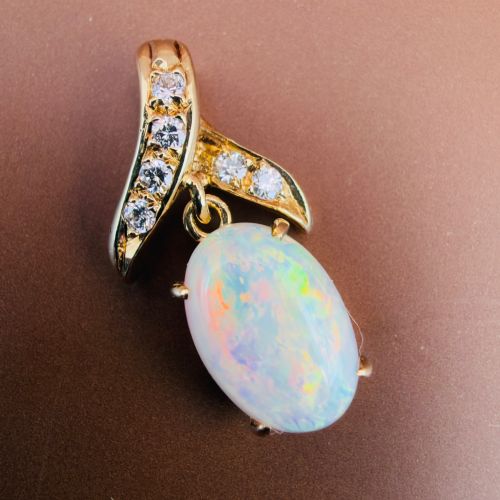
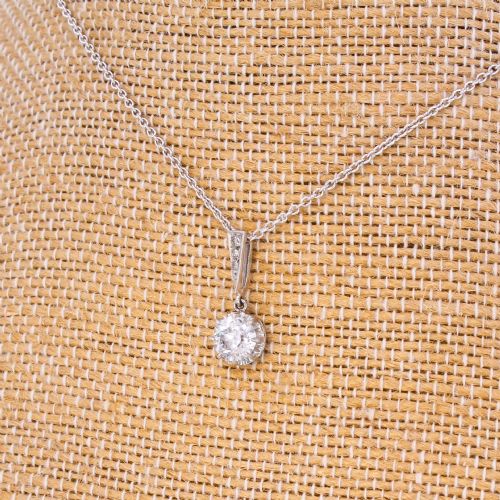
A solitaire drop pendant focuses attention on one central stone suspended from a necklace, appearing in forms ranging from old cut diamonds to cabochon opals and coloured quartz. Buyers examining this page will encounter pendants fashioned during the Edwardian, Art Deco, and mid-century eras, alongside Victorian and later modern designs.
The selection includes platinum and various gold standards such as nine carat, fourteen carat, and eighteen carat white gold. While many examples feature a solitary diamond, others incorporate opal, emerald, aquamarine, amethyst, topaz, and zircon within pendant necklaces and drop earrings.
How they were made
Goldsmiths constructed these pieces using durable precious metals, mounting stones securely in platinum or various grades of gold. Bezel settings and claw mounts hold the central gems firmly while allowing light to pass through the facets or cabochon surfaces.
Makers utilised casting and hand-working techniques to shape the pendant settings and attach them to fine necklaces. The combination of secure stone-setting methods and precious alloys ensures the longevity of these delicate neck ornaments.
Current listings span periods from the Victorian era through the 1960s, featuring platinum and various gold purities set with diamonds, opals, and coloured quartz.
What varies in quality
The integrity of the chain and the refinement of the setting work indicate the overall standard of construction. Superior examples display harmonious proportions between the drop stone and its suspension loop.
The Solitaire Drop Pendant Glossary
- Solitaire
- A piece of jewellery featuring a single gemstone as the primary focal point. This setting concentrates visual impact onto one prominent stone.
- Cabochon
- A gem polished to a smooth, rounded convex surface rather than faceted. This traditional cut suits opaque or translucent stones like opal.
- Bezel setting
- A method of securing a gemstone by a thin metal strip that wraps around the girdle of the stone. It provides a clean outline and protects the stone edges.
- Old cut
- A diamond cutting style prevalent in earlier periods, characterised by a high crown, small table, and deep pavilion. These cuts project a distinctive pattern of candlelight sparkle.
Solitaire Drop Pendant: Frequently Asked Questions
How do I wear a solitaire drop pendant?
These pendants rest on fine chains near the collarbone, pairing easily with evening wear or simpler everyday outfits. Their versatile drop design draws the eye downward along the neckline.
Matching the gold colour of the pendant with other jewellery helps create a cohesive look when layering necklaces.
What periods do these pendants come from?
The selection spans Victorian, Edwardian, and Art Deco eras, alongside mid-century and later twentieth-century designs. Each period brings distinct metal colours and gemstone cuts to the pendant form.
Mid-century pieces often showcase clean lines, whereas Victorian and Edwardian examples lean towards ornate detailing.
How are different gold purities used?
Pendants utilise nine carat, fourteen carat, and eighteen carat gold in yellow and white variations, alongside platinum. Higher carat golds offer a richer hue, while platinum provides exceptional durability for secure stone settings.
White gold alloys give a bright, contemporary finish that complements colourless diamonds.
What gemstones appear in these designs?
Diamonds form a large portion of the selection, accompanied by opals, emeralds, aquamarines, amethysts, topazes, and zircons. Some pieces combine a central diamond with coloured stones in a cluster arrangement.
Each stone variety requires specific care to maintain its lustre and surface polish over time.