



Solid Wood Entryway Seats
Solid wood entryway seats serve as practical corridor furniture, offering a sturdy spot to pause in traditional hallways.
Solid Wood Entryway Seats
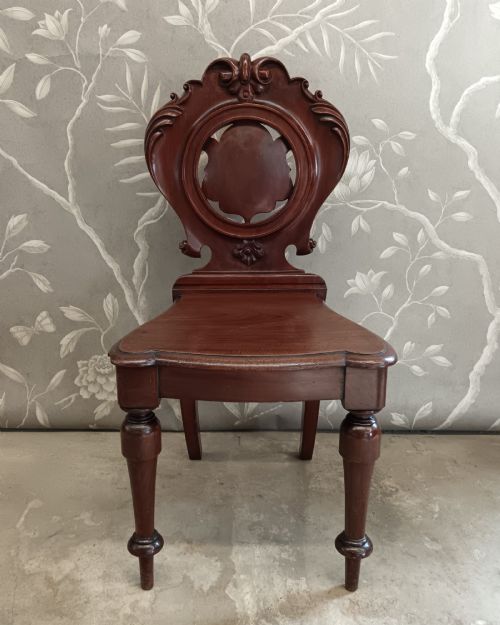
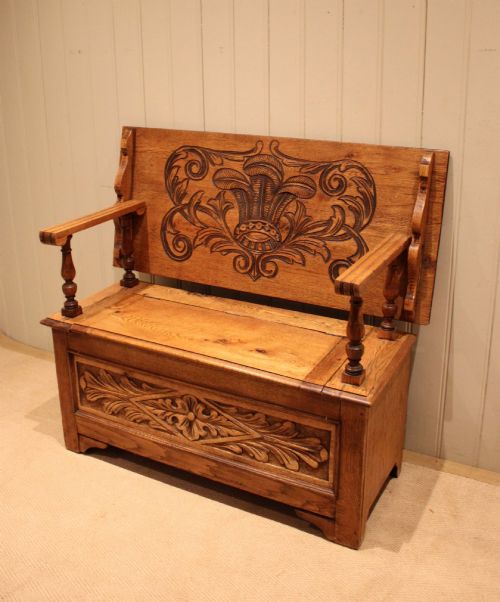
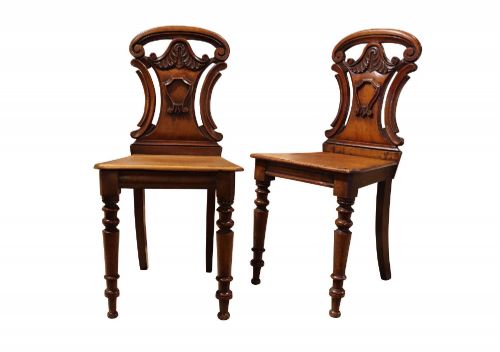
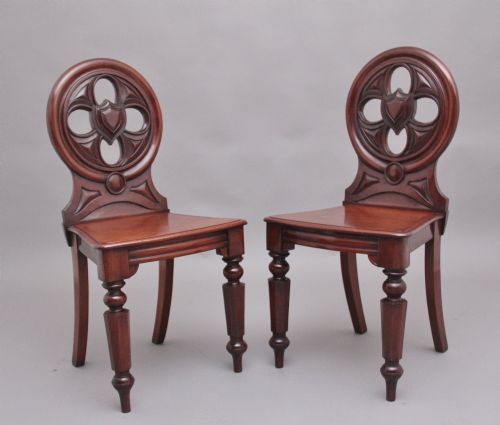
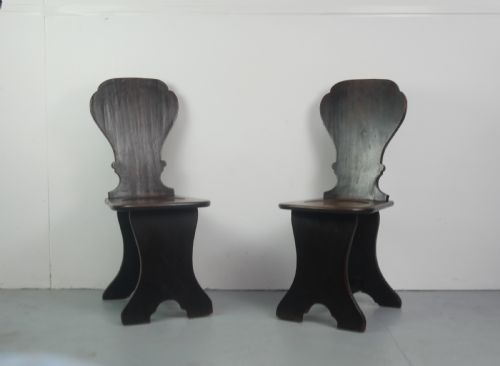
Solid wood entryway seats encompass historic hall chairs and hall benches designed for utilitarian spaces, predominantly meeting the eye as single seats rather than long benches. These pieces originate from periods spanning the eighteenth century through the late nineteenth century, including Georgian, Regency, and Victorian eras.
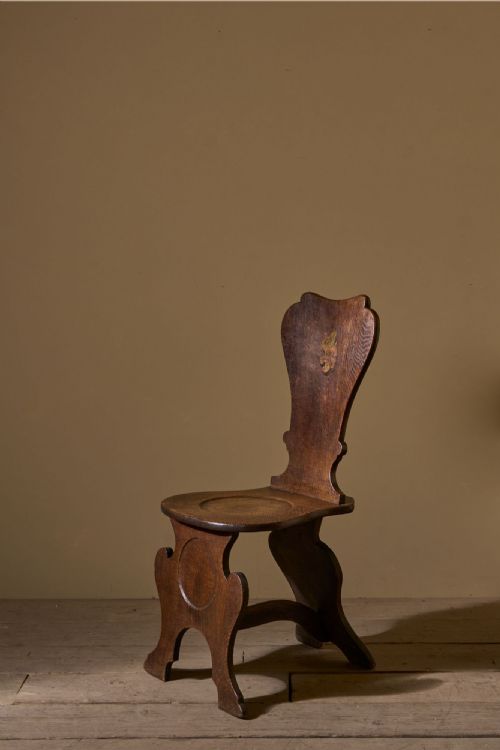
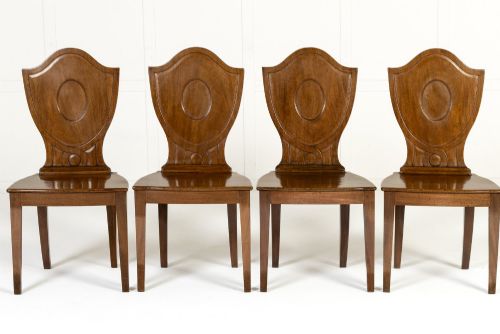
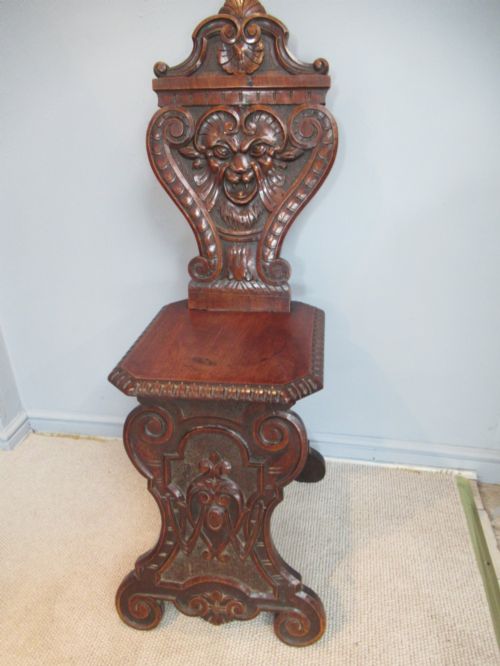
Forms vary from shield-back and shell-back designs to carved sgabello chairs and substantial armorial models with brass inlay. Buyers will encounter pairs and sets alongside single chairs, reflecting their original placement flanking a hallway.
Materials and Construction
Cabinetmakers relied on dense timbers like mahogany, oak, and walnut to build these seats, ensuring durability for high-traffic hallway use. Solid wood construction allows for deep relief carving on the backs, such as heraldic shields, pelta motifs, and mythological hippocampus armorials.
Joinery methods involved sturdy tenon and mortise framing to support the upright posture demanded of hall furniture. Selected pieces incorporate brass inlay or painted details to complement the polished timber surfaces.
Listings feature solid wood entryway seats predominantly in mahogany and oak, spanning the Georgian, Regency, and Victorian periods.
Judging Quality
Quality rests in the crispness of the timber carving and the architectural proportion of the backrest. Boldly figured mahogany and richly grained oak elevate a piece above utilitarian factory work.
The depth and sophistication of carved details, from simple shield backs to sculptural shell motifs, distinguish high-end commission work from standard production. Original matching pairs demonstrate greater symmetry and preservation than mismatched individual items.
Gillows
The Solid Wood Entryway Seats Glossary
- Hall chair
- A rigid wooden seat placed in an entrance hallway, traditionally featuring a solid wood seat and a carved back displaying family crests or armorials. These items were built for brief seating rather than comfort.
- Shield back
- A chair back shaped like a heraldic shield, popular in Georgian and Victorian seating designs. This silhouette provides a flat canvas for elaborate wood carving.
- Sgabello
- An early Renaissance-style chair form featuring a wooden seat supported by solid trestle planks rather than traditional legs. Examples often display heavy carving and distinct Italianate influence.
- Pelta
- A crescent-shaped decorative motif derived from ancient Greek shields, frequently utilised in Regency and Victorian carved woodwork. It appears centrally on chair splats to add classical symmetry.
- Hippocampus
- A mythological sea-horse creature carved in relief onto wooden chair backs and armorials. This sculptural element denotes high-status bespoke furniture commission work.
Solid Wood Entryway Seats: Frequently Asked Questions
What is a solid wood entryway seat?
These pieces are historic hall chairs and benches constructed from dense timbers like mahogany, oak, and walnut. They were traditionally positioned in entrance halls to offer brief seating for visitors.
The designs focus on upright posture and decorative carved backs featuring crests, shields, or classical motifs rather than cushioned comfort.
How were hall chairs used historically?
Visitors and waiting guests sat upon them in entranceways and reception rooms while awaiting announcement. Their rigid structure discouraged lingering in drafty corridors.
They also functioned as decorative status symbols, displaying family crests or armorial bearings to impress arriving company.
How do I date a Victorian hall chair?
Victorian pieces often display heavier proportions and eclectic revival styles, ranging from Gothic to Jacobean influences. Look for deeper, machine-assisted or crisp hand-carving alongside dense mahogany timbers.
Comparing the turnings and cross-referencing mid-nineteenth-century cabinetmaking traits helps narrow down the decade of production.
Are these seats comfortable for daily use?
Historic hall chairs were built with solid wooden seats and straight, carved backs intended for short-term posture rather than lounging. They function best in modern entryways for putting on shoes or as sculptural accent pieces.
Adding loose squab cushions can improve comfort if utilised frequently in a busy hallway.